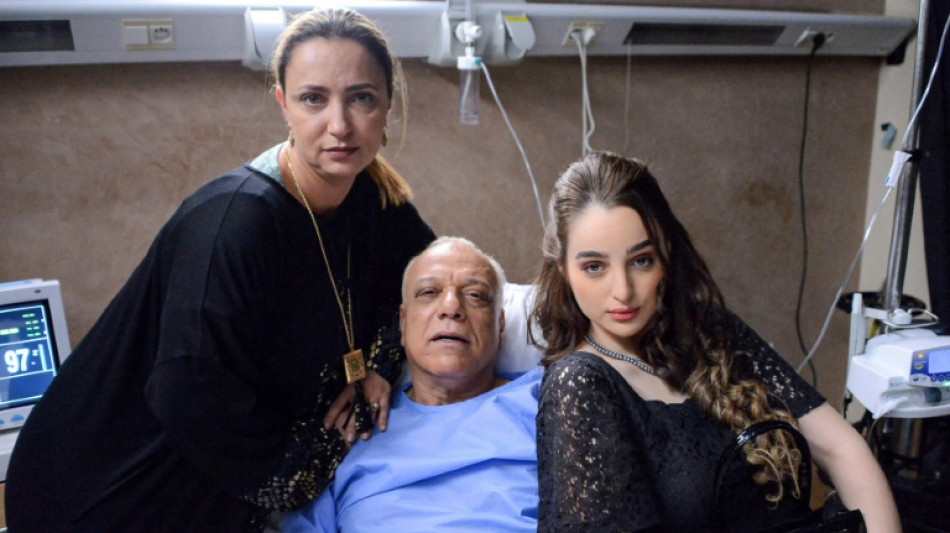
Tunisia TV series sparks polygamy row / Photo: Achraf OUERGHEMMI - AFP
A Ramadan TV series dealing with polygamy has sparked a heated debate in Tunisia, an Arab pioneer in women's rights that banned the practice decades ago.
"Baraa" (Arabic for "innocence") has also been criticised by rights activists and secular politicians for its portrayal of customary "orfi" marriage, religious unions not sanctioned by the state.
Both practices are punishable by up to a year in prison under the country's 1956 family code.
But in one episode, the series' main character, Wannas, declares to his wife and children that he has the right to marry a second woman under Islamic law, which "trumps all other laws".
The series, aired at prime time after observant Muslims break their daytime fast, has sparked a backlash on social media.
"It's disappointing to see these subjects being debated," said Tunisian actress Mariem Ben Hussein.
Post-independence leader Habib Bourguiba outlawed polygamy in the family code passed just five months after the country's 1956 independence from France, a piece of legislation that was nothing short of revolutionary in the Arab world at the time.
It also changed the law so that divorce cases had to go through the courts, meaning a husband could no longer simply declare a marriage over.
- 'Out of the question' -
Tunisia's 2011 revolt, which overthrew Bourguiba's successor Zine El Abidine Ben Ali, brought in a parliamentary system ideologically divided between secularists and Islamist-leaning parties such as Ennahdha.
The strongly secular Free Destourian Party (PDL) founded by one-time members of Ben Ali's ruling party has been one of the loudest voices against "Baraa", saying that "putting these questions back on the table is out of the question" and an affront to women's dignity.
The PDL also blames Ennahdha, politically dominant after the 2011 revolt, for a rise in "crimes" under the family code and has frequently called for its rival to be dissolved.
Rights group Aswat Nissa ("Women's Voices") said polygamy and customary marriage were "forms of violence against women" and that discussing them "normalises a culture of impunity".
The group has urged the country's broadcast regulator to take the programme off the air.
But sociologist Mohamed Jouil said the series does "not necessarily reflect Tunisian society".
"Talking about polygamy and orfi marriage doesn't threaten the gains that women have made," he told AFP.
Jouil added that many Tunisians happily discuss such issues in private but are angered when they are aired in public -- where commentators are "instrumentalising" the issue for political gain.
- 'Subject of debate' -
Civil servant Nadia Abdelhak agreed.
"The over-reactions to the series are trying to convince people that everything related to Islam is backwards," the 28-year-old said.
Sociologist Foued Ghorbali said that while the subject remains taboo, polygamy is still an issue in Tunisia.
After Islamist movements grew following the 2011 revolt, "religious marriage became more common" particularly among university students looking for "halal" sex, he added.
"Some Tunisians support customary marriage," he said.
The justice ministry said courts examined 1,718 cases of orfi marriage between 2015 and 2020 in the country of 12 million people.
Moreover, the freedom of speech that came with the end of Ben Ali's dictatorship allowed people in favour of such practices to openly say so.
In early 2018, a group of women held a protest to demand the re-legalisation of polygamy.
Such controversies ought to be reflected in the arts, Ghorbali said.
"It's not the role of drama to present a positive image of society. It can show a point of view or phenomena in society that could be a subject of debate," he said.
Q.Fiala--TPP