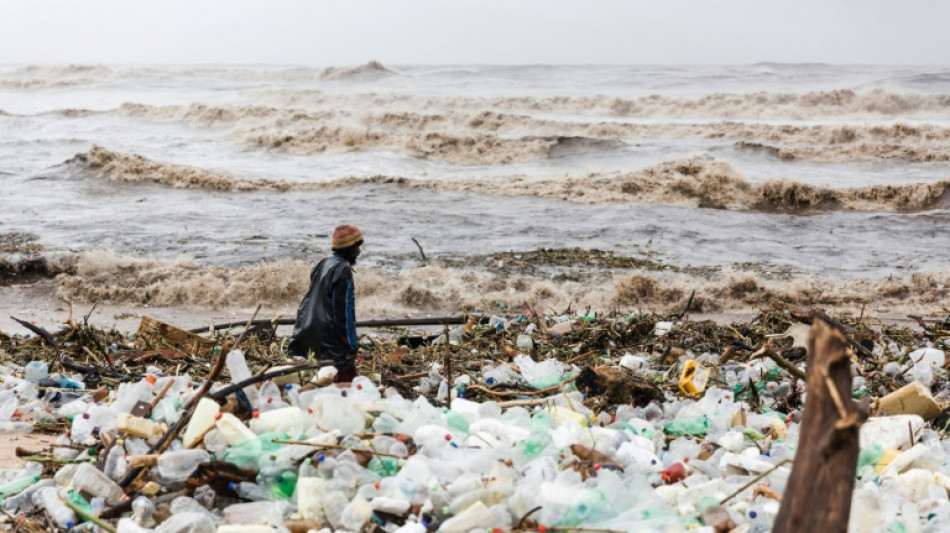
Durban cleans up after record floods hit South Africa / Photo: RAJESH JANTILAL - AFP
Residents on Wednesday started sifting through the remains of shattered homes after floods and landslips stoked by record rains devastated the South African city of Durban city and surrounding area, killing at least 59 and leaving many missing.
Storms struck the southeastern province of KwaZulu-Natal as Durban, its main city, was still struggling to recover from deadly riots last July which claimed more than 350 lives.
A lull in the rain saw residents begin clearing debris from roads and fill up holes left by raging waters to allow cars pass, an AFP correspondent said.
Schools not affected by the floods re-opened Wednesday but few students turned up. A teacher at a primary in Durban's Inanda suburb said only two of 48 pupils reported for classes.
Parts of the province received more than 300 millimetres (13 inches) of rain on Monday, the heaviest one-day downpour in over 60 years, the South African Weather Service said.
"Some areas in KwaZulu-Natal have received more than double the maximum rainfall recorded during previous record rainfalls," the agency's spokeswoman, Hannelee Doubell, told AFP.
President Cyril Ramaphosa was visiting Durban on Wednesday where he was expected to declare a state of emergency.
The provincial government said the disaster "wreaked untold havoc and unleashed massive damage to lives and infrastructure."
"This is a tragic toll of the force of nature and this situation calls for an effective response by government," Ramaphosa said late Tuesday.
Days of driving rain flooded several areas, tore houses apart and ravaged infrastructure across the city, while landslides forced train services to be suspended across the province.
The rains flooded highways to such depths that only the tops of traffic lights poked out, resembling submarine periscopes.
Torrents tore several bridges apart, submerged cars and collapsed houses. A fuel tanker floated at sea after being swept off the road.
Several stacked shipping containers fell like dominoes and lay strewn round a yard, while some spilled onto a main road in the city, one of southern Africa's largest gateways to the sea.
More than 2,000 houses and 4,000 "informal" homes, or shacks, were damaged.
Rescue operations, aided by the military, evacuated people trapped in the worst-affected areas.
The city had only just recovered from July's rioting which saw shopping malls looted and warehouses set on fire, in South Africa's worst unrest since the end of apartheid.
After TV footage showed people stealing from shipping containers, the provincial government condemned "reports of the looting of containers" during the flooding.
Southern parts of the continent's most industrialised country are bearing the brunt of climate change -- suffering recurrent and worsening torrential rains and flooding.
Floods killed around 70 people in April 2019.
"We know it's climate change getting worse, it's moved from 2017 with extreme storms to supposedly having record floods in 2019, and now 2022 clearly exceeding that," University of Johannesburg development studies professor Mary Galvin said.
The South African Weather Service admitted "the exceptionally heavy rainfall... exceeded even the expectations".
T.Musil--TPP