The Prague Post - Warmer seas, heavier rains drove Asia floods: scientists

EUR -
AED 4.251062
AFN 72.925265
ALL 94.8254
AMD 427.157207
ANG 2.07246
AOA 1062.045358
ARS 1654.698773
AUD 1.642292
AWG 2.086462
AZN 1.967909
BAM 1.95287
BBD 2.334956
BDT 142.30647
BGN 1.957259
BHD 0.437251
BIF 3465.784636
BMD 1.157538
BND 1.486363
BOB 8.011014
BRL 5.853783
BSD 1.15934
BTN 109.742857
BWP 15.554258
BYN 3.209653
BYR 22687.747139
BZD 2.331561
CAD 1.622613
CDF 2686.646022
CHF 0.921227
CLF 0.026189
CLP 1030.729439
CNY 7.825594
CNH 7.828563
COP 4041.544344
CRC 527.417725
CUC 1.157538
CUP 30.67476
CVE 110.407208
CZK 24.153769
DJF 206.436676
DKK 7.474212
DOP 67.658232
DZD 154.134274
EGP 58.360897
ERN 17.363072
ETB 184.624981
FJD 2.566149
FKP 0.863695
GBP 0.864276
GEL 3.061668
GGP 0.863695
GHS 12.993385
GIP 0.863695
GMD 83.924124
GNF 10157.397109
GTQ 8.837701
GYD 242.547107
HKD 9.066683
HNL 30.92954
HRK 7.533486
HTG 151.523294
HUF 350.295918
IDR 20532.411161
ILS 3.377121
IMP 0.863695
INR 109.586622
IQD 1516.374936
IRR 1592485.963199
ISK 144.403384
JEP 0.863695
JMD 183.767433
JOD 0.820733
JPY 185.529064
KES 149.855057
KGS 101.226337
KHR 4641.727778
KMF 491.953924
KPW 1041.784713
KRW 1750.937854
KWD 0.356973
KYD 0.966167
KZT 567.498277
LAK 25494.776957
LBP 103657.538635
LKR 385.464952
LRD 210.874511
LSL 18.77495
LTL 3.417909
LVL 0.700183
LYD 7.384758
MAD 10.732983
MDL 20.166089
MGA 4867.447466
MKD 61.626914
MMK 2429.776871
MNT 4140.153881
MOP 9.355001
MRU 46.370593
MUR 54.681731
MVR 17.884094
MWK 2010.643333
MXN 19.946639
MYR 4.705276
MZN 73.978503
NAD 18.775389
NGN 1573.094844
NIO 36.601094
NOK 11.072836
NPR 175.592558
NZD 1.993813
OMR 0.445072
PAB 1.159261
PEN 3.943156
PGK 5.04568
PHP 69.901374
PKR 322.171817
PLN 4.250578
PYG 7098.2265
QAR 4.217491
RON 5.236586
RSD 117.380316
RUB 83.863288
RWF 1753.091482
SAR 4.343308
SBD 9.335592
SCR 14.49409
SDG 695.104711
SEK 10.900655
SGD 1.485706
SHP 0.864219
SLE 28.649668
SLL 24272.999836
SOS 661.530515
SRD 43.428575
STD 23958.702011
STN 24.742377
SVC 10.143823
SYP 127.945117
SZL 18.775036
THB 37.69581
TJS 10.746728
TMT 4.051383
TND 3.370754
TOP 2.787074
TRY 53.593356
TTD 7.869057
TWD 36.557949
TZS 3038.535259
UAH 51.973915
UGX 4306.556634
USD 1.157538
UYU 47.018839
UZS 13890.457831
VES 685.002873
VND 30439.779925
VUV 138.327009
WST 3.175698
XAF 654.985514
XAG 0.016695
XAU 0.000268
XCD 3.128304
XCG 2.089374
XDR 0.814557
XOF 653.445775
XPF 119.331742
YER 276.188155
ZAR 18.780883
ZMK 10419.269321
ZMW 20.379069
ZWL 372.726802
  • CMSC

    0.0100

    22.34

    +0.04%

  • CMSD

    0.0600

    22.32

    +0.27%

  • BCE

    -0.2369

    24.04

    -0.99%

  • JRI

    0.1135

    12.78

    +0.89%

  • BCC

    0.4500

    71.59

    +0.63%

  • RIO

    0.5400

    105.89

    +0.51%

  • NGG

    -0.2700

    81.57

    -0.33%

  • RBGPF

    2.1500

    62.87

    +3.42%

  • GSK

    -0.8100

    52.23

    -1.55%

  • BTI

    -1.2600

    61.06

    -2.06%

  • AZN

    -1.4800

    177.27

    -0.83%

  • RELX

    -0.9000

    32.84

    -2.74%

  • RYCEF

    1.0700

    18.11

    +5.91%

  • VOD

    -0.5300

    15

    -3.53%

  • BP

    -1.1900

    41.59

    -2.86%

Warmer seas, heavier rains drove Asia floods: scientists
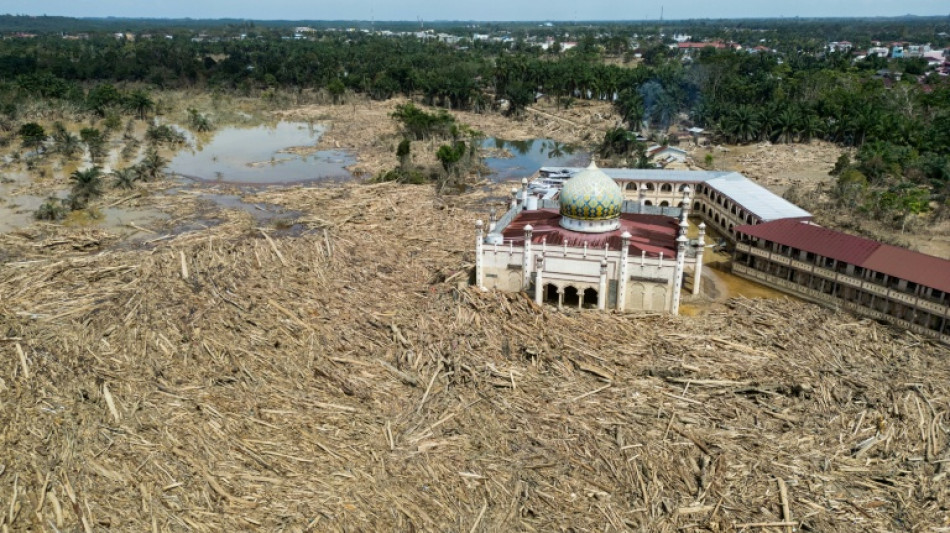
Warmer seas, heavier rains drove Asia floods: scientists / Photo: Aditya Aji - AFP

Warmer seas, heavier rains drove Asia floods: scientists

Warmer seas and heavier rains linked to climate change, along with Indonesia and Sri Lanka's unique geographies and vulnerabilities, combined to produce deadly flooding that killed hundreds, scientists said Thursday.

Text size:

Two tropical storms dumped massive amounts of rain on the countries last month, prompting landslides and flooding that killed more than 600 people in Sri Lanka and nearly 1,000 in Indonesia.

A rapid analysis of the two weather systems carried out by an international group of scientists found a confluence of factors drove the disaster.

They include heavier rainfall and warmer seas linked to climate change, as well as weather patterns such as La Nina and the Indian Ocean Dipole.

The research could not quantify the precise influence of climate change because models do not fully capture some of the seasonal and regional weather patterns, the scientists said.

Still, they found climate change has made heavy rain events in both regions more intense in recent decades, and that sea surface temperatures are also higher due to climate change.

Warmer oceans can strengthen weather systems and increase the amount of moisture in them.

"Climate change is at least one contributing driver of the observed increase in extreme rainfall," said Mariam Zachariah, one of the study's authors and a research associate at Imperial College London.

The analysis, known as an attribution study, uses peer-reviewed methodologies to assess how a warmer climate may impact different weather events.

The scientists found extreme rainfall events in the Malacca Strait region betwen Malaysia and Indonesia had "increased by an estimated 9-50 percent as a result of rising global temperatures," said Zachariah.

"Over Sri Lanka, the trends are even stronger, with heavy rainfall events now about 28-160 percent more intense due to the warming we have already experienced," she told reporters.

While the datasets "showed a wide range," Zachariah added, "they all point in the same direction, that extreme rainfall events are becoming more intense in both study regions."

The scientists said other factors were also at play, including deforestation and natural geography that channeled heavy rain into populated flood plains.

The two tropical storms coincided with the monsoon rains across much of Asia, which often brings some flooding.

But the scale of the disaster in the two countries is virtually unprecedented.

"Monsoon rains are normal in this part of the world," said Sarah Kew, climate researcher at the Royal Netherlands Meteorological Institute, and study lead author.

"What is not normal is the growing intensity of these storms and how they are affecting millions of people and claiming hundreds of lives."

O.Ruzicka--TPP