From farms to court, climate-hit communities take on big polluters / Photo: Ted ALJIBE - AFP/File
Farmers and fishermen hit by climate change are taking big corporate polluters to court -- and experts say these David-vs-Goliath lawsuits are only set to multiply as the planet keeps warming.
From Pakistan to Belgium and Peru, ordinary people bearing the brunt of failed harvests, rising seas and destructive storms are demanding compensation from the heavy-emitting industries most responsible for the climate crisis.
Once dismissed as legal long shots, climate damage claims are gaining traction, bolstered by scientific advances tying rising greenhouse gas emissions to extreme weather.
While most face steep hurdles, legal scholars say these cases are slowly shifting how courts view responsibility for climate-related economic harm -- and who should pay for it.
- Polluter pays -
The use of courts and other legal avenues to pursue climate litigation has grown rapidly over the past decade, particularly in the United States.
Most climate lawsuits target governments. For example, on Thursday, hundreds of people across Japan sued the central government over its "grossly inadequate" response to climate change in the country's first such litigation.
But cases seeking monetary damages from companies with massive carbon footprints -- mostly fossil fuel and cement giants -- have risen sharply in recent years.
Claimants argue a relatively small number of major polluters bear a historic liability for losses caused by droughts, storms and other climate-fuelled extremes.
"Their responsibility dwarfs many even industrialised nation states, let alone other companies or individuals," Jonathan White, a lawyer at ClientEarth, told AFP.
More than 60 "polluter pays" cases have been filed globally and dozens are ongoing, Zero Carbon Analytics said in March, citing data from Columbia University's Sabin Center for Climate Change Law.
- Breaking ground -
In one closely watched case, a Peruvian farmer took German energy company RWE to court, alleging its emissions helped melt an Andean glacier threatening to flood his home.
Swiss cement producer Holcim is being sued by Indonesian islanders over rising seas, while in another landmark case a Belgian farmer is accusing French fossil fuel major TotalEnergies of contributing to his crop losses.
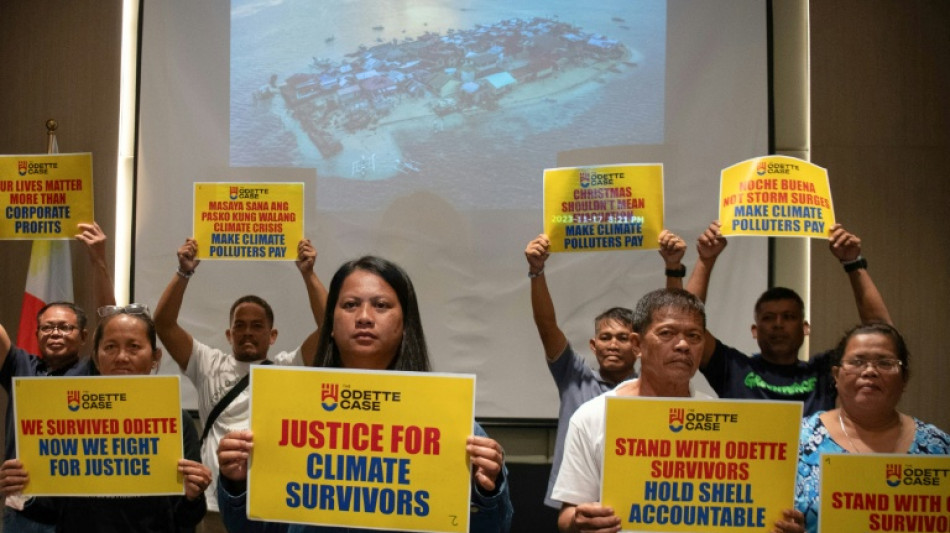
This month, typhoon victims in the Philippines filed a lawsuit in the UK targeting oil giant Shell, while flood-hit Pakistani farmers announced legal action against RWE and German cement producer Heidelberg Materials in October.
Not all cases involve distant polluters: South Korean farmers are suing a national coal-fired power generator, and lawsuits in New Zealand, Brazil and the United States have targeted climate-harming activity at home.
- Justice moves slowly -
Corporations argue they cannot be held solely responsible for climate damages and so far no court has ordered a company pay compensation for any alleged harm caused by their global emissions.
"It's a very difficult claim to win, and the courts are very cautious," Sophie Marjanac, a lawyer and director of legal strategy at the Polluter Pays Project, told AFP.
But experts said this could change in time, particularly as climate attribution science draws a clearer line between humanity's burning of fossil fuels and the impact on specific extreme weather events.
"It's worth just underscoring that justice moves gradually," said White.
Although no case has succeeded in directly linking a company's emissions to a specific storm or flood, in Brazil judges have ordered that climate damages be paid for illegally felling carbon-rich forests.
In May, a German court dismissed the Peruvian farmer's claim against RWE, but in a major step, ruled that corporate polluters could -- in principle -- be held liable for climate damages.
This "set a significant legal precedent" that could influence cases in Europe and beyond, the Grantham Research Institute at the London School of Economics said in a June report.
- Litigation landslide -
While climate rulings in one country are not legally binding in another, judges considering the merits of a case look to decisions elsewhere for guidance, said White.
Experts said that corporate polluters should expect an avalanche of litigation as climate damages mount.
"I can't really foresee a world where these arguments simply go away," said White.
Zero Carbon Analytics said estimates of climate damages vary but could reach "trillions of dollars globally" by mid-century.
Experts pointed to historic class-action lawsuits against tobacco and asbestos companies as examples where courts eventually held corporations accountable for harm.
"Over the past five years especially there has been an absolute revolution in climate change law... the law can evolve, and I believe that in the future these cases will eventually succeed," said Marjanac.
C.Novotny--TPP