'Artists of steel': Japanese swords forge new fanbase / Photo: Yuichi YAMAZAKI - AFP
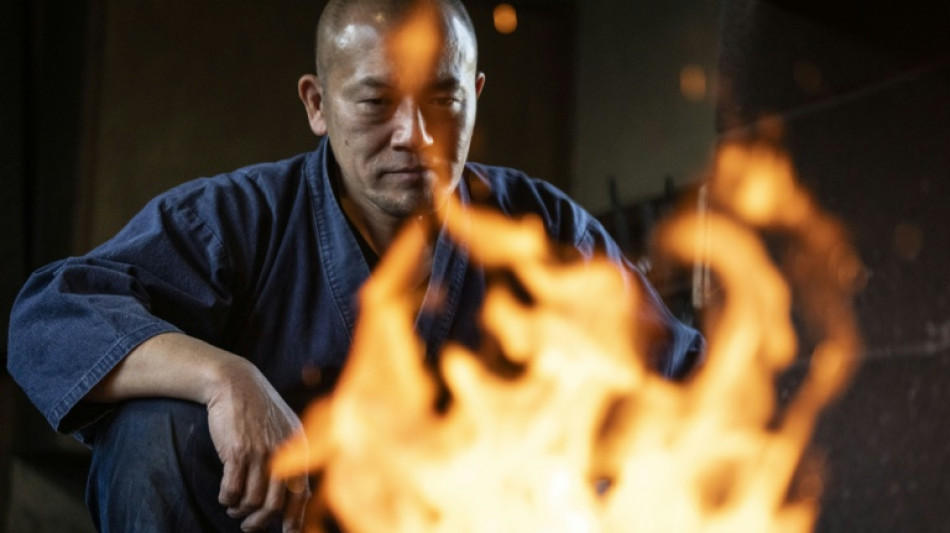
Sparks illuminate the soot-covered studio of Japanese swordsmith Akihira Kawasaki as his apprentice hammers red-hot steel, showcasing a millennium-old craft now enjoying a resurgence in popularity.
Despite the rapidly greying, shrinking population of blademakers in Japan, their fine steel swords known as katana are amassing a new generation of fans, particularly younger women, on the back of pop culture.
Driving the sword boom of the last decade has been video game "Touken Ranbu," where swords take on the form of handsome men, with more recent hits like US series "Shogun" and anime "Demon Slayer" also feeding the trend.
"It's really encouraging to see more young people who genuinely love swords and engage with them so deeply," 57-year-old Kawasaki told AFP.
Katana buffs "used to be exclusively male", he said, with "these old men dismissive or quite scornful of younger people showing interest, condescendingly telling them: 'You don't know nearly as much about swords as we do'."
"It was no fun community".
The 2015 release of "Touken Ranbu" has since turned some of its fans into serious admirers of the katana, the name given to the lightweight but extremely sharp Japanese sword with a curved blade.
Among them is Minori Takumi, 25, who began poring over blades showcased at museums after getting into the game as a teen.
"I was interested in finding out what similarities an actual sword has to its matching character" in the game, she said.
"I found myself growing absorbed in the craft itself, especially the hamon" -- distinctive, milky-white patterns along the hardened edge of a katana.
Her devotion ultimately changed her life when she joined the Bizen Osafune Sword Museum in western Japan's Setouchi city as a full-time curator.
The museum periodically displays the legendary sword "Sanchomo," a national treasure purchased by the city in 2020 for more than $3 million through crowd-funding.
Sanchomo is featured heavily in "Touken Ranbu" and whenever the museum exhibits it, "our visitor numbers skyrocket", Tumi Grendel Markan, a cultural guide at the museum, told AFP, calling their demographic "about 80 percent female".
"That's, I think, the biggest impact we've seen within Japan," Markan said, while international shows like "Shogun" have helped "introduce a new generation of people to samurai culture and Japanese swords".
The runaway success of "Demon Slayer" too, has seen DIY buffs and craftsmen worldwide post YouTube videos recreating some of its characters' outlandish katana, and racking up millions of views.
- The daily grind -
Despite the boom, swordsmiths themselves are far from thriving.
Their numbers nationwide have halved to around 160 from nearly 40 years ago, with many in their 70s or 80s, according to the All Japan Swordsmith Association.
Young recruits are scared away in part by the unpaid, mandatory apprenticeship that lasts at least five years, explained Tetsuya Tsubouchi, who heads the association's business unit.
From repeatedly whacking steel with a heavy hammer to sitting sweat-drenched by a hearth for hours, the daily grind of blademaking is also not for the faint-hearted.
But more fundamentally, "you can barely make ends meet" as a swordsmith today, with prices kept low by disdain for newly crafted swords among the industry old guard and collectors, 66-year-old Tsubouchi said.
"The view still exists within our industry that ancient swords are undeniably the best," he said.
Kawasaki's work is an exception, with his pieces selling for tens of thousands of dollars.
As well as "Touken Ranbu" fans seeking replicas of their favourite katana, practitioners of martial arts such as Iaijutsu value their practicality as weapons, he said.
But what he really wants is the katana recognised not as an antiquity but as a "masterpiece" of contemporary art.
Not all of his fellow swordsmiths see their work this way.
Some are content to produce quality products "but never exercise creativity", he said.
As long as this mindset prevails, the contemporary katana will continue to be undervalued, Kawasaki warned.
"Unless we declare ourselves artists of steel, I doubt swordsmiths will ever be properly recognised."
N.Kratochvil--TPP