Journalists face restrictions, detention covering Mideast war / Photo: - - AFP
Journalists covering the war in the Middle East are facing increasing restrictions and censorship imposed by governments and armed groups, with reporters being stopped and questioned or even detained, a survey of AFP bureau chiefs from the region showed.
Some of the tightest restrictions are in Iran and Israel, although Gulf monarchies, targets of unprecedented drone and missile attacks from Iran, have also imposed tighter controls.
Governments seem particularly concerned about images that disclose the location of missile and drone strikes, or that show projectiles being intercepted.
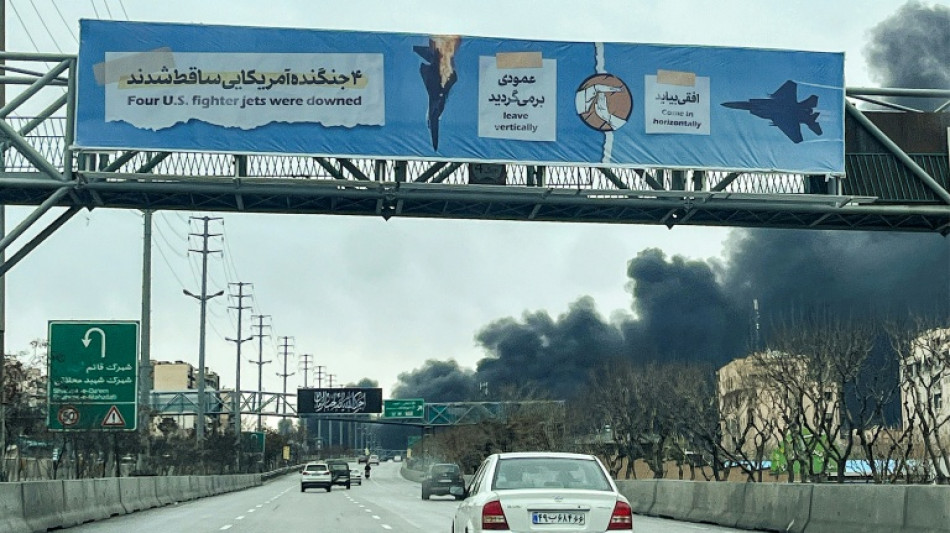
Obtaining independent information outside of official channels is particularly difficult in Iran, where media access to areas outside the capital Tehran is limited or non-existent.
AFP, one of the few international news outlets with a Tehran bureau, has been unable to visit the scene of the strike on a school in the southern town of Minab, where Iranian authorities say more than 150 people, many of them children, were killed.
With the Iranian internet barely functioning and security extremely tight, there is relatively little independent user generated content being posted from within Iran. This contrasts with the start of the war in Ukraine when journalists were allowed to travel freely and citizens posted images of Russian strikes.
- Tightly regulated -
To get an independent picture of what is happening outside of Tehran, AFP is relying heavily on interviews with people who have fled the country, including those who have crossed Iran's borders into neighbouring countries, and on information provided by members of the Iranian diaspora with contacts inside the country.
With the phones barely functioning in Iran, a dedicated team based at AFP's Paris headquarters has been using their contacts to speak to Iranians who have left the country and scour social media.
It is difficult for staff from the agency's Tehran bureau to work freely on the ground, although the authorities are organising media visits to civilian sites that have been targeted, including homes, schools, sports stadiums and hospitals.
The Ministry of Culture and Islamic Guidance, known as Ershad, regulates the press and usually must give its approval before coverage.
However, being given permission to work outside has not prevented journalists from being stopped and questioned by security forces, with the risk of detention.
Iranian state media is focusing on reporting civilian casualties and damage to civilian targets. It does not give military losses, although it does announce the launch of missiles and drones towards Israel and other targets in the region.
AFP's Middle East photo chief Jewel Samad said Iran's intelligence ministry warned: "If someone takes photos of sensitive places or damaged buildings and areas or records the locations of centres with a GPS device or mobile phone and marks the places, they could be an agent of the American-Zionist enemy." It called on people to inform the authorities if they saw anyone doing that.
AFP's Tehran team is managing to take images of strikes, mainly billowing smoke, from a distance. The bombing has also taken a physical and mental toll on journalists in Iran, whose sleep is constantly interrupted by nighttime air strikes.
- Forbidden -
Iran's foe Israel has imposed strict military censorship of sensitive army operations for decades, but has tightened its restrictions as it faces strikes from Iran and the Iranian-backed Shia militia Hezbollah in Lebanon.
The army has banned live broadcasts of the Israeli skyline when alarms have been sounded to warn of incoming missiles or drones.
Images of air defences intercepting incoming missiles had been a major part of the coverage at the start of the war, and was a feature in the coverage of the June 2025 war between Israel and Iran.
However, this is now forbidden.
The army has also banned filming impacts at or near security sites, although it does allow coverage of civilian damage as long as exact locations are withheld.
In guidelines sent to media outlets in Israel, the army's chief censor Brigadier General Netanel Kula listed a range of subjects and topics that could not be published without official clearance.
"Its primary purpose is to prevent assistance to the enemy during wartime, which constitutes a tangible threat to state security," he said.
The guidelines bar journalists from disclosing information about military planning and preparations, air defences, and impact sites and locations.
- Lebanon and the Gulf -
In Israel's northern neighbour Lebanon, the scene of heavy Israeli strikes in retaliation for Hezbollah missile and drone attacks, journalists are facing restrictions imposed by the pro-Iranian militia.
Reporters are forbidden by Hezbollah from freely accessing the group's stronghold in Beirut's southern suburbs, although the organisation does organise press trips.
Faced with unprecedented attacks from Iran, the Gulf monarchies have imposed tight restrictions on journalists.
"The operating environment for journalists is getting much harder in the Gulf generally," said Talek Harris, AFP's Dubai-based bureau chief for the Gulf and Yemen.
In Qatar, the interior ministry announced on Monday that more than 300 people had been arrested for sharing images and misleading information about Iranian attacks.
Those arrested, of various nationalities, "filmed and circulated video clips and published misleading information and rumours that could stir public opinion", the ministry said.
The UAE attorney general Hamad Saif Al Shamsi has warned against photographing, publishing or circulating images that show damage where projectiles or shrapnel has fallen.
"Disseminating such materials or inaccurate information can incite public panic and create a false impression of the country's actual situation," Shamsi said.
The UAE authorities were also concerned about fake and AI-generated images being posted online, and Shamsi warned that those who do this will face being treated "without leniency".
In Saudi Arabia, filming of energy installations and diplomatic areas -- which have borne the brunt of Iranian attacks -- was already highly restricted during normal times, with the war adding further pressure.
Saudi authorities regularly refuse to speak on the record outside of official statements, while the Royal Court's media service has pressured reporters to disclose the identities of their anonymous sources.
Meanwhile, the Kuwaiti interior ministry said it had arrested two people who shared video clips that "mocked" the army, and a third person who used pictures of "banned terrorist organisations' leaders on his profile".
Bahrain's interior ministry announced that four people had been arrested for filming and sharing footage of Iranian attacks and allegedly spreading false information, saying their actions amounted to "treason".
- Threat of prosecution -
Jordan's Media Commission has banned the publication of any videos or information related to the kingdom's defence operations, warning that violators will face criminal prosecution.
In Iraq, AFP's Baghdad bureau chief Roba El Husseini said authorities were only giving limited information about the conflict. Journalists are generally barred from filming around Baghdad International Airport and are not allowed access to border crossings to Iran.
In the Kurdish-controlled north of the country, authorities have said journalists cannot publish live videos of incoming missiles or rockets, reveal the time and location of an attack, or give details of any damage.
They must not shoot images around sensitive locations such as military and security sites, government buildings or diplomatic missions.
Journalists are also warned to be careful about sharing videos uploaded by citizens, as they might disclose sensitive positions or infrastructure.
On the US side, and unlike the 2003 Gulf War, the Pentagon has not invited international media such as AFP to join military embeds.
US and international news outlets including AFP, AP, Fox News and the New York Times were stripped of their Pentagon credentials late last year when they declined to sign new media rules.
C.Zeman--TPP