Erratic rains dictate menu at three-star Michelin restaurant in Brazil / Photo: Nelson ALMEIDA - AFP
Climate adaptation has reached the world of fine dining: At Tuju, a three-Michelin-star restaurant in Brazil, erratic rainfall keeps its owners on their toes.
Chef Ivan Ralston and his partner, gastronomic researcher Katherina Cordas, spent two years studying local ingredients, mainly from the state of Sao Paulo, but using them at their peak is a challenge.
In a region where summer storms bring chaos and reservoirs run dry in winter, it takes "a lot of flexibility," said Cordas, 38, who runs a culinary research center that the pair created for the restaurant.
Tuju is situated in gastronomic powerhouse Sao Paulo, a megalopolis of 12 million people. In April, it secured its third Michelin star along with another restaurant in the city, Evvai -- becoming the first two locations in Latin America to earn the top culinary honors.
Tuju offers four menus a year -- "Humidity," "Rain," "Gale" and "Drought" -- but they are not tied to fixed dates.
Instead, they follow the rain.
"Sao Paulo is usually dry in July, but this year it stayed somewhat wetter because of El Nino, so mushroom season lasted almost twice as long. You always have to stay alert and adapt," said Ralston.
Tuju's 10-course tasting menu draws primarily on ingredients from small-scale producers across Sao Paulo state.
Sardines, pork, artichokes, chestnuts, grapes, guava, capers and more: the products are prepared "with the most modern techniques, emphasizing creativity and the research work behind the scenes," according to Michelin.
The third star is "like a black belt for karate practitioners," said Ralston, the son of restaurateurs who trained in some of Spain and Japan's top kitchens.
But he insists the accolade has not gone to his head: "The pursuit of perfection is superficial. What we promise is a genuine experience."
- 'Pay attention' -
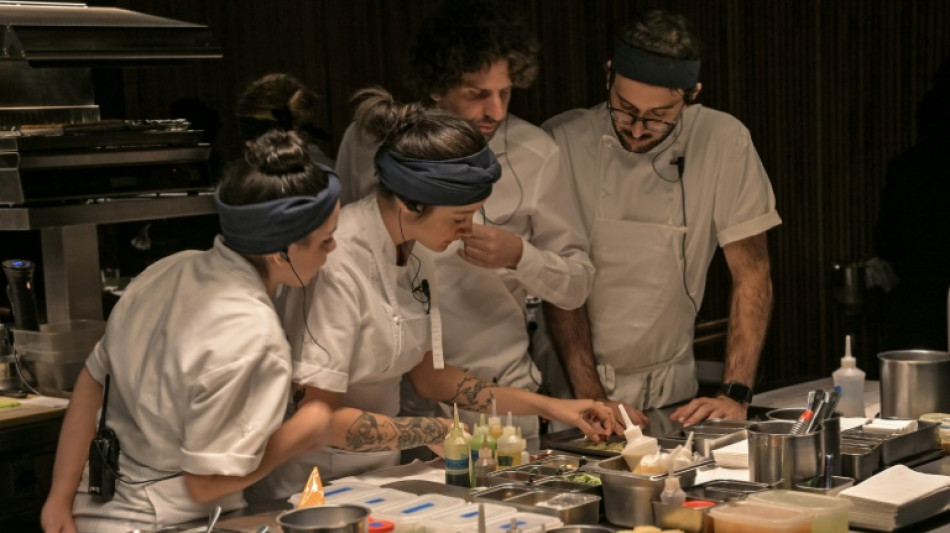
Ralston leads a team of eight young chefs -- mostly women -- who work in silence and perfect synchrony in an open kitchen, dramatically lit at the center of the minimalist dining room.
Cordas, mother of two of Ralston's children, glides between the restaurant's nine green marble tables, attending to diners, who pay 1,650 reais (about $320) for the tasting menu.
Ralston is frustrated by the fact that some diners come mainly in search of content for social media.
"Eating is a moment to pay attention to details. My advice would be: stop working on the marketing of living and enjoy life a little more!"
The evening begins with cocktails beneath a towering jabuticaba tree, native to Brazil, alongside a glass-enclosed wine cellar housing 5,000 bottles.
It ends on a rooftop terrace with sweeping views, with a taste of chocolates and honey from native stingless bees.
Ralston opened Tuju in 2014 and earned his first Michelin star just months later. A second followed. Then, the restaurant was forced to close because of the Covid-19 pandemic.
Ralston and Cordas embarked on their two-year study of Brazilian cuisine and in 2023 partnered up to re-open Tuju -- named after a Latin American bird.
Sao Paulo boasts more Michelin-starred restaurants than any other city in Latin America -- although the guide rates only cities in Argentina, Brazil, and Mexico.
While half a million families live in extreme poverty in Sao Paulo, Ralston attributes its culinary wealth to "the size of Sao Paulo's economy: there's a lot of money here."
X.Kadlec--TPP