Inside Europe's last 'open-outcry' trading floor / Photo: BENJAMIN CREMEL - AFP
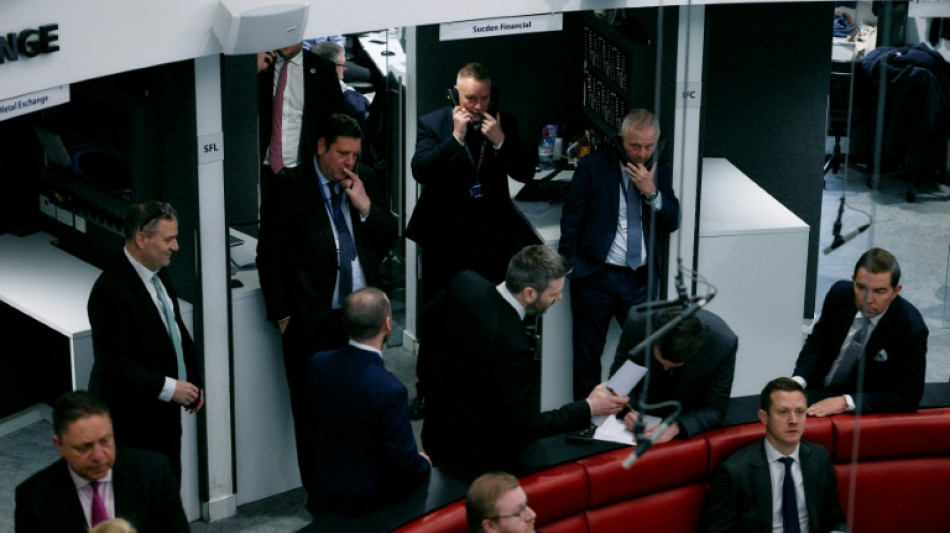
In an era where computer algorithms automate trading at breakneck speeds, a dwindling number of London's metal traders still conduct business in-person by shouting orders across Europe's last so-called open-outcry trading floor.
The near 150-year old tradition takes place in a circle, or pit, of red-leather benches -- called the "Ring" -- where the daily global prices of copper, nickel, aluminium and other metals are set at the London Metal Exchange (LME).
Seconds before the frantic trading begins, a trader rushes in, puts on a tie as per the obligatory dress code, and heads towards one of the booths circling the Ring.
Then, sheets of pencilled figures and stock market orders are handed out.
Once the bell rings, signalling the start of trading, no-one is allowed to trade online or use mobile phones. They can only communicate with the outside world via landline phones.
The five minutes of trading per metal is "a bit like playing poker", said Giles Plumb, a trader at financial services firm StoneX, who has run its copper portfolio for 21 years.
- 'Flurry of activity' -
It starts off calm, with seemingly unbothered traders sitting quietly.
As the minutes tick by, "you try not to look at your watch, to make it look like you don't have an order to place", Plumb told AFP.
But as the final seconds of the allotted time approach, the Ring erupts.
"There's this big flurry of activity," Plumb said, as traders jump up from benches and begin shouting.
They stand up and lean towards the person -- almost exclusively a man -- they're making a deal with, making sure to keep one heel glued to the seat -- another rule of the Ring.
"To be good, you've got to be aware of who's doing what around you, you need to quickly process information and you have to be clear and audible," Plumb said.
"By now, I can tell people's voices and I know who's doing what even without looking at them."
Behind them, brokers speak to clients on landlines, some holding one phone to each ear, repeating orders while taking new ones.
Despite the tumult, Plumb says the sessions are "less aggressive, less competitive" than when he began his career.
At its peak, he explained, the "pit would be full of 22 brokers, 300 people, huge wall of noise. So you could barely hear yourself think".
- 'The battle is lost' -
Now, only eight companies and a few dozen people still participate in these age-old sessions, as online trading killed off most of the world's open-outcry markets.
The London Metal Exchange and its open-outcry tradition began towards the end of the 19th century, pausing only during World War I and again during the Covid-19 pandemic.
The LME wanted to shift entirely to electronic trading in 2021, but faced pressure from its remaining traders to keep the tradition alive.
The exchange compromised by keeping one of its two daily in-person sessions, as long as more than six members are willing to participate.
"Those wanting to trade in the Ring continue to do so, but these days most of the LME's trading takes place electronically," the exchange said in a statement.
There is no longer any reason to continue open-outcry trading, explained Thierry Foucault, professor of finance at HEC Paris business school.
Electronic trading is "technically superior and allows for greater market liquidity, as well as lower intermediation costs", he told AFP.
In some cases it has persisted for good reason, he said, "particularly in highly specialised markets", like metals, where the number of expert operators is very limited.
However, "over time, the battle is lost".
L.Hajek--TPP