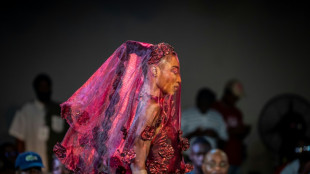
Bangladesh sari weaving tradition hangs by a thread / Photo: Munir UZ ZAMAN - AFP
Bangladesh's Tangail sari is fighting for survival as weavers warn that automation and economic pressures are pushing the centuries-old craft to the brink despite its global acclaim.
The detailed designs and fine textures of the garments made in the central Tangail city won UNESCO recognition in December as intangible cultural heritage reflecting "local social and cultural practices".
But it has brought little relief to crowded local workshops where a shift to automated looms, evolving fashion choices, unstable yarn prices and a lack of government support have squeezed weavers at every turn.
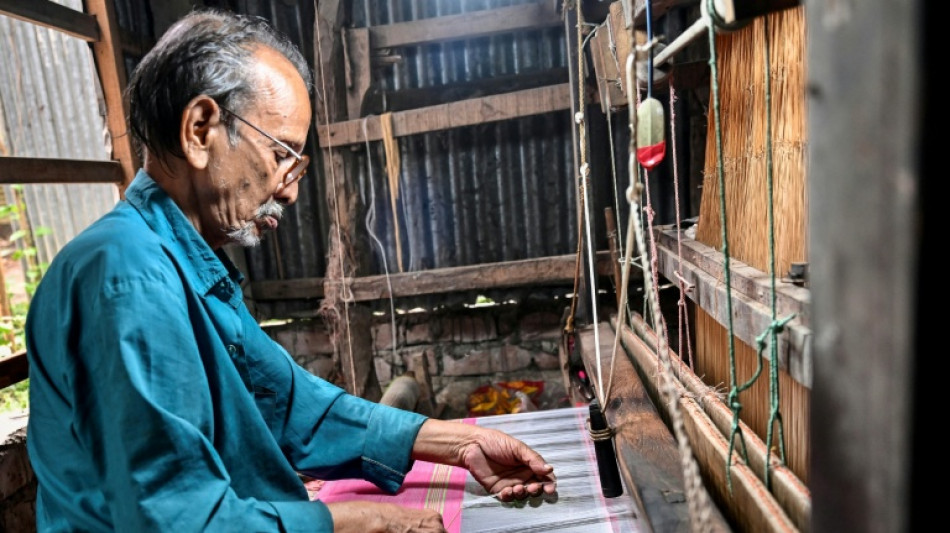
Ajit Kumar Roy, who spends the day interlacing warp and weft threads while paddling the shuttle back and forth, says the honour has done little to ease his daily hardship.
"It's all hard work," the 35-year-old weaver told AFP as he worked the handloom he has operated for nearly two decades.
"Hands, legs and eyes must move together. If I make a mistake then there is a problem."
Men typically lead the weaving, dyeing and design work, while women prepare threads, apply rice starch and add finishing touches.
- High-profile clients -
Once considered a well-paying profession, weaving has suffered from a market slump that began during the Covid-19 pandemic and never recovered.
Roy said his factory owner used to run 20 handlooms but now has only 10.
"Some factories have shut down entirely," Roy said.
With demand falling and costs rising, many weavers have abandoned the craft, turning to driving or construction work to survive.
"We earn 700 taka ($6) per sari, and it takes at least two days to make one. How can a family of four live on 350 taka a day?"
Raghunath Basak, president of a local sari traders' association, whose family has preserved Tangail weaving for generations, fears the craft may end with him.
His ancestors migrated in search of weather and water suitable for weaving before settling in Tangail, nestled in a low-lying floodplain near the Jamuna River.
"I brought my son into the profession too, but I don't know how he will cope after I am gone," Basak, 75, said from his showroom, where shiny crests line the walls.
Despite high-profile clients -- from political leaders in India's West Bengal state to ousted Bangladeshi prime minister Sheikh Hasina, who wore his sari to deliver a speech to the UN General Assembly -- Basak says the industry is struggling.
- Cultural symbol -
A halt to land-port trade with neighbouring India following a diplomatic fallout has also affected business.
"We used to export saris by road and import yarn when local prices shot up. Now land ports on both sides are sealed. Export has become almost impossible," he said.
In the 1960s, the sari emerged as a cultural symbol as Bengalis in what was then East Pakistan embraced their ethnic identity.
But consumer preference is slowly shifting.
Kaniz Neera, 45, buys two dozen Tangail saris a year, favouring their distinctive patterns and comfortable design, but worries that the younger generation is drifting away.
"Sari is integral to our identity," she said. "My mother wears sari at home and outside. I wear it mostly outside. (But) girls now wear sari only on special occasions."
But researchers remain cautiously optimistic.
Shawon Akand, author of a book on the subject, notes that the Tangail sari is a relatively recent evolution by the descendants of Dhakai muslin weavers whose creations once captivated Mughal rulers and European aristocracy.
"The Tangail weavers inherited fine yarn techniques from their ancestors and adapted with unique designs in Tangail sari," Akand told AFP.
"Tangail sari will evolve. It will endure."
A.Slezak--TPP