'Earth is in our hands': Astronaut Pesquet's plea for the planet / Photo: JOEL SAGET - AFP
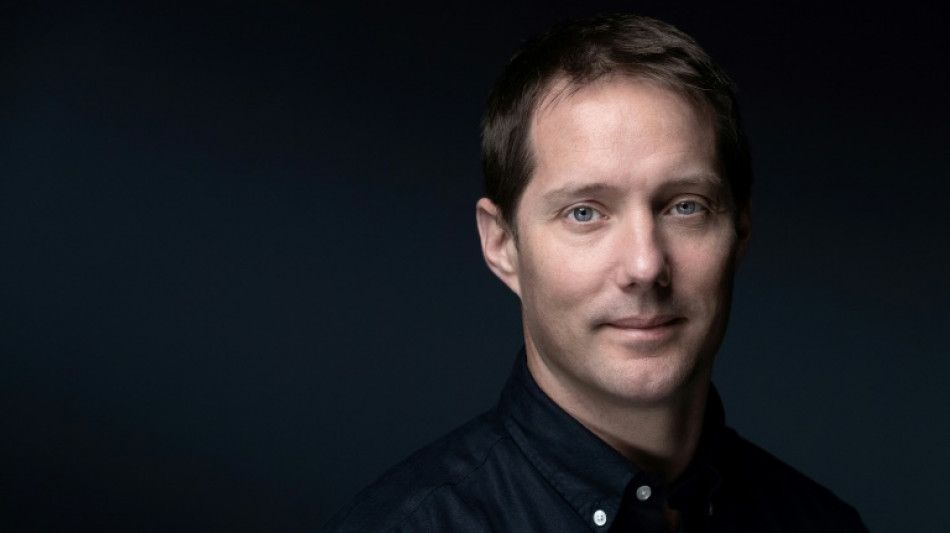
From his unique viewpoint hundreds of kilometres above Earth, French astronaut Thomas Pesquet told AFP he felt helpless watching fires rage across the planet below, calling for more to be done to protect this fragile "island of life".
Pesquet said his two tours onboard the International Space Station convinced him more than ever that the world is failing to address the threat posed by climate change.
He also witnessed moments of astonishing beauty while in space, some of which are captured in 300 photos published in his new book "La Terre entre nos mains" (Earth is in our Hands), released this week in France, the profits of which will go to charity.
Pesquet wrote that he initially "caught the photo bug" during his first tour on the ISS in 2016-2017.
But it was during his last mission, from April to November 2021, that he fully embraced the endeavour, taking constant photos and sharing his passion with his colleagues in space.
"At first I was a bit of a Sunday photographer, then I really got a taste for it," Pesquet told AFP in an interview.
"When you to arrive at the station, you have that smartphone reflex: you see something great and want to immortalise it," he said.
"But quickly you are confronted with limitations, if you want to take photos at night, for example, or of precise targets with long lenses," he added.
"It's difficult because everything is manual".
- 245,000 photos -
Around a dozen cameras are available to astronauts on the ISS, some permanently installed on the Cupula observation module, some in the US laboratory which has a porthole looking down on Earth.
Despite only having a few hours of leisure time a day, Pesquet took 245,000 photos during his last tour.
"Many are not very good, but in six months there is a real progression curve," he said.
Throughout the photos of rivers, oceans, deserts, mountains, sunsets and sunrises, the astronaut's amazement at the world shines through.
"The planet is so vast and diverse that you still don't feel like you've seen everything. Even after 400 days in orbit, there are still some thing that surprise me, places I haven't seen," he said.
The speed of the station, which hurtles through space at 28,000 kilometres an hour, means that "we are never above the same area at the same time of day," he said.
One day, he was surprised to find out that the northern lights appeared blue from space.
Pesquet only managed to get a photo of the phenomenon because his US colleague Shane Kimbrough told him it was taking place, after spotting it out of his bedroom window.
- 'Sinister spectacle' -
But Pesquet did not only witness Earth's beauty.
He also captured images of a world in a state of degradation: the "sinister spectacle" of hurricanes, tornadoes and fires that stormed across the planet during his second stint of 200 days in space.
Pesquet described himself as a "helpless" witness to the carnage.
"What struck me the most were the fires. We could see the flames and smoke very clearly," he said, which gave the impression of "the end of the world."
"Like in the movies," he watched as entire regions were engulfed. Parts of southern Europe, British Columbia and California were "consumed little by little by a blanket of smoke," he added.
"I saw the difference just four years made," he said.
"My first mission was in winter and the second in summer, so it was normal that there were more fires -- but overall I saw more violent phenomenona."
Watching these increasingly extreme weather events, "which we know are linked to climate change, has convinced me that we not doing enough to protect our planet," Pesquet wrote in the book.
Without science "we would be lost in the face of the magnitude of the challenges" ahead, he said.
"It's not too late, but the longer we wait..." he trailed off.
"Every year we say 'now is the time act' -- and it's the same the next year, we only make small changes without a strong global impact."
E.Soukup--TPP