The Prague Post - Top oil producers likely to hold course despite Ukraine war

EUR -
AED 4.314042
AFN 75.770252
ALL 95.711219
AMD 441.351736
ANG 2.102555
AOA 1078.363762
ARS 1599.52384
AUD 1.646108
AWG 2.115906
AZN 1.998213
BAM 1.956029
BBD 2.375778
BDT 145.027
BGN 1.959499
BHD 0.445352
BIF 3507.411141
BMD 1.174688
BND 1.501176
BOB 8.150955
BRL 5.885421
BSD 1.179638
BTN 109.463831
BWP 15.826855
BYN 3.350393
BYR 23023.878873
BZD 2.372378
CAD 1.609798
CDF 2713.528572
CHF 0.920156
CLF 0.026588
CLP 1046.435987
CNY 8.008727
CNH 8.016092
COP 4235.747634
CRC 537.96306
CUC 1.174688
CUP 31.129224
CVE 110.277927
CZK 24.285961
DJF 210.054623
DKK 7.473034
DOP 70.71829
DZD 156.219312
EGP 61.090691
ERN 17.620315
ETB 184.18309
FJD 2.605804
FKP 0.868621
GBP 0.871166
GEL 3.178253
GGP 0.868621
GHS 13.034528
GIP 0.868621
GMD 86.332552
GNF 10349.213141
GTQ 9.021057
GYD 246.788929
HKD 9.19892
HNL 31.341674
HRK 7.539024
HTG 154.468107
HUF 362.387042
IDR 20134.147137
ILS 3.476829
IMP 0.868621
INR 108.78025
IQD 1545.281139
IRR 1552349.792126
ISK 143.465183
JEP 0.868621
JMD 186.501862
JOD 0.832867
JPY 186.990328
KES 151.922567
KGS 102.727058
KHR 4718.553112
KMF 491.019762
KPW 1057.209717
KRW 1735.368917
KWD 0.362227
KYD 0.983015
KZT 553.104835
LAK 26025.050672
LBP 105632.082256
LKR 372.863707
LRD 217.045442
LSL 19.333866
LTL 3.468547
LVL 0.710557
LYD 7.458874
MAD 10.883376
MDL 20.277377
MGA 4892.57351
MKD 61.647226
MMK 2466.171243
MNT 4198.948525
MOP 9.515115
MRU 47.148527
MUR 54.376866
MVR 18.160654
MWK 2045.439768
MXN 20.404947
MYR 4.645883
MZN 75.127174
NAD 19.333866
NGN 1582.304393
NIO 43.405088
NOK 11.024397
NPR 175.14253
NZD 2.000875
OMR 0.454133
PAB 1.179638
PEN 4.058276
PGK 5.113599
PHP 69.969095
PKR 328.898654
PLN 4.231912
PYG 7514.880899
QAR 4.300504
RON 5.095793
RSD 117.363757
RUB 89.653259
RWF 1723.602042
SAR 4.406491
SBD 9.439376
SCR 17.633236
SDG 705.987416
SEK 10.799621
SGD 1.495671
SHP 0.877023
SLE 28.926663
SLL 24632.609171
SOS 674.179028
SRD 44.292748
STD 24313.663655
STN 24.502872
SVC 10.32121
SYP 129.858763
SZL 19.328266
THB 37.742552
TJS 11.123504
TMT 4.11728
TND 3.423501
TOP 2.828366
TRY 52.694966
TTD 8.011939
TWD 36.978975
TZS 3061.058793
UAH 51.930587
UGX 4368.51208
USD 1.174688
UYU 46.925501
UZS 14314.677975
VES 563.447136
VND 30935.400516
VUV 137.427213
WST 3.189496
XAF 656.033901
XAG 0.014879
XAU 0.000247
XCD 3.174653
XCG 2.125949
XDR 0.815896
XOF 656.033901
XPF 119.331742
YER 280.284679
ZAR 19.294187
ZMK 10573.594334
ZMW 22.441631
ZWL 378.248959
  • RBGPF

    -13.5000

    69

    -19.57%

  • BCC

    4.2400

    83.04

    +5.11%

  • GSK

    1.2200

    58.35

    +2.09%

  • RELX

    0.4700

    36.68

    +1.28%

  • BCE

    -0.0700

    24.09

    -0.29%

  • RYCEF

    0.5600

    17.66

    +3.17%

  • RIO

    0.4400

    100.15

    +0.44%

  • VOD

    -0.2200

    15.48

    -1.42%

  • CMSD

    0.1800

    23.08

    +0.78%

  • CMSC

    0.1500

    22.77

    +0.66%

  • NGG

    -0.6000

    86.92

    -0.69%

  • AZN

    4.3300

    204.8

    +2.11%

  • BTI

    0.5400

    56.68

    +0.95%

  • BP

    -3.0400

    44.59

    -6.82%

  • JRI

    0.1800

    13.09

    +1.38%

Top oil producers likely to hold course despite Ukraine war

Top oil producers likely to hold course despite Ukraine war

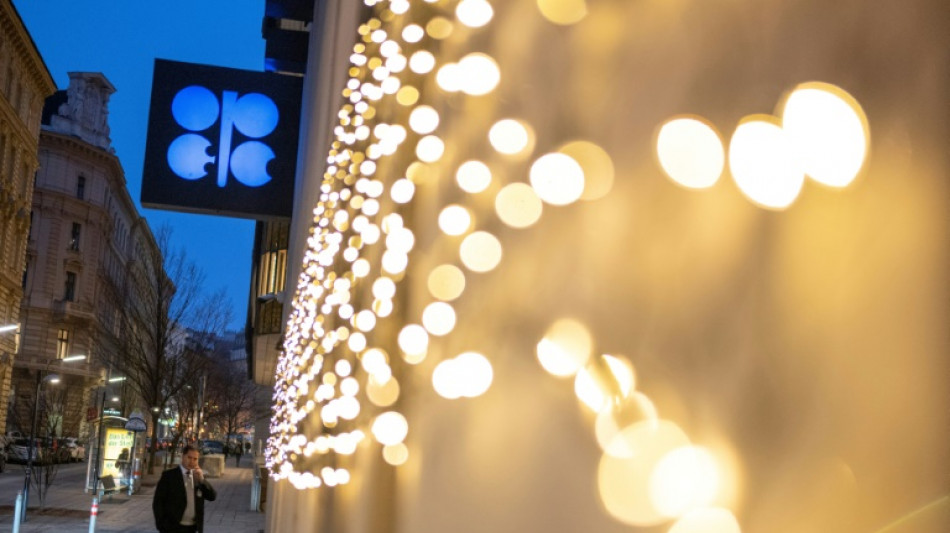
Saudi Arabia, Russia and other top oil producers are expected Wednesday to agree to hold firm on only gradually opening the taps despite Russia's assault on Ukraine sending prices spiralling.

Text size:

Both WTI crude and Brent broke above $110 a barrel Wednesday. Brent is at a high last seen in 2014, while WTI is at levels not seen since 2013.

But analysts expect the 23-member OPEC+ group at its monthly meeting Wednesday to stick to a decision from last year for an output target of 400,000 barrels per day for April as well.

On Sunday, OPEC leader Riyadh confirmed the commitment of the 13-country group to the agreement with its 10 partners, led by Moscow, which faces international criticism and sanctions over its invasion of Ukraine.

Crown Prince Mohammed bin Salman "affirmed the kingdom's keenness on the stability and balance of oil markets," according to the Saudi Press Agency.

- 'Risk for disruptions' -

The gathering starts with a technical discussion at 1:00 p.m. local Vienna time (1200 GMT) followed by a formal meeting to endorse any decision, scheduled for 1:30 p.m.

The meetings, held via video conference, come a day after International Energy Agency (IEA) countries agreed to release 60 million barrels of oil to stabilise global markets.

The United States will contribute half of the amount, President Joe Biden announced.

But the move has failed to assure markets, and analysts have low expectations that OPEC+ will take any decision to rein in surging prices.

"The war in Ukraine is getting very ugly and destructive and hostilities between the West and Russia are intensifying. High risk for disruptions to both crude and natural gas," Bjarne Schieldrop of Seb said.

"Could OPEC help? Yes, but it will probably choose not to," Ipek Ozkardeskaya of Swissquote said.

- 'Paper promise' -

OPEC+ has so far resisted pressure from major oil consumers, such as the US, to open the taps more as some of its members, including Nigeria and Angola, struggle to meet quotas.

Between December and January, OPEC members boosted their production by 64,000 barrels per day (bpd), far below their 400,000 bpd agreement, according to the organisation's last monthly report.

"The pledge from OPEC+ to increase supply is so far a paper promise... adding to the shortness in the supply market and further stoking the bullish price environment," Louise Dickson of Rystad Energy said.

The Organization of the Petroleum Exporting Countries (OPEC), whose secretariat is based in Vienna, had drastically slashed production in 2020 as the Covid-19 pandemic began to spread through the world, pummelling demand and prices.

Wednesday's meeting takes place at a key moment as negotiations to revive the 2015 Iran nuclear deal are widely expected to come to a head in the coming days.

The deal provided sanctions relief for Tehran in return for strict curbs on its nuclear programme but has been disintegrating since former US president Donald Trump withdrew from it in 2018 and reimposed sanctions, including on Iran's oil exports.

If an agreement were to be found and sanctions lifted again, it could unlock the Iranian exports.

C.Novotny--TPP