Skiing in Lesotho: an African adventure under pressure / Photo: Phill Magakoe - AFP
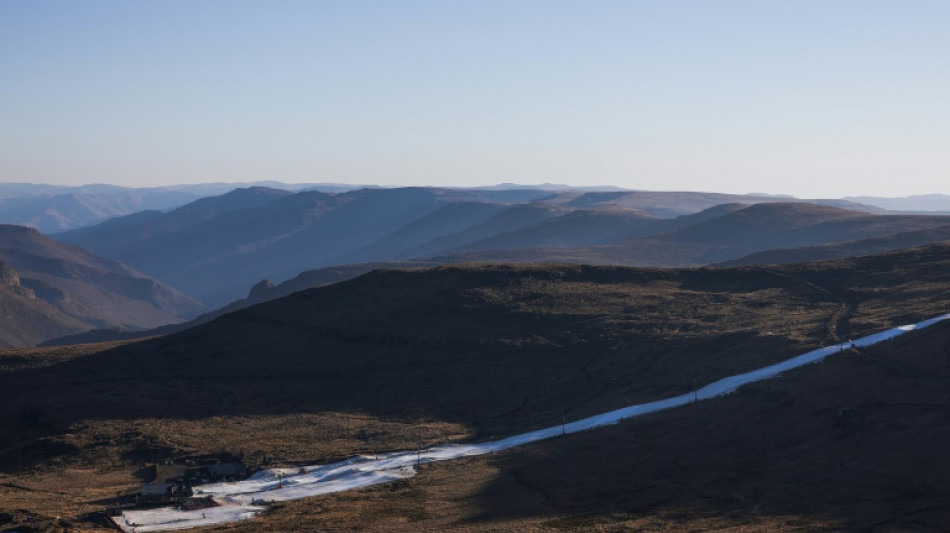
High in the wintry mountains of Lesotho, Sharon Kadangwe from Malawi is learning to ski on a strip of snow that runs down a dry, brown slope at southern Africa's only ski resort.
It's "exciting and scary", the 29-year-old said, climbing down from the ski lift. "It feels like the first time I learned how to ride a bike or swim... once you get into the rhythm of it, it becomes fun," the arts manager said.
For a bubbly Ethiopian teacher who would only give her name as Helen, a trip to the Afriski resort in the tiny mountainous kingdom of Lesotho is a once-in-a-lifetime opportunity.
"I wanted to ski in Africa so bad because it's my continent," the 29-year-old said. "I am doing it once and it will be the last time in my life."
Pop music blasts out as visitors take selfies or enjoy a beer in the sun. Some are here to ski or snowboard, others just want to experience snow for the first time.
As enthusiastic as the visitors are, high running costs threaten the unique African ski adventure, which relies on artificial snow when snowfalls are patchy.
At 3,000 metres (10,000 feet) in the Maluti Mountains, Afriski -- which opened in 2002 -- has weathered a series of challenges, including the Covid shutdown, to keep running. The only other ski resort in the area, South Africa's Tiffindell, closed this year.
South African Bianca Rentzke, 29, has been coming to Afriski since she was 11 years old.
"This is where I've learned how to ski. I'd love to do a trip overseas, but this is where I've grown up," said the business owner. It's been "amazing to see it develop".
"We call this place magical... even though it's a small hill we have, there's something special about it," said Shayne Murray, head of the ski school.
Surrounded by the brown mountains of a country that is in drought at the lower altitudes, the resort's three small slopes are this year layered in artificial snow created with water pumped from eight nearby dams.
- High costs -
Afriski employs around 200 people, mostly from the small town of Butha-Buthe around 70 kilometres (43 miles) away, said general manager Puseletso Mahlakajoe.
Most of the instructors are from countries like France, Germany and the United States, but the resort targets tourists from the region for its June-August ski season, she said.
"It's cheaper to come here than to go to Europe," she said. "We want those (African) kids to grow up loving skiing here so that we can stop hiring the people from America as instructors."
A day pass costs 1,200 loti ($66, 60 euros).
"We have to make sure this business runs itself, and sometimes that's where the problem comes," Mahlakajoe said.
"Our electricity is very expensive, so there are times when we can't pay a bill that month because we didn't make enough."
Illustrating the challenges it faces, Afriski could not open for the 2023 ski season because of power shortages and an internal legal issue, managing director Theo Ferreira told AFP.
While operations are currently stable, if "we hit another Covid-type of situation, that would be disastrous".
"It would be good to get sponsors," he said.
X.Kadlec--TPP