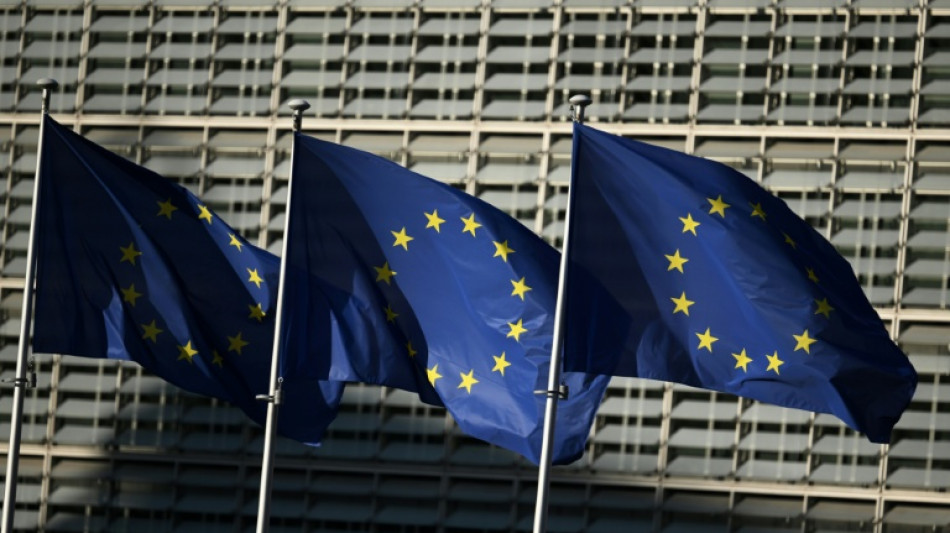
EU warns against long war, urges 'credible transition' in Iran / Photo: Nicolas TUCAT - AFP
The EU warned Sunday against a prolonged war in the Middle East, saying further escalation could threaten Europe and beyond, as it urged Iran to refrain from indiscriminate retaliation after US-Israeli strikes.
Foreign ministers from the bloc's 27 nations -- most of which are NATO members -- held extraordinary talks via video link on day two of an assault that killed Iran's supreme leader, as EU chief Ursula von der Leyen called for a "credible transition" in the country.
"The Middle East stands to lose greatly from any drawn-out war," the European Union's top diplomat Kaja Kallas said, speaking on behalf of member states after the meeting.
"The events unfolding in Iran must not lead to an escalation that could threaten the Middle East, Europe and beyond, with unpredictable consequences, also in the economic sphere."
Writing on social media after calls with several Middle East leaders, von der Leyen said the death of Ayatollah Ali Khamenei spurred "renewed hope for the people of Iran" but also carried "a real risk of instability".
The Islamic republic launched a new round of retaliatory attacks across the Gulf on Sunday after vowing to avenge the supreme leader.
NATO said its top commander in Europe was "closely" following developments in the Middle East and adjusting forces as needed to defend against "potential threats" -- citing in particular "ballistic missiles or unmanned aerial vehicles, emanating from this or other regions".
The commander, US General Alexus Grynkewich, was speaking "actively and regularly" with military leaders on both sides of the Atlantic, and with NATO's Secretary General Mark Rutte, the alliance said.
Von der Leyen said Brussels was engaging closely "with all key actors" to safeguard stability and security.
"The risk of further escalation is real. This is why a credible transition in Iran is urgently needed," she wrote on X, calling for a "lasting solution", after speaking with Qatar's ruler Sheikh Tamim bin Hamad Al Thani.
"This must mean the halt of Iran's military nuclear and ballistic missile programmes and the end of destabilising actions on air, land and at sea."
Von der Leyen also spoke with Saudi Crown Prince Mohammed bin Salman, Jordan's King Abdullah II and Turkish President Recep Tayyip Erdogan.
Likewise, Kallas said she was in contact with regional partners "that bear the brunt of Iran's military actions" to find practical steps for de-escalation.
"The death of Ali Khamenei is a defining moment in Iran's history," she wrote on X.
"What comes next is uncertain. But there is now an open path to a different Iran, one that its people may have greater freedom to shape".
I.Mala--TPP