US, Iran trade strikes putting new strain on Middle East truce / Photo: ibrahim AMRO - AFP
Iran launched attacks on US sites in the Gulf in response to American strikes on the country, state media said Saturday, after Washington accused Tehran of attacking one of its cargo ships in the Strait of Hormuz.
The trading of fire raised questions about efforts to keep the crucial waterway open while Washington and Tehran negotiate a final settlement to a war that began on February 28 with US and Israeli strikes on Iran.
US Central Command (CENTCOM) said the latest American strikes, against Iranian missile and drone storage sites and coastal radar positions, were a response to "unwarranted aggression against commercial shipping by Iranian forces" that "clearly violated the ceasefire".
Iranian state television, citing a reporter in the southern port city of Sirik, said an explosion was heard late Friday at Taherouyeh pier. It quoted an informed military source as saying the blast was caused by a projectile impact in the area.
"Sirik Port is operating normally, and no damage has been reported to its equipment or facilities," Mehr news agency reported following the explosion.
CENTCOM described the operation as "a powerful response to yesterday's attack on a commercial ship that was transiting the Strait of Hormuz".
US President Donald Trump had earlier denounced what he described as an Iranian drone strike on the vessel, saying "obviously, this is a foolish violation of our ceasefire agreement".
Vice President JD Vance issued a direct warning, posting on X that "violence will be met with violence" if Iran carries out any further attacks.
Minutes later, on Saturday morning Iran time, state television reported that the Revolutionary Guards said they had targeted US sites in the Gulf region in retaliation for the American strikes.
"If the aggression is repeated, our response will be broader than this," the Guards said, according to a post by state TV on Telegram.
Iran has warned vessels not to enter or leave the Gulf through the strait without permission, but ships have continued to move, some using a route not authorised by Tehran.
Despite the latest flare-up, oil prices have fallen sharply on hopes that traffic through Hormuz -- a strategic waterway which normally sees around a fifth of the world's oil and gas exports -- would keep recovering.
- Lebanon framework -
Israel and Lebanon hailed an agreement signed Friday with the US to pave a way towards peace on their front in the war, although Iran-backed Hezbollah warned the deal would thwart plans to resolve the broader conflict.
The agreement -- which includes a pilot effort in which Lebanese soldiers take control of two areas occupied by Israel, as well as a process aimed at disarming Hezbollah -- is the result of five rounds of talks in the US capital.
At a Washington signing ceremony, Secretary of State Marco Rubio, flanked by Israeli and Lebanese envoys, said the trilateral accord "begins to put in place a framework for lasting peace and security."
"It's the beginning of the beginning. There's a lot of work ahead," he said.
Israeli Prime Minister Benjamin Netanyahu welcomed the framework as a victory against Iran, which argues the Lebanon front is inseparable from the wider war and should be resolved as part of US-Iran talks.
"Iran has been trying to force us to withdraw from southern Lebanon through pressure but, in effect, Israel, Lebanon, and the United States are telling them: this is none of your business," Netanyahu said.
Netanyahu said the agreement would allow the Lebanese army to return to two "pilot areas" in southern Lebanon, but that Israeli forces would remain in their security zone until Hezbollah is disarmed. Displaced civilians would be prevented from returning.
Lebanese President Joseph Aoun welcomed the unpublished framework as a "first step" toward civilians returning home "under the sovereignty of the Lebanese state".
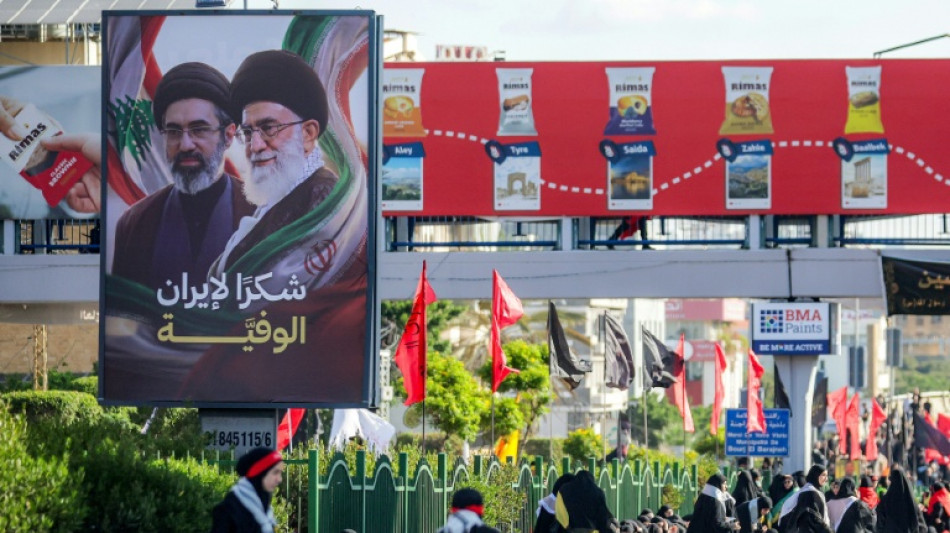
But Hezbollah supporters took to the streets of Beirut late Friday to protest the agreement.
Hezbollah MP Hassan Fadlallah said the Washington signing sought to undercut the US-Iran ceasefire, which he said envisioned Lebanon being settled through the wider peace process.
- Nuclear safeguards -
The UN nuclear watchdog's chief has warned that any final US-Iran settlement would need strong safeguards to ensure Tehran does not build a nuclear weapon.
Iran's nuclear program remains a central sticking point, with Tehran and Washington giving conflicting accounts of whether inspectors will regain access to the Islamic republic's facilities.
"The government of Iran has declared quite clearly that this is not their intention," International Atomic Energy Agency chief Rafael Grossi said Friday of developing nuclear weapons.
"But of course intentions are not enough. We have to have a very strong verification system in place... as soon as is practicable."
The interim agreement says Iran's stockpile of enriched uranium -- estimated pre-war at 440 kilograms (970 pounds), enriched to 60 percent -- should be "downblended" under IAEA supervision.
burs-ft/mlm/msp/ane/jfx
X.Vanek--TPP