The Prague Post - EU pushes 10-year renewal for controversial herbicide

EUR -
AED 4.301814
AFN 77.708293
ALL 96.176014
AMD 446.924892
ANG 2.097203
AOA 1074.135394
ARS 1698.74032
AUD 1.770078
AWG 2.108444
AZN 1.991912
BAM 1.950236
BBD 2.36247
BDT 143.341038
BGN 1.955079
BHD 0.441654
BIF 3477.877376
BMD 1.171358
BND 1.512285
BOB 8.104876
BRL 6.444114
BSD 1.172958
BTN 106.59388
BWP 15.491801
BYN 3.437408
BYR 22958.617481
BZD 2.359079
CAD 1.615232
CDF 2635.555553
CHF 0.933339
CLF 0.027334
CLP 1072.249192
CNY 8.248644
CNH 8.245095
COP 4499.162784
CRC 585.330013
CUC 1.171358
CUP 31.040988
CVE 109.951301
CZK 24.352124
DJF 208.874957
DKK 7.471771
DOP 75.364979
DZD 151.627638
EGP 55.766478
ERN 17.570371
ETB 182.088389
FJD 2.670112
FKP 0.872551
GBP 0.87877
GEL 3.15685
GGP 0.872551
GHS 13.489513
GIP 0.872551
GMD 86.100851
GNF 10199.898985
GTQ 8.982373
GYD 245.399857
HKD 9.112316
HNL 30.903829
HRK 7.536638
HTG 153.611735
HUF 387.432543
IDR 19557.696563
ILS 3.773032
IMP 0.872551
INR 105.882157
IQD 1536.622469
IRR 49340.51376
ISK 148.001104
JEP 0.872551
JMD 188.262873
JOD 0.830488
JPY 182.223503
KES 151.004694
KGS 102.43541
KHR 4696.600275
KMF 491.969805
KPW 1054.235599
KRW 1732.367947
KWD 0.359502
KYD 0.977515
KZT 604.617565
LAK 25412.604561
LBP 105039.563247
LKR 363.105585
LRD 207.617653
LSL 19.697785
LTL 3.458716
LVL 0.708543
LYD 6.354896
MAD 10.733975
MDL 19.752728
MGA 5298.881924
MKD 61.532571
MMK 2460.108883
MNT 4156.475757
MOP 9.398924
MRU 46.520274
MUR 53.941062
MVR 18.050801
MWK 2033.897151
MXN 21.056371
MYR 4.7891
MZN 74.861814
NAD 19.697785
NGN 1705.356781
NIO 43.166842
NOK 11.969757
NPR 170.550408
NZD 2.028622
OMR 0.450384
PAB 1.172953
PEN 3.951227
PGK 4.986772
PHP 68.718886
PKR 328.725128
PLN 4.214535
PYG 7878.555568
QAR 4.276698
RON 5.092357
RSD 117.397841
RUB 94.202038
RWF 1707.82745
SAR 4.39328
SBD 9.562266
SCR 15.804605
SDG 704.56838
SEK 10.937063
SGD 1.513547
SHP 0.878822
SLE 27.872113
SLL 24562.796602
SOS 670.387339
SRD 45.305812
STD 24244.746356
STN 24.430299
SVC 10.263761
SYP 12951.888916
SZL 19.680933
THB 36.933012
TJS 10.779545
TMT 4.111467
TND 3.425327
TOP 2.820349
TRY 50.041619
TTD 7.957331
TWD 36.794115
TZS 2900.810779
UAH 49.466868
UGX 4176.08534
USD 1.171358
UYU 45.889075
UZS 14222.422448
VES 320.06667
VND 30847.713845
VUV 142.118205
WST 3.269295
XAF 654.090834
XAG 0.017758
XAU 0.000271
XCD 3.165653
XCG 2.113978
XDR 0.813479
XOF 654.093618
XPF 119.331742
YER 279.193074
ZAR 19.608123
ZMK 10543.631377
ZMW 26.949227
ZWL 377.176809
  • BCC

    0.0100

    75.88

    +0.01%

  • JRI

    -0.0130

    13.5

    -0.1%

  • GSK

    0.5600

    49.34

    +1.13%

  • CMSC

    0.0400

    23.34

    +0.17%

  • RBGPF

    0.4100

    82.01

    +0.5%

  • BCE

    0.0050

    23.34

    +0.02%

  • RYCEF

    -0.3100

    14.64

    -2.12%

  • CMSD

    0.0150

    23.38

    +0.06%

  • RIO

    1.3200

    77.32

    +1.71%

  • RELX

    0.0000

    40.83

    0%

  • BTI

    0.3400

    57.635

    +0.59%

  • VOD

    0.1000

    12.8

    +0.78%

  • BP

    0.5700

    34.33

    +1.66%

  • NGG

    1.1300

    76.93

    +1.47%

  • SCS

    0.0200

    16.14

    +0.12%

  • AZN

    -0.2000

    91.15

    -0.22%

EU pushes 10-year renewal for controversial herbicide
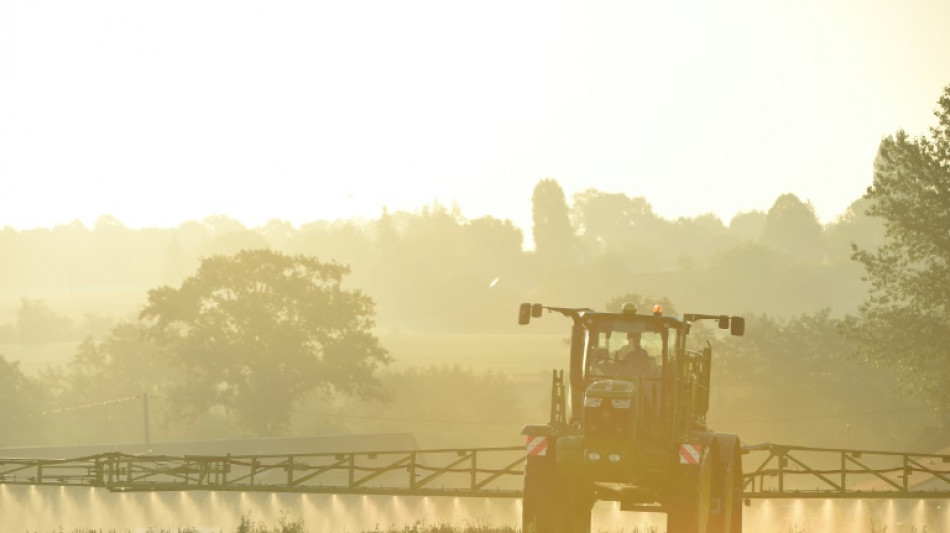
EU pushes 10-year renewal for controversial herbicide / Photo: JEAN-FRANCOIS MONIER - AFP/File

EU pushes 10-year renewal for controversial herbicide

The European Commission proposed to renew the use of the controversial and widely used herbicide glyphosate in the EU for 10 years on Wednesday, after a report saw no reason to block it.

Text size:

Glyphosate is one of the most widely used weedkillers in the world but critics point to evidence that says it may cause cancer and constitutes a risk to biodiversity.

The European Union's 27 member states will discuss the proposal on Friday. It has to be approved by a weighted majority of countries during a meeting on October 13.

The proposal comes after the European Food Safety Authority (EFSA) in July said it had not found "any critical areas of concern" preventing glyphosate from being reauthorised, sparking a backlash from environmental groups.

Environmental activists said there was scientific evidence that glyphosate may cause cancer, poison aquatic life and can be fatal to key pollinators like bees.

The previous authorisation expired in December 2022 but was extended by a year pending a scientific study of the herbicide.

The proposal would authorise its usage until December 15, 2033, double the previous five-year authorisation but less than the 15-year period initially planned.

Authorisation can be withdrawn if any development warrants a change in position.

Environmental defenders accused the EU of putting people's health at risk.

"Industry interests clearly prevail over health and the environment," said Angeliki Lysimachou, head of science and policy at ecologist group PAN Europe.

European Parliament members also hit out at the plans.

"By destroying biodiversity, glyphosate endangers our long-term food security. This proposal is irresponsible," said Green MEP Benoit Biteau.

But the European Chemicals Agency last year said scientific evidence did not justify classifying glyphosate as a carcinogen.

- Mitigating risk -

The commission's proposal says the use of glyphosate must be accompanied by "risk mitigation measures".

For example, there must be a "non-sprayed buffer strip" of five to 10 metres (16 to 33 feet) in a field and equipment used to drastically reduce "spray drift".

The EFSA agency's report noted there were gaps in the data in some areas, and "identified a high long-term risk to mammals" in 12 of 23 of the proposed uses of glyphosate.

To address this, the commission urged member states, in charge of issuing permits at a national level and setting conditions of use, to "pay particular attention" to effects on the environment.

The countries must "pay attention" to the impact on small mammals and consider whether it is "necessary" to impose mitigating measures like limiting the timing of use or maximum dose rate.

The text also now bans glyphosate's use for desiccation -- drying a crop before harvest.

Pascal Canfin, the head of the parliament's environment committee, criticised the lack of restrictions on use in the "unacceptable" proposal that was "not in accordance with the EFSA's conclusions".

Luxembourg had prohibited glyphosate in 2020 before the courts forced it to lift the ban earlier this year.

The proposal comes as the parliament and member states are bogged down in negotiations for a law that imposes binding pesticide reduction targets in the EU.

H.Dolezal--TPP