WHO sends first overland convoy from emergencies hub to Beirut / Photo: Fadel Senna - AFP
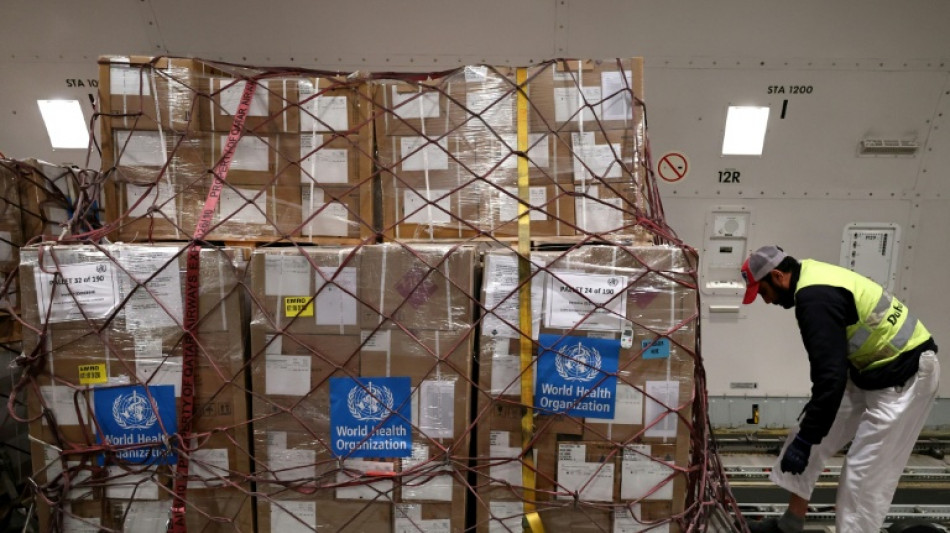
The World Health Organization has sent a first overland convoy of medical equipment bound for Beirut from its global emergency logistics hub in Dubai, WHO chief Tedros Adhanom Ghebreyesus said Saturday.
The UN health agency has dispatched 22 metric tonnes of "life-saving medicines and trauma and emergency supplies", Tedros said on X.
The supplies are enough to support treatment for 50,000 patients, including 40,000 surgical interventions, he said.
"This is the first land convoy dispatched through a multi-country land bridge from WHO's Global Logistics Hub in Dubai, which has established a new route to keep supplies moving amid growing logistics disruptions across the Middle East region," said Tedros.
The convoy is expected to reach Beirut within a week.
Lebanon was pulled into the broader Middle East war when Hezbollah began firing rockets into Israel on March 2 to avenge the killing of Iran's supreme leader Ayatollah Ali Khamenei in Israeli-US attacks.
Israel has responded with heavy strikes across Lebanon and ground incursions in the border area, killing more than 1,000 people according to Lebanese authorities.
Lebanon's health system is facing mounting pressure from rising needs, mass displacement, and critical shortages of medicines, supplies and fuel, said Tedros.
The WHO chief said more medical shipments were ready and would be sent soon to support the response in Lebanon.
Last year, the Dubai logistics hub processed more than 500 emergency orders for 75 countries around the world.
Operations were briefly suspended early in the Middle East war due to insecurity, airspace closures and restrictions affecting access to the Strait of Hormuz. The WHO then began looking at potential overland routes.
Tedros raised the plight of health workers in Lebanon, who "continue to operate under difficult conditions".
The WHO has recorded 63 attacks on health care targets in Lebanon since March 2, resulting in 51 deaths and 91 injuries.
Of those attacks, 28 impacted facilities, 23 impacted transport, 32 impacted supplies and 10 impacted warehouses.
Almost all involved the use of heavy weapons.
Though the WHO counts and verifies attacks on health care, it does not attribute blame as it is not an investigation agency.
"WHO calls for the protection of healthcare and urges all parties to choose the life-saving path to peace," said Tedros.
H.Dolezal--TPP