The Prague Post - Sweeteners may be linked to heart disease risk, study suggests

EUR -
AED 4.306924
AFN 77.800612
ALL 96.290273
AMD 447.455848
ANG 2.099694
AOA 1075.411417
ARS 1700.779101
AUD 1.772061
AWG 2.110949
AZN 1.988177
BAM 1.952553
BBD 2.365276
BDT 143.51133
BGN 1.955558
BHD 0.44213
BIF 3482.009164
BMD 1.17275
BND 1.514082
BOB 8.114505
BRL 6.462082
BSD 1.174352
BTN 106.720516
BWP 15.510205
BYN 3.441491
BYR 22985.892779
BZD 2.361882
CAD 1.615644
CDF 2638.686581
CHF 0.934332
CLF 0.027329
CLP 1072.104138
CNY 8.258444
CNH 8.255383
COP 4504.50788
CRC 586.025397
CUC 1.17275
CUP 31.077865
CVE 110.081926
CZK 24.301712
DJF 209.123105
DKK 7.471107
DOP 75.454514
DZD 151.827002
EGP 55.592317
ERN 17.591244
ETB 182.304714
FJD 2.673278
FKP 0.876507
GBP 0.876073
GEL 3.160551
GGP 0.876507
GHS 13.505539
GIP 0.876507
GMD 86.199295
GNF 10212.016669
GTQ 8.993044
GYD 245.691397
HKD 9.122608
HNL 30.940544
HRK 7.53222
HTG 153.794229
HUF 385.778924
IDR 19582.573348
ILS 3.789201
IMP 0.876507
INR 105.893078
IQD 1538.448008
IRR 49399.146865
ISK 147.995144
JEP 0.876507
JMD 188.486533
JOD 0.831511
JPY 181.991394
KES 151.226201
KGS 102.55723
KHR 4702.179931
KMF 492.554939
KPW 1055.474962
KRW 1735.464253
KWD 0.359705
KYD 0.978677
KZT 605.335863
LAK 25442.795245
LBP 105164.352354
LKR 363.536961
LRD 207.864306
LSL 19.721186
LTL 3.462825
LVL 0.709385
LYD 6.362446
MAD 10.746727
MDL 19.776195
MGA 5305.177102
MKD 61.535274
MMK 2462.499847
MNT 4159.55763
MOP 9.41009
MRU 46.575541
MUR 54.005329
MVR 18.072469
MWK 2036.313462
MXN 21.065457
MYR 4.791838
MZN 74.950137
NAD 19.721186
NGN 1704.791285
NIO 43.218125
NOK 11.959003
NPR 170.753025
NZD 2.030505
OMR 0.450919
PAB 1.174347
PEN 3.955921
PGK 4.992697
PHP 68.680904
PKR 329.11566
PLN 4.216211
PYG 7887.915449
QAR 4.281779
RON 5.091849
RSD 117.371155
RUB 92.705885
RWF 1709.856384
SAR 4.398673
SBD 9.573626
SCR 16.573783
SDG 705.411284
SEK 10.921847
SGD 1.515386
SHP 0.879866
SLE 27.90959
SLL 24591.977696
SOS 671.183772
SRD 45.359637
STD 24273.549601
STN 24.459322
SVC 10.275954
SYP 12968.817782
SZL 19.704314
THB 36.88356
TJS 10.792352
TMT 4.116351
TND 3.429397
TOP 2.8237
TRY 50.099067
TTD 7.966785
TWD 37.020192
TZS 2899.859147
UAH 49.525635
UGX 4181.046614
USD 1.17275
UYU 45.943592
UZS 14239.318971
VES 320.446921
VND 30897.848168
VUV 142.444302
WST 3.259438
XAF 654.867907
XAG 0.017685
XAU 0.00027
XCD 3.169414
XCG 2.116489
XDR 0.814446
XOF 654.870694
XPF 119.331742
YER 279.524973
ZAR 19.649713
ZMK 10556.150373
ZMW 26.981243
ZWL 377.624903
  • SCS

    0.0200

    16.14

    +0.12%

  • CMSD

    0.0150

    23.38

    +0.06%

  • RBGPF

    0.4100

    82.01

    +0.5%

  • NGG

    -0.2600

    75.77

    -0.34%

  • CMSC

    0.0400

    23.34

    +0.17%

  • GSK

    -0.4600

    48.78

    -0.94%

  • RELX

    -0.2600

    40.82

    -0.64%

  • BCC

    0.5100

    75.84

    +0.67%

  • BCE

    -0.2800

    23.33

    -1.2%

  • RIO

    0.1700

    75.99

    +0.22%

  • BTI

    -0.4500

    57.29

    -0.79%

  • JRI

    -0.0500

    13.51

    -0.37%

  • VOD

    0.0000

    12.7

    0%

  • RYCEF

    -0.3100

    14.64

    -2.12%

  • AZN

    -0.2100

    91.35

    -0.23%

  • BP

    -1.4900

    33.76

    -4.41%

Sweeteners may be linked to heart disease risk, study suggests
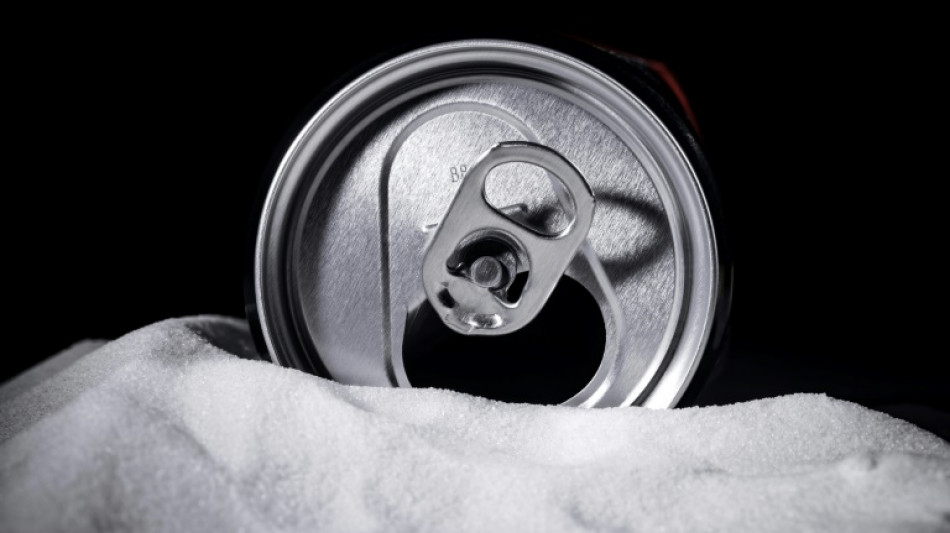
Sweeteners may be linked to heart disease risk, study suggests / Photo: JOEL SAGET - AFP/File

Sweeteners may be linked to heart disease risk, study suggests

A large study suggested Thursday that artificial sweetener could be associated with a higher risk of heart disease, however experts urged caution about the findings.

Text size:

Sweeteners are consumed by millions every day in products like diet soda, partly as a way to avoid weight gain from sugar -- but the healthiness of these substitutes has long been a matter of controversy.

Aiming to assess the heart disease risk of sweeteners, researchers at the French INSERM institute analysed the data of more than 100,000 adults in France who self-reported their diet, lifestyle and medical history between 2009-2021 as part of the NutriNet-Sante study.

Thirty-seven percent of the participants consumed artificial sweeteners, with an average intake of 42 milligrams a day -- the equivalent of one packet of sweetener or about a third of a can of diet soda.

During the nine-year follow-up period, 1,502 heart problems were recorded, including heart attack, angina and stroke.

The research, published in the journal BMJ, indicated that heart disease occurred in 346 out of 100,000 people who consume a high level of sweetener, compared to 314 per 100,000 for non-consumers.

"These results, in line with the latest WHO report published this year, do not support the use of sweeteners as a safe alternative to sugar," said INSERM's Mathilde Touvier, who coordinated the study.

An April report from the World Health Organization said that "there is no clear consensus on whether non-sugar sweeteners are effective for long-term weight loss or maintenance, or if they are linked to other long-term health effects".

Another study published earlier this year using Nutri-Net data found a correlation between cancer and sweeteners such as aspartame, acesulfame potassium and sucralose.

However such observational studies have come under increased criticism because they cannot establish the cause of the differences they find, which could come from other sources.

Naveed Sattar, a professor of metabolic medicine at Glasgow University not involved in the sweetener study, said that it "cannot answer the question posed".

"This is because there are clearly major differences in many characteristics of people who consume artificial sweeteners compared to those who do not consume any," he said.

He called for governments to fund long-term, randomised trials "to get closer to the truth".

K.Dudek--TPP