The Prague Post - Two thirds of reef sharks and rays risk extinction: study

EUR -
AED 4.114065
AFN 72.259582
ALL 90.790621
AMD 404.158249
ANG 2.004979
AOA 1027.255243
ARS 1706.277137
AUD 1.605841
AWG 2.019222
AZN 1.908846
BAM 1.955598
BBD 2.254667
BDT 138.445698
BGN 1.95798
BHD 0.422456
BIF 3355.553362
BMD 1.120234
BND 1.430852
BOB 13.181638
BRL 5.562192
BSD 1.119484
BTN 106.219027
BWP 15.421407
BYN 3.28696
BYR 21956.591821
BZD 2.251367
CAD 1.568609
CDF 2594.46299
CHF 0.92428
CLF 0.028078
CLP 1105.065844
CNY 7.480981
CNH 7.472639
COP 3552.732992
CRC 510.847228
CUC 1.120234
CUP 26.866225
CVE 110.25361
CZK 24.330933
DJF 199.339408
DKK 7.473811
DOP 68.662907
DZD 150.487454
EGP 61.701626
ERN 16.803514
ETB 182.080891
FJD 2.506193
FKP 0.837532
GBP 0.83759
GEL 2.901844
GGP 0.837532
GHS 12.979659
GIP 0.837532
GMD 82.897735
GNF 9906.976581
GTQ 8.557116
GYD 234.45578
HKD 8.78527
HNL 30.053895
HRK 7.537165
HTG 146.714844
HUF 366.731529
IDR 20269.350965
ILS 3.478944
IMP 0.837532
INR 106.361208
IQD 1697.024692
IRR 2052689.282929
ISK 136.422562
JEP 0.837532
JMD 177.661647
JOD 0.79429
JPY 175.72038
KES 145.354984
KGS 97.962924
KHR 4573.527541
KMF 492.347215
KPW 1008.210806
KRW 1482.658115
KWD 0.348046
KYD 0.932904
KZT 508.267495
LAK 25190.397759
LBP 100245.344367
LKR 371.711601
LRD 190.860284
LSL 18.546684
LTL 3.307761
LVL 0.677619
LYD 7.169259
MAD 10.995664
MDL 20.205913
MGA 5062.477032
MKD 61.598637
MMK 2352.70217
MNT 4032.758987
MOP 9.043866
MRU 44.738378
MUR 52.830672
MVR 17.319246
MWK 1941.099479
MXN 20.912986
MYR 4.576498
MZN 71.587148
NAD 18.546684
NGN 1492.219693
NIO 41.195744
NOK 10.482469
NPR 169.950444
NZD 1.961367
OMR 0.429016
PAB 1.119384
PEN 3.844503
PGK 5.013482
PHP 71.267107
PKR 309.775499
PLN 4.40251
PYG 6474.331183
QAR 4.080578
RON 5.3545
RSD 117.487863
RUB 91.430555
RWF 1653.929144
SAR 4.204519
SBD 9.045421
SCR 15.663382
SDG 673.825035
SEK 11.125947
SGD 1.430432
SHP 0.837151
SLE 25.709792
SLL 23490.757589
SOS 639.733914
SRD 42.176265
STD 23186.587781
STN 24.497469
SVC 9.794988
SYP 14565.285711
SZL 18.546084
THB 37.830725
TJS 10.315634
TMT 3.932022
TND 3.342755
TOP 2.697255
TRY 55.679905
TTD 7.606214
TWD 36.503734
TZS 2963.693842
UAH 50.679165
UGX 4931.490563
USD 1.120234
UYU 44.895362
UZS 13396.616091
VES 985.569686
VND 28949.654292
VUV 133.391269
WST 3.100456
XAF 655.957
XAG 0.020782
XAU 0.000280356799
XCD 3.02749
XCG 2.017492
XDR 0.792064
XOF 655.957
XPF 119.331742
YER 264.491333
ZAR 18.566461
ZMK 10083.456786
ZMW 22.506675
ZWL 360.71498
SSP 6436.51929
MXV 2.360302
  • RIO

    -0.7200

    83.42

    -0.86%

  • RELX

    -0.0800

    40.54

    -0.2%

  • BCC

    -0.5500

    77.74

    -0.71%

  • GSK

    -0.4600

    50.75

    -0.91%

  • BCE

    -0.4100

    20.4

    -2.01%

  • RYCEF

    -1.7500

    15.26

    -11.47%

  • NGG

    -0.7800

    81.86

    -0.95%

  • RBGPF

    2.6200

    72.77

    +3.6%

  • CMSC

    0.0000

    19.6

    0%

  • JRI

    0.0700

    10.75

    +0.65%

  • BTI

    -0.9900

    59.48

    -1.66%

  • AZN

    -1.0800

    171.49

    -0.63%

  • VOD

    -0.3800

    15.74

    -2.41%

  • BP

    1.2700

    51.32

    +2.47%

  • CMSD

    0.1800

    19.78

    +0.91%

Two thirds of reef sharks and rays risk extinction: study
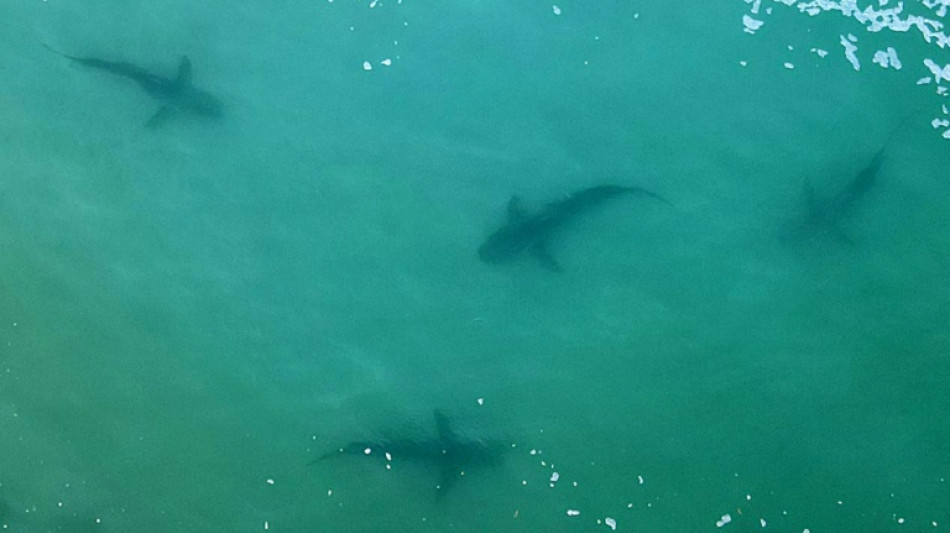
Two thirds of reef sharks and rays risk extinction: study / Photo: JACK GUEZ - AFP/File

Two thirds of reef sharks and rays risk extinction: study

Nearly two thirds of the sharks and rays that live among the world's corals are threatened with extinction, according to new research published Tuesday, with a warning this could further imperil precious reefs.

Text size:

Coral reefs, which harbour at least a quarter of all marine animals and plants, are gravely menaced by an array of human threats, including overfishing, pollution and climate change.

Shark and ray species -- from apex predators to filter feeders -- play an important role in these delicate ecosystems that "cannot be filled by other species", said Samantha Sherman, of Simon Fraser University in Canada and the wildlife group TRAFFIC International.

But they are under grave threat globally, according to the study in the journal Nature Communications, which assessed extinction vulnerability data from the International Union for Conservation of Nature (IUCN) to look at 134 species of sharks and rays linked to reefs.

The authors found 59 percent of coral reef shark and ray species are threatened with extinction, an extinction risk almost double that of sharks and rays in general.

Among these, five shark species are listed as critically endangered, as well as nine ray species, all so-called "rhino rays" that look more like sharks than stingrays.

- Keeping reefs healthier -

"It was a bit surprising just how high the threat level is for these species," Sherman told AFP.

"Many species that we thought of as common are declining at alarming rates and becoming more difficult to find in some places."

Sherman said the biggest threat to these species by far is overfishing.

Sharks are under most threat in the Western Atlantic and parts of the Indian Ocean, whereas the Indian Ocean and Southeast Asia are the highest risks for rays.

These regions are heavily fished and do not currently have management in place to reduce the impact on these species, said Sherman.

Coral reef fisheries directly support the livelihoods and food security of over half a billion people, but this crucial ecosystem is facing an existential threat.

Human-driven climate change has spurred mass coral bleaching as the world's oceans get warmer.

Modelling research has shown that even if the Paris climate goal of holding global warming to 1.5 degrees Celsius is reached, 99 percent of the world's coral reefs will not be able to recover.

At two degrees of warming, the number rose to 100 percent.

"We know coral reef health is declining, largely due to climate change, however, coral reef sharks and rays can help keep reefs healthier for longer," said Sherman.

The study was carried out by an international team of experts from universities, government and regional oceanic and fishery organisations as well as non-governmental organisations across the world.

A.Novak--TPP