Hungary protests against Chinese battery plant defy 'Orbanomics' / Photo: ATTILA KISBENEDEK - AFP
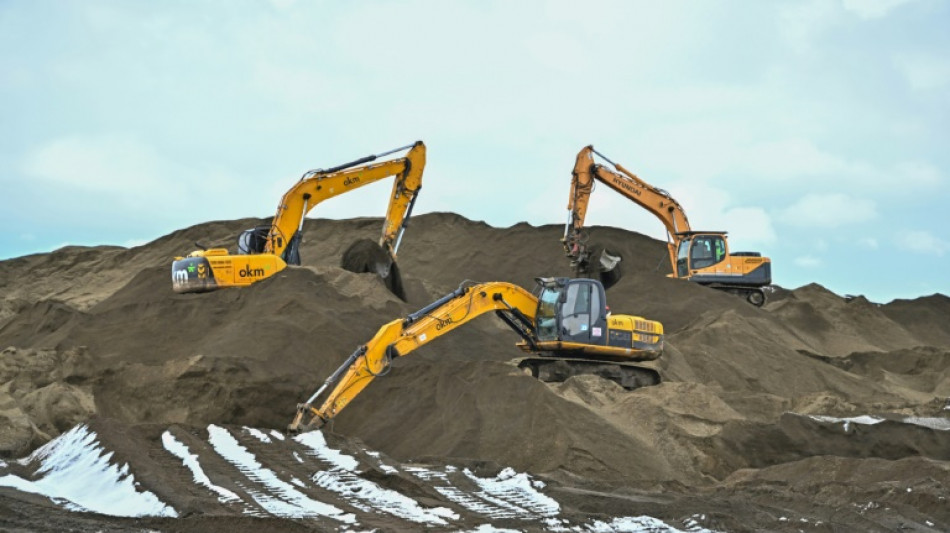
Even as diggers turned over land for one of Europe's biggest electric battery plants, environmental protesters vowed to run the Chinese project out of town.
Hungarian Prime Minister Viktor Orban is keen to woo foreign manufacturers and promote the country as a global hub for electric vehicle (EV) batteries.
The market for greener vehicles is expected to surge in response to consumers' worries about climate change, with top carmakers shifting towards developing less polluting vehicles.
But the groundswell of opposition in Hungary's second biggest city of Debrecen is a rare grassroots challenge to the nationalist premier.
Chinese giant CATL is pouring 7.3 billion euros ($7.8 billion) into building a lithium-ion EV battery plant, under a deal announced in August.
Rancorous public hearings followed in January, with angry locals confronting officials over worries about the giga-factory's demands for water and energy, and pollution risks.
"Our most basic need is clean water, clean air and healthy land, not batteries," said protest co-organiser Julia Perge, a 56-year-old civil activist.
Alarm and resistance only grew after last summer's drought, which dried up a lake near the city, a longtime stronghold of Orban's ruling Fidesz party.
Hungary has more than 20 EV battery plant projects under way and hopes to become the EU's second biggest producer in GWh (gigawatt per hour) terms by 2030 behind Germany.
Some of these other sites, too, have been targeted by protesters voicing similar environmental fears.
- 'Decisive' for future -
The government drive is in line with priorities of the European Union, which aims to produce a quarter of the world's batteries by 2030, compared to just three percent in 2020.
The CATL 100GWh factory in Debrecen will reportedly produce enough to power more than a million new cars annually. It is expected to employ 9,000 workers.
The project also tallies with Orban's longstanding policy to look East -- offering lucrative tax breaks, infrastructure and job creation subsidies to lure Asian factories.
It is a pillar of his overall economic strategy -- dubbed Orbanomics by analysts -- but Hungary’s economic performance is sliding, hit by record inflation which is among the highest in the EU and a weakening local currency.
Defending the new Chinese factory on the same day as a protest last weekend, Foreign Minister Peter Szijjarto stressed there was "huge competition" to attract such investment.
"This will be the decisive industrial sector of the future, economic growth will go where these (EV) investments go," he said.
German carmakers Audi and Mercedes already have plants in Hungary and have been switching their focus to electric vehicles, while BMW recently also chose Debrecen for a two-billion-euro EV plant.
- 'Strictest environmental rules' -
With placards reading "Without water, there is no life!", hundreds of flag-waving protesters filled Debrecen's main square on Saturday demanding a halt to the plant.
"People living here were not properly informed, or asked if they wanted this," software engineer Gabor Bogos, 42, complained.
CATL told AFP it was "open for questions and comments" from the local community.
In an emailed comment, it said that it "strives to become a partner in the sustainable development of Debrecen and the wider region".
The government expects the factory to comply with the "strictest possible environmental protection rules", Orban's chief of staff Gergely Gulyas told reporters on Thursday.
He said that many of the protesters' concerns were "based on fake news about the factory".
- 'False' promise -
The promise of new jobs resulting from the factories has also been met with scepticism.
Analysts say they will likely be filled by migrant workers from Asia due to a local labour shortage, as has happened at other new plants.
"The promise that young people will stay local with the construction of factories is false," said professor Dora Gyorffy at Budapest's Corvinus economic university.
State support should be directed at Hungary's crumbling education, social care and health sectors, she said.
Such plants "are not only environmentally destructive, but also do not help economic catch-up" as Hungary itself does not develop batteries, she told AFP.
But few believe the protest will stop the construction -- or that it will grow into a wider wave of discontent against Orban.
"An objection to a particular local issue cannot be easily transformed into a general objection to the government nationally," political analyst Bulcsu Hunyadi said.
M.Jelinek--TPP