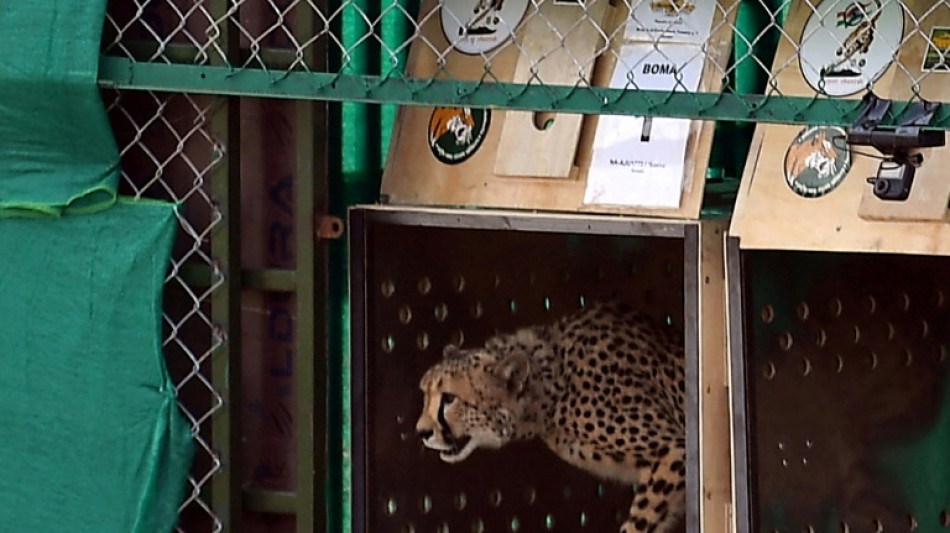
Top Indian wildlife official removed after 8 cheetahs die / Photo: - - PIB/AFP
A top Indian wildlife official has been removed after a scheme to relocate cheetahs from Africa saw eight felines die, raising questions about the high-profile project.
Asiatic cheetahs were declared extinct in India in 1952 but their African cousins were reintroduced last year as part of a plan championed by Prime Minister Narendra Modi.
Eight cheetahs were brought in from Namibia, followed by another 12 from South Africa in February, with Modi presiding over the release of the first arrivals at the Kuno National Park in Madhya Pradesh state.
Eight cheetahs have died in the last four months, with wildlife authorities attributing the deaths to natural causes.
But the top wildlife official in Madhya Pradesh, Jasbir Singh Chauhan, was transferred from his post by the state forest department on Monday, it said in a statement without giving reasons for his removal.
Indian media reports have linked the transfer to the cheetah deaths, citing sources saying that there were concerns over the project's management.
Of the eight cheetahs that died, five were translocated animals, plus three of the four cubs born since their arrival -- renewing concerns among experts about the project's viability.
On Sunday, the environment ministry had said it would be premature to declare the programme a success or failure "since cheetah reintroduction was a long-term project".
It also said that global experience, particularly from South Africa, showed that the initial phases of reintroductions resulted in more than 50 percent mortality.
But wildlife conservationist Praveen Bhargav told AFP Tuesday that the cheetah reintroduction programme was bound to fail as many fundamental issues had been ignored.
"I believe the prime minister has unfortunately been misled by some bureaucrats and experts," he said.
"We neither have the expansive grassland habitats that cheetahs need nor other ecological conditions to attempt such a complicated reintroduction," he said.
"This was a very good, headline grabbing event but the harsh reality kicks in, as we are now witnessing after eight cheetahs have died."
- 'Disappointing' start -
Arjun Gopalaswamy, a wildlife and statistical ecologist who studies large carnivores, said there should be more transparency about the causes of death.
Media reports have cited officials saying some of the animals could have died as a result of infections caused by their radio tracking collars.
The project's start was "disappointing", Gopalaswamy told AFP, as seven out of the eight deaths had happened inside the enclosures "where such incidents were least anticipated".
With one possible exception -- a female killed by her partner while mating -- a lack of information from authorities "obscures the primary causes behind all the deaths", he said.
"From a scientific perspective, this ambiguity is worrisome as it prevents meaningful learning from these occurrences," he said.
Scientists from the Cheetah Research Project at Leibniz-IZW in Namibia had earlier said the relocation programme ignored "spatial ecology", as the Kuno National Park was much smaller than the spaces the big cats usually need to thrive.
The reintroduction is the first intercontinental relocation of cheetahs and the programme aims to bring in about 100 of the animals over the next decade.
Cheetahs are one of the oldest big cat species, with ancestors dating back about 8.5 million years, and they once roamed widely throughout Asia and Africa in great numbers.
But today, after their extinction from many countries across the Middle East and Asia, only around 7,000 remain, primarily in the African savannahs.
H.Vesely--TPP