Belgium struggles with spread of 'invasive' raccoons / Photo: JOHN THYS - AFP
Belgian forest ranger Thierry Petit can barely keep pace with call outs to deal with raccoons, a North American species branded an invasive threat to Europe's indigenous wildlife.
Authorities admit it is too late for any cull to eradicate the entire population of more than 50,000 that has made its home in the forested hills of southern Belgium.
So Belgium may just have to live with the new arrivals, while battling to control their numbers and protect vulnerable local fauna from being eaten or catching diseases.
"We can't now respond to all the requests," says Petit, a ranger in the Barriere Mathieu woods, near Tenneville.
"We can't come out if it's just someone reporting raccoons in their garden. We'll reduce the population where it poses a threat to the Black Stork or the Sand Martin -- or where we can really protect a habitat."
Native to the North America, where the agile omnivore has adapted to suburban life and earned the dubious nickname "Trash Panda", raccoons invaded Belgium in an east-west pincer movement.
One group spread from Germany where they had been introduced from the Americas in the 1930s under Nazi rule as a game animal for hunters and as a source of fur.
Another population arrived from France, where they had established a population in the 1960s around a US airbase in the Aisne region after American airmen released animals brought over as mascots.
"From around 2005, we started finding tracks alongside waterways and dead racoons as roadkill, suggesting a growing population," said biologist Vinciane Schockert.
"They have also benefited from a series of mild winters," she added.
Schockert is part of a team measuring the effect on the local species of the new arrival, which is a good climber and a cunning forager, notably entering human homes through cat flaps.
The tawny owl is at risk, along with the white-throated dipper, whose riverside nests are low to the ground and an easy target for egg-loving raccoons.
Authorities in Wallonia, French-speaking southern Belgium, have launched a plan of action.
"It's a cute looking beast," admits Celine Tellier, Wallon environment minister.
"Unfortunately invasive exotic species ... are one of the five main causes of degradation of biodiversity around the world," she told AFP.
"Today the species is so widespread in our territory that we must learn to live with it, but at the same time learn to manage it in the places where it poses the most problems and avoid multiplying its spread."
- Trapped then shot -
Her advice for local communities: Don't feed raccoons and protect your home from break-ins at night.
What about just killing them? The Green minister is hesitant. When it's necessary to "destroy certain individual racoons" it must be done in the most "ethical" way possible.
Tellier's government is in talks with the main Wallon animal rights group about culling methods.
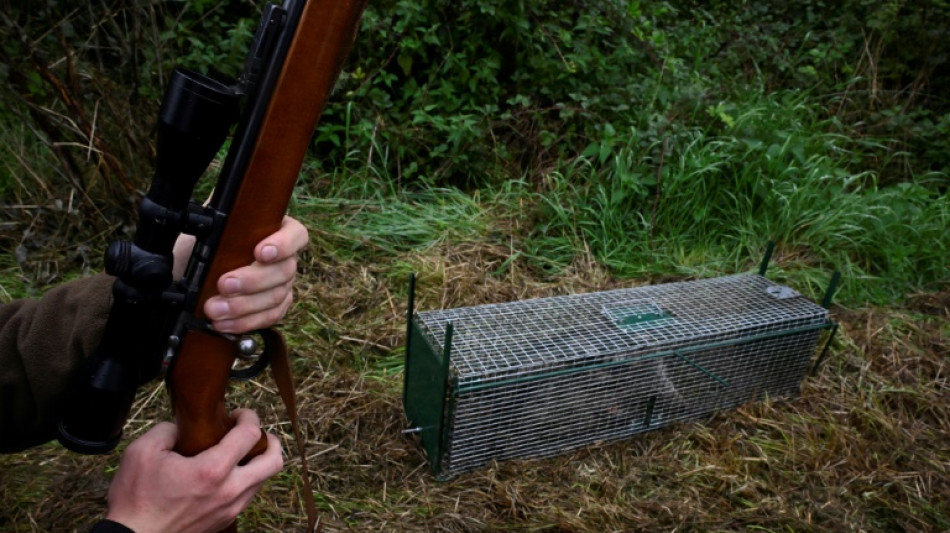
Hunters like 18-year-old Simon Taviet, a student of agriculture and the environment with a hunting rifle on his shoulder, already have their own technique.
Walking up to his cage trap in the woods near Ciney last week, he found a trapped raccoon. The prisoner was quickly dispatched.
"We limit the number because of they can spread disease and damage some crops," he told AFP. He himself has been bitten by a raccoon that got into a fight with his dog, during a hunt.
Benoit Petit, president of Belgium's biggest hunters' association the Royal Saint-Hubert Club, says Wallonia should organise a full-scale trap and cull operation to avoid landowners taking matters into their own hands.
"If a citizen is fed up with them, he'll trap them," he reasons. "And what comes after that, if he hasn't got a firearm or he doesn't want to pay a vet for a lethal injection?
"We need to limit both the demographic explosion and the geographical spread."
Q.Fiala--TPP