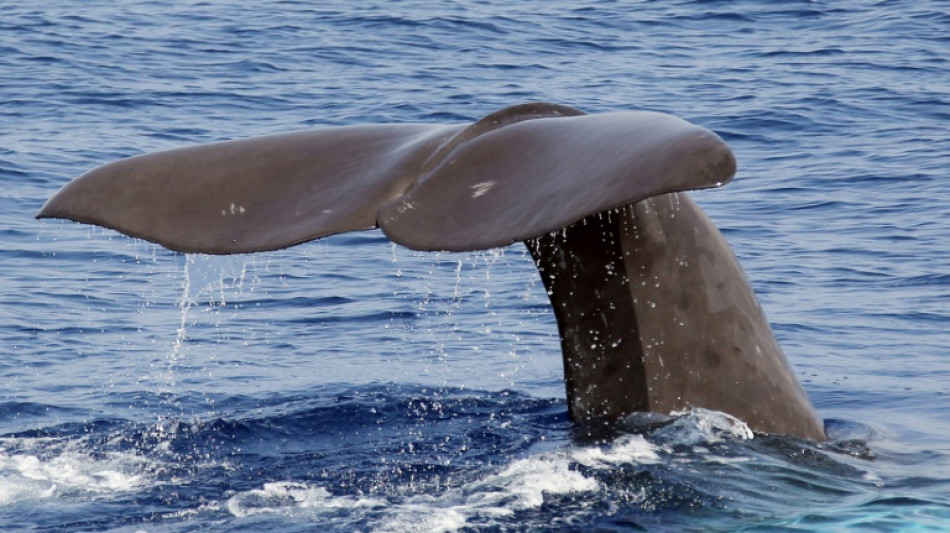
Dominica to create world's first sperm whale reserve / Photo: VALERY HACHE - AFP/File
Dominica is set to create the world's first sperm whale reserve, designating a swath of ocean where large ships and commercial fishing are restricted and visitors can swim alongside the gentle marine giants.
The Caribbean nation said it hoped the new protected zone of 300 square miles (nearly 800 square kilometers) off its western coast -- roughly the size of the island itself -- would boost valuable tourism revenue but also help sequester more carbon in the deep sea, an often overlooked benefit of whale conservation.
"The 200 or so sperm whales that call our sea home are prized citizens of Dominica," said Prime Minister Roosevelt Skerrit in a statement Monday. "Dominica is honored to establish the first Sperm Whale Reserve on our planet."
Sperm whales are the largest toothed predators on Earth, living in matrilineal societies with distinct cultures and dialects.
Growing up to 50 feet (16 meters) long, they are found across the globe, from Iceland to New Zealand. But they have a particular affinity for the majestic blue waters off Dominica, which provide critical feeding and nursing grounds.
Marine biologist Shane Gero told AFP he began studying the Dominica whales in 2005, with his research showing the population was experiencing a decline as a result of ship strikes and unintentional entanglements in fishing gear as well as plastic pollution.
"We're losing individual animals and the families that researchers and the operators who do whale watching here know very well," he said. Individuals live up to 90 years, and the Dominican whales communicate in a specific series of clicks thought to convey: "I'm from Dominica, are you?"
Several Dominican whales have been given names, such as "Can Opener," "Fingers" and "Hope," and remember certain tour operators they've come to know.
- Ecotourism and climate benefits -
The reserve's boundaries were defined based on studies of where the roughly 50 whale families find food and shelter, though a corridor will be carved out to allow ships to dock at Roseau, the island's capital and largest city, Francine Baron, CEO of the Climate Resilience Execution Agency for Dominica told AFP.
Success or failure will hinge on stringent regulations and implementation. A law required to operationalize the reserve should be passed by Dominica's parliament "within weeks," said Baron, a former foreign minister, promising there would be "legislative teeth."
Vessels 60 feet or longer would likely be prohibited, while small-scale, artisinal fishing would be allowed to continue.
Kristen Rechberger, CEO of Dynamic Planets which is advising the government, told AFP the idea would be to do something akin to the mountain gorilla tourism program of Rwanda, where foreign visitors pay $1,500 to hike a whole day then spend an hour with the primates.
Conserving sperm whales also carries climate benefits that derive from their feces.
Sperm whales dive to hunt squid, then return to the surface where they breathe, rest and defecate. Their nutrient-rich feces foster plankton blooms which capture carbon dioxide from seawater. When the plankton dies it becomes a carbon sink, helping mitigate impacts of climate change.
Assuming 250 whales in Dominica's waters, each year they lock up to 4200 metric tons of carbon, equivalent to keeping 5,000 cars off the road -- significant for a small island nation, said Enric Sala, founder of nonprofit Pristine Seas which is also advising Dominica.
"So the whales are part of the climate resilience plan of Dominica," he said. "Whale poop, who would have thought?"
G.Turek--TPP