COP28 host UAE ready for rising heat risk, says minister / Photo: Karim SAHIB - AFP
The United Arab Emirates is ready for soaring temperatures that are feared to make parts of the Gulf uninhabitable by the end of the century, the oil power's climate change minister told AFP.
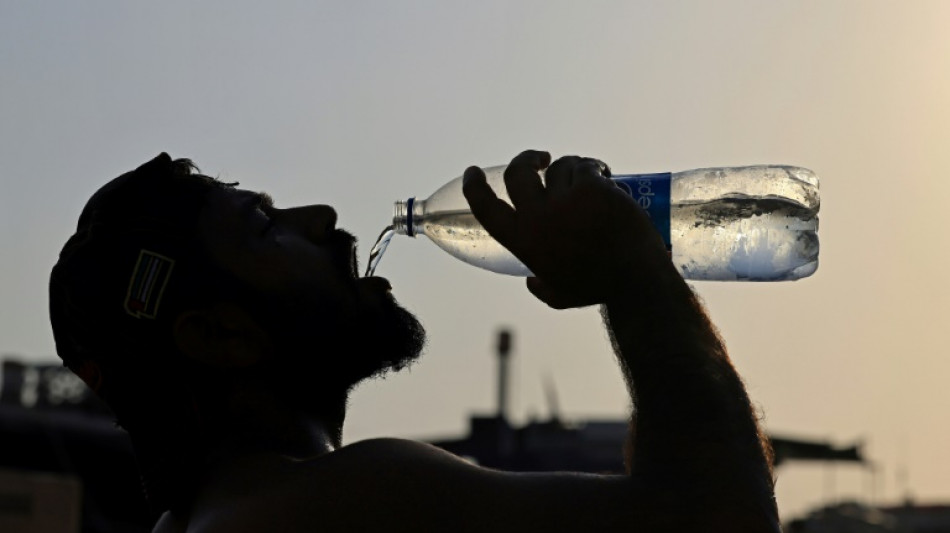
Long experience of the harsh desert summers has taught the country to live with temperatures that regularly flirt with 50 degrees Celsius (122 degrees Fahrenheit), she said.
"We've actually been on the journey of adaptation for many years now," Mariam Almheiri, the UAE's minister of climate change and environment, said in an interview ahead of the COP28 United Nations climate talks in Dubai.
"When you look at the temperatures now currently in the summer, there are people from around the world that say: 'How do you live in that temperature?'
"But actually we can stay here during the summer and we live fine. We're able to do the activities we want to do. It's just we have already adapted since many, many years."
The UAE's scorching summers, when many flee for cooler climes and the streets empty, look set to worsen due to climate change, various studies show.
The Gulf region's extreme heat and high humidity are a dangerous mix as in such conditions the human body struggles to cool itself by evaporating sweat on the skin.
The combination is measured by a thermometer wrapped in a wet cloth to calculate the "wet bulb temperature" -- the lowest possible through evaporative cooling.
The Gulf is one of the few places to have repeatedly measured wet bulb temperatures above 35C (95F), the threshold of human survivability beyond which heat stress can be fatal within hours, regardless of age, health and fitness.
It is for this reason that experts warn accelerated climate change will make parts of the Gulf region unlivable by the end of this century.
- Carbon footprint -
As global temperatures tick higher, with this year on course to be the hottest on record, the UAE is changing its building designs and urban planning to create cooler living environments, even outdoors, Almheiri said.
More parks and vegetation, including a plan to plant 100 million mangroves -- an effective carbon sink -- by 2030, will also mitigate the heat, she added.
"People don't realise that actually, already more than 70 percent of our economy is non oil-based. We have actually already set up a lot of the renewable energy infrastructure," she said.
"We've also made sure that buildings are set or start to be built at a certain level to take care of any sea-level rise that the models are looking like it might come up soon."
The high temperatures mean air-conditioning is used nearly year-round in the UAE's homes, offices, malls, cars and even bus stops, a key factor in making its carbon footprint one of the world's biggest per capita.
Other contributors are the fleets of SUVs, muscle cars and sports vehicles that clog the multi-lane highways, scant mass transport, and energy-heavy attractions such as an indoor ski slope with artificial snow that is kept at a steady minus -2C (28.4F).
- 'Pro-climate, pro-growth' -
Despite these challenges, the UAE is targeting domestic carbon neutrality by 2050 -- not including exported oil and gas -- by ramping up nuclear, solar and wind energy, extending metro and rail services, and promoting electric vehicles.
The UAE's Masdar -- chaired by COP28 president and state oil giant CEO Sultan Al Jaber -- is one of the world's biggest renewable energy companies, signalling the country's ambitions to lead the energy transition.
Changing blase attitudes to energy and resources, in a multicultural, multi-lingual, often transient environment that is 90 percent expatriate, is one of the key tasks for the UAE, Almheiri said.
"We look at it sector by sector, bringing in the private sector, bringing in community members, academia, and really making sure that youth are also part of this conversation, to understand how we can decarbonise these sectors, but how also individuals can do their part as well," the minister said.
"I myself always talk about stories that I do at home, whether it's trying to make sure you don't put any edible food in the bin, being a little bit more conscious about what you're buying, where is it sourced from," she added.
"The net zero strategy that we have just announced... it's a pathway that's pro-climate, pro-growth, but it also means that there needs to be mindset change in the way we do business and the way we live," Almheiri said.
B.Hornik--TPP