Stoltenberg to leave NATO after battle to keep US in and Russia out
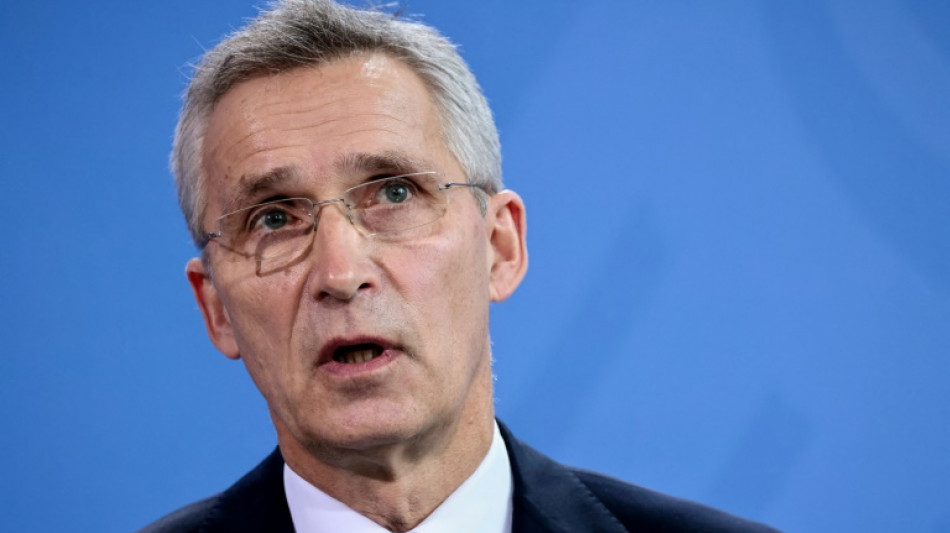
NATO's outgoing leader Jens Stoltenberg will leave the alliance late this year after a diplomatic battle to hold it together against outside threats and the clashing egos of its national leaders.
From December, the 62-year-old economist will again wrestle with balance sheets in his new role as head of Norway's central bank, after eight years of high international drama.
Stoltenberg's extended mandate presiding over the alliance has not been an easy period for NATO since he took over in 2014, and independent observers credit the former Norwegian prime minister with holding the alliance together.
Russia's President Vladimir Putin has mobilised a huge force to try to force the alliance to drop its open door to eastern and central European members, which during the Cold War had been held in Moscow's orbit.
But -- even as he kept an eye on external threats from Russia and Afghanistan -- Stoltenberg has also had to tread carefully to keep rival leaders within the Atlantic alliance on board.
Former US president Donald Trump, who resented what he saw as European freeloading in an alliance dominated by the big-spending American military, famously declared NATO "obsolete".
Turkey's President Recep Tayyip Erdogan dismissed his allies' protests and bought a Russian air defence system incompatible with Western equipment -- while engaged in a maritime standoff with NATO ally Greece.
And France's Emmanuel Macron, frustrated by resistance to his push for greater European autonomy and sovereignty, snapped that the alliance was experiencing strategic "brain death".
- Didactic style -
Before coming to Brussels, when he served as Norway's prime minister, Stoltenberg was known for having good relations with Putin and Russia's former prime minister Dmitry Medvedev.
During his decade in power, the two countries -- which share a narrow Arctic border -- signed agreements on the their frontier in the Barents Sea and on visa exemptions for their border populations.
An economist by training, the former Labour Party head had never shown any particular fondness for defence or security matters -- but his experience left him with a strong international network.
Before he joined government there was little to suggest he would lead a military alliance.
In Brussels, he is known for his strait-laced appearance and unsmiling didactic style -- but as a long-haired teenager in the 1970s, he threw stones at the US embassy in Oslo in reaction to the Vietnam War.
Born into a political family -- his father was minister of defence and then of foreign affairs, his mother a deputy minister -- the married father-of-two also devoted the majority of his career to politics.
After entering parliament in 1991, he rose rapidly, becoming minister of energy and then of finance, before being named the country's youngest prime minister in 2000, the day after his 41st birthday.
Stoltenberg won international respect with his measured response to Norway's worst peace-time massacre.
When right-wing extremist Anders Behring Breivik killed 77 people on July 22, 2011, he called for "more democracy" and "more humanity".
When it came time for him to seek the NATO job, he was backed by centrist heavyweights German chancellor Angela Merkel and then US president Barack Obama.
- 'Russians out, Americans in' -
In Brussels, cynical observers often quip that any NATO secretary general's core task is to "Keep the Russians out and the Americans in" -- and for a while that was Stoltenberg's main challenge.
Trump came to the December 2019 NATO summit in Watford, England, ready to break up the alliance that Washington had led since it was formed in 1949.
It was Stoltenberg who talked him down, experts say.
According to Jamie Shea, a former senior NATO official turned think tank expert, Stoltenberg convinced Trump that his demands for Europe to shoulder more of the financial burden were paying off.
"He kept Trump in NATO, which was far from certain. He was one of the few European leaders that Trump was positive about," Shea told AFP, crediting the Norwegian with moving on from an "existential situation".
Stoltenberg also deftly managed the prickly Erdogan, having decided -- in Shea's words -- it was better to "keep the family together even if it meant having to deal with an authoritarian".
Trump's departure lifted one threat, but NATO's next challenge again showed the strains in the trans-Atlantic relationship.
Amid the debacle of the rushed departure of the remaining US and NATO troops from a collapsing Afghanistan last year, European capitals and Stoltenberg's NATO headquarters found themselves left in the dark by American decision-making.
"It is the Afghan affair that dominates the mandate and it cannot be said to be a success," Elie Tenenbaum, an analyst at the French Institute of International Relations.
But this year's crisis, with Putin deploying more than 100,000 troops to Russia's Ukraine border, to occupied Crimea and to Belarus to intimidate Kiev has again given NATO a central role in events.
Moscow clearly wanted to split the allies, disregarding European nations and the European Union to demand direct talks with Washington. But Stoltenberg's NATO ended up marshalling a tough diplomatic response.
NATO members united behind a stern reply to Putin's demands, dismissing calls to block future membership bids.
O.Ruzicka--TPP