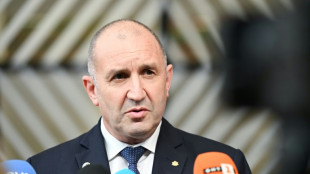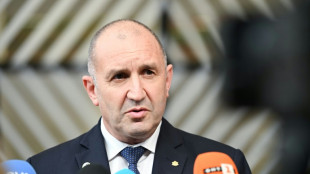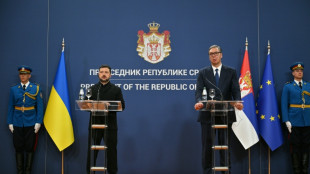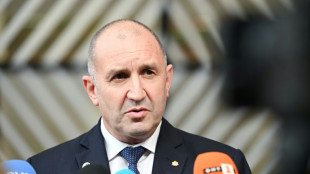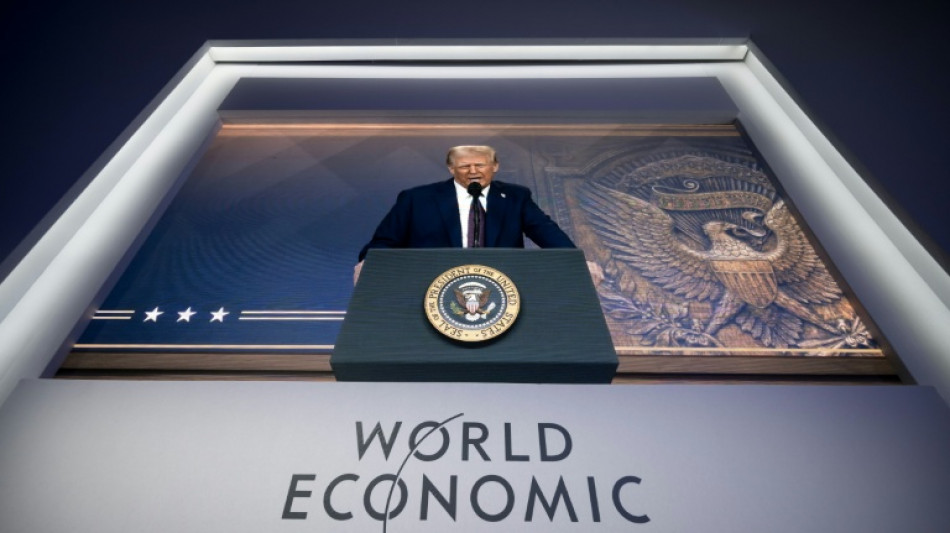
Davos braces for Trump's 'America First' onslaught / Photo: FABRICE COFFRINI - AFP
All eyes will be on Donald Trump next week as politicians and business leaders head to the World Economic Forum, wondering how to square the mercurial US leader with the Davos creed of open markets and multilateralism.
After a year of roiling the liberal international order since his re-election, Trump will descend on the Swiss ski resort for an address Wednesday, at a meeting whose theme is "A Spirit of Dialogue".
"We're pleased to welcome back President Trump," Borge Brende, the forum's chief executive, told an online press conference ahead of the Davos summit, six years after Trump's previous in-person appearance during his first term.
He will bring along the largest US delegation ever, Brende added, setting the stage for private meetings on geopolitical flashpoints from Ukraine and Venezuela to Gaza, Greenland and Iran.
"The interest is to come together at the beginning of the year to try to connect the dots, decipher, and also see areas where we can collaborate," Brende said.
"Dialogue is not a luxury. Dialogue is really a necessity."
But after Trump's protectionist tariff blitz and marked disdain for traditional US allies since last year's re-election, the chances of forging common strategies for the world's biggest challenges appear slim.
Brende acknowledged that "our annual meeting is taking place against the most complex geopolitical backdrop since 1945".
For Karen Harris, an economist at the consulting firm Bain & Co., "2025 will ultimately be seen as the year in which neoliberal globalisation ended and ... the post-globalisation era began."
It's a shift in which "the US prioritises national security, its own security, and uses the economy as a tool to achieve some of those goals", she said.
"And that, by the way, is a very Chinese view of the economy as well."
China is sending Vice Premier He Lifeng to Davos, while EU Commission chief Ursula von der Leyen and Ukraine's President Volodymyr Zelensky will also attend.
Six of the Group of Seven leaders will also make appearances -- only Japan will be absent.
Trump is bringing with him at least five key secretaries including Secretary of State Marco Rubio and Treasury Secretary Scott Bessent, Brende said, as well as Steve Witkoff, his special envoy for the Middle East and Ukraine.
- 'Broad rejection' -
Addressing Davos by video last year just days after his second inauguration, Trump had warned nations to shift manufacturing to the US or face punishing tariffs -- a direct repudiation of decades of ever-opening trade.
In his latest upending of the global order in place since World War II, Trump in early January pulled the United States out of 66 international organisations including around half linked to the United Nations.
This rejection of cooperative partnerships "is precisely a broad rejection of multilateral institutions, on the view that international cooperation is inconsistent with 'winning' a global competition that is seen as a zero-sum game," said Philippe Dauba-Pantanacce, head of geopolitical analysis at the British bank Standard Chartered.
As a result, even if global trade manages to adapt to Trump's tariff frictions, "we may end up with a world that continues its globalisation, maybe with some adaptation and changes but... increasingly without the US", Dauba-Pantanacce said.
A case in point is the European Union's agreement this week to the Mercosur trade deal with South American countries, or China's shift of exports from the US to other parts of the globe.
With his tariffs, trade "is a subject where Trump has made a lot of noise", Pascal Lamy, former head of the World Trade Organization, told AFP.
"But unlike what has been the case with geopolitics, whether it's Ukraine, China, Iran or Venezuela, the impact on the global economy has been limited so far," he said.
Among the 850 CEOs or board chairs set to attend are Nvidia's Jensen Huang and Microsoft's Satya Nadella.
B.Barton--TPP