CMSC
0.0300
Iran's Revolutionary Guards said Wednesday they had total control of the Strait of Hormuz, a key waterway for global energy transit, as Israel launched a new wave of strikes on the Iranian capital.
In Lebanon, the Israeli military told residents south of the Litani River to move north, warning that the army was "compelled to take military action" against Hezbollah in the area.
Governments around the world scrambled to evacuate citizens stranded by the war in the Middle East, with Iran expanding a missile and drone barrage on the fifth day of a war that sent global shares sinking.
The war sparked by a US-Israeli attack that killed supreme leader Ayatollah Ali Khamenei has seen Iran lash out with missile and drone strikes from Israel across the Gulf, and has also drawn in Tehran's proxy Hezbollah in Lebanon.
Cities like Dubai and Riyadh, which have long taken pride in their safety from the tumult of the region, have been drawn in, with the growing chaos sparing few countries in Iran's vicinity.
A ballistic missile launched from Iran, heading towards Turkish airspace through Iraq and Syria, has been destroyed by NATO air defence systems, Turkish officials said on Wednesday.
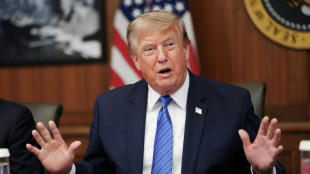
With energy prices already spiking, President Donald Trump had said the US Navy was ready to escort oil tankers through the crucial Strait of Hormuz.
Earlier, the Revolutionary Guards warned ships against entering the strait, and major shipping firms have already suspended transit through the waterway with maritime agencies reporting several ships attacked.
- 'War situation' -
In Lebanon, which Hezbollah dragged into the war, Israel expanded its air strikes, targeting the area around the presidential palace and the militant group's south Beirut bastion, killing 11 people according to Lebanese authorities.
An AFP journalist reported a fresh explosion in the northeast of the Iranian capital, as Iran announced that Khamenei's funeral had been postponed.
Israel has already vowed to assassinate any successor to Khamenei, while Iran has said an appointment would be made "at the earliest opportunity".
"We are close, but the situation is a war situation," Ahmad Khatami, a member of the Assembly of Experts, told Iranian state TV.
- Bigger than 'shock and awe' -
The Israeli military said it had begun "broad scale strikes" in Tehran on Wednesday.
Earlier, US President Donald Trump said the US had "knocked out" Iran's navy, along with its air force and radar systems, while the US military said it had hit nearly 2,000 targets since first launching strikes.
Admiral Brad Cooper, commander of US forces in the region said the first day's barrage had been bigger than the so-called "shock and awe" assault on Saddam Hussein's Iraq in 2003.
Trump and Israeli Prime Minister Benjamin Netanyahu have urged Iranians to rise up but the US leader also said regime change was not the goal.
The assault came weeks after Iranian authorities clamped down on mass protests, killing thousands according to rights groups.
- Salvos target Gulf -
Saudi Arabia said it intercepted two cruise missiles as well as a drone targeting its huge Ras Tanura refinery, while drones struck near the US consulate in Dubai, starting a fire, and a missile hit the US military base at Al-Udeid in Qatar.
The UAE and Qatar both said they had intercepted drone and missile salvos on Wednesday, with Abu Dhabi saying it had been targeted by three ballistic missiles and 129 drones, intercepting all but eight drones.
Kuwait has also been struck, with the health ministry announcing the death of an 11-year-old girl killed after she was hit by falling shrapnel.
The Pentagon identified four of six US troops killed in the war so far, saying they were hit by a drone attack in Kuwait.
The United States encouraged all Americans to leave the region if they could find commercial flights, though air travel has been severely disrupted, while governments including Britain and France sent chartered flights to get their citizens out.
The war was taking a growing toll on Lebanon, from where Iran-backed militant group Hezbollah launched drones and rockets at Israel in retaliation for Khamenei's killing.
An air strike hit a hotel in Hazmieh near Beirut on Wednesday, the first reported Israeli attack on the predominantly Christian area in Beirut's suburbs, near the presidential palace and several embassies.
The southern suburbs of Beirut, a Hezbollah stronghold, were targeted again on Wednesday morning, following an evacuation order from Israel's military.
Israel then warned all residents south of the Litani River, an area of hundreds of square kilometres (miles), to leave their homes, saying it was "compelled to take military action".
In Iraq, meanwhile, the country's top Shiite cleric, Iranian-born Grand Ayatollah Ali Sistani, denounced the war as "unjust" and called "on all Muslims and free people around the world to denounce" the war and "stand in solidarity with the Iranian people."
A key figure in Iraq, Sistani's influence extends to millions of followers across the Muslim world.
- 'You'd think no one lived here' -
According to the Iranian Red Crescent, the US and Israeli attacks have killed 787 people in Iran, a toll that could not be independently confirmed by AFP.
Iran repeatedly vowed to inflict a heavy price in retaliation, with the judiciary saying that those who aid the country's enemies "will be dealt with decisively and severely".
In Tehran, residents who have not fled remained shut away in their homes, fearing the US-Israeli bombardment.
The Iranian capital is normally home to around 10 million people, but in recent days "there are so few people that you'd think no one ever lived here", said Samireh, a 33-year-old nurse.
burs/dcp/ser
W.Urban--TPP