India's strategic $9 bn megaport plan for pristine island / Photo: R. Satish BABU - AFP
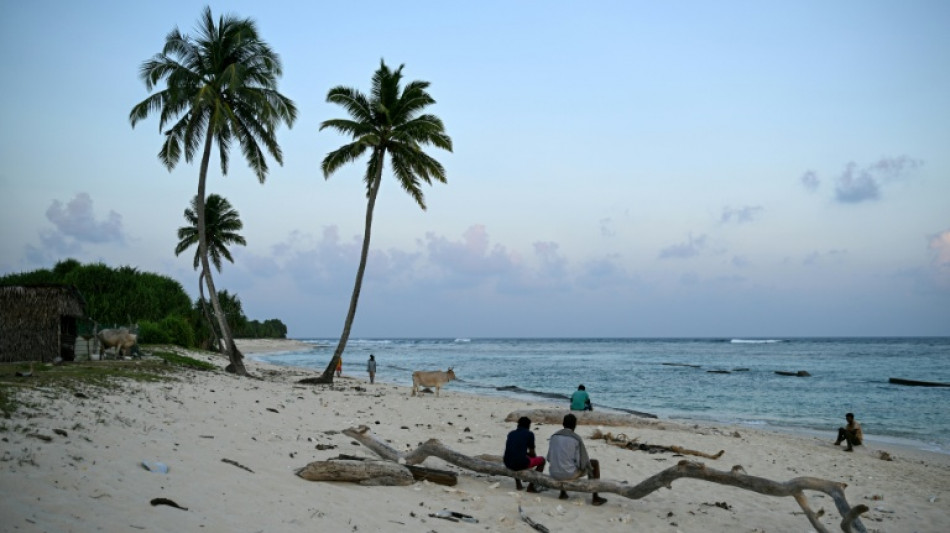
On a remote island in the Andaman Sea, bulldozers are tearing into pristine forests that are home to one of Earth's most isolated people -- part of India's ambition for a $9 billion megaport, airport and city.
Designed to rival China's investments around the Indian Ocean, New Delhi's colossal project will be built on Great Nicobar Island, a site offering a naval presence far closer to Southeast Asia than India's mainland.
Authorities promise sweeping economic transformation at the entrance to one of the world's busiest waterways -- the Strait of Malacca, through which up to 30 percent of global trade passes.
But secretive military moves are also afoot, with plans for upgraded or new runways for both military and civilian use.
"The Great Nicobar Island Project, which is of strategic, defence and national importance, transforms the region into a major hub of maritime and air connectivity in the Indian Ocean region," Prime Minister Narendra Modi said in September.
Access to parts of Great Nicobar requires special permits, particularly for any contact with Indigenous groups.
Roads, bridges and docks will be built on the island, opening it up for port activity and tourism, and serving expanded military installations.
But the project, nearly 3,000 kilometres (1,860 miles) from New Delhi, has also sparked opposition from residents and environmentalists.
Roughly 95 percent of the 910 square kilometre (351 square mile) island, encircled by lagoons and coral reefs, is biologically under-explored forest rich in unique species.
Nearly a fifth of the land will be cleared for the project.
Rights group Survival International warned that the island's Indigenous groups face "genocide in the name of 'mega-development'".
Totalling around 1,200 people, these include the Nicobarese as well as the Shompen, hunter-gatherers who shun contact with outsiders, who Survival describes as "one of the most isolated peoples on Earth."
- Strategic -
The government insists it has met all "green" requirements and has pledged to protect Great Nicobar's peoples, communities, as well as its unique flora and fauna, by establishing protected zones.
India's environmental court has said that it did "not find any good ground to interfere" with the plans.
"We have also noted... the area is located in China's 'string of pearls' strategy which is sought to be countered by Indian authorities under India's 'Act East' policy," the court added.
Beijing has long been accused of seeking to develop facilities around the Indian Ocean -- a so-called "string of pearls" -- to counter India's rise and secure its own economic interests.
Environment Minister Bhupender Yadav has said that the project "poses no threat to the island's tribal groups, does not come in the way of any species, and does not jeopardise the eco-sensitivity of the region".
The first $4 billion phase on Great Nicobar -- construction of a port at Galathea Bay and airport at Campbell Bay -- should be completed within three years, according to the archipelago's governor, former navy admiral Devendra Kumar Joshi.
Once finished, the container port will handle more than 20 million twenty-foot equivalent units (TEUs), making it one of India's three largest ports.
"In the long run, it may well be competing to become the container handling hub in the entire Indo-Pacific region," Joshi said, rivalling Singapore and Malaysia's Port Klang.
The megaport may be the showpiece, but the new infrastructure on the southern tip of the 836-island archipelago is only part of a grand plan for the chain, stretching 800 kilometres (500 miles).
Government development plans envision the expansion of existing naval and air facilities across the islands.
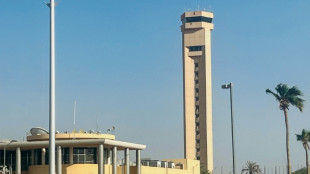
Joshi has said two new airports will be built -- in the archipelago's capital Sri Vijayapuram and on Great Nicobar -- and older runways expanded to three-kilometre strips, capable of handling heavy-lift cargo aeroplanes.
"All of them will be dual-use runways, used by military and for commercial flights," Joshi said in February.
One already upgraded runway, on Car Nicobar island, was inaugurated in January by India's Chief of Defence Staff, Anil Chauhan.
Beyond the runways, the military aspect of the project remains largely secret.
Yet the island's strategic position has not escaped notice over the centuries, from India's medieval Cholas to the British, all of whom stationed warships there, just 175 kilometres (110 miles) from Indonesia.
"Great Nicobar Island is like India's unsinkable aircraft carrier," said Nitin Gokhale, a New Delhi-based security expert.
"The fact that everyone, including the Chinese, can see our ability to keep a close watch, creates a new paradigm for us."
- 'Nonsense' -
But environmentalists view the plans with dread.
Manish Chandi has been one of the few to regularly visit the small villages of the Nicobarese, which are off-limits except with special permission.
"I just don't understand the rationale for the project," Chandi said, noting that there was no clarity about how huge investments can be recovered economically.
Plans extend beyond the port to include a gas-solar power plant, hotels, and a town across 161 square kilometres -- multiple times larger than the archipelago's capital.
The island's population is projected to grow, from 9,000 people today to 336,000 by 2055.
Tourism projections anticipate 98,000 visitors by 2029, and more than one million by 2055.
The government has promised to compensate for the swathes of trees cut down by planting seedlings in Haryana -- a northern state next to New Delhi.
"It is all nonsense," Chandi added. "We are removing crocodiles from their natural habitat, and saying we are going to conserve them."
- 'Duty' -
Some islanders warn that the isolated Indigenous populations' millennia-old culture risks being bulldozed away.
"If we lose control of these lands, our culture too will be lost," said the Nicobarese's most senior leader, 54-year-old Barnabas Manju.
The Indians who arrived from the mainland are also sceptical.
The first families from outside the islands only settled in 1969, encouraged by the government who feared losing control of the sparsely populated territory.
Sharda Devi, 55, a settler's daughter, recalls the first arrivals "toiling in some of the harshest conditions" to carve plantations out of the tangled forests.
She initially welcomed the project, before realising the airport would encroach on her land.
"The government is going to take back 11 acres (4.5 hectares) alloted to my father, without offering us another suitable plot of land or even proper compensation," she said.
Her neighbour, 71-year-old Kusum Mishra, who arrived 50 years ago, also dismissed the "petty compensation" offered, complaining that "they are uprooting us and destroying our lives."
- 'See the world' -
Around 400 kilometres away, change is already starting to ripple through the archipelago's island of Little Andaman, which Joshi has said will see the "next developmental thrust" after Great Nicobar.
Raja, one of just 143 surviving members of the En-iregale, or "perfect person" in their language, describes a life on Little Andaman where his people still fish in bountiful coral reefs or hunt wild boar in the areas of forest still protected by their millennia-old stewardship.
"We don't need anything from the government -- or anyone," he told AFP, stressing that "we have everything".
Past forced contact with outsiders brought trauma, including disease outbreaks that devastated Indigenous populations lacking immunity.
Many of Raja's community, more widely known as the Onge, still live in near isolation in neat thatched homes on stilts in coastal forests.
But contact is growing rapidly today, even if outsiders are barred from entering Indigenous territory, with members curious about the wider world -- and the modern comforts it can offer.
Authorities, treading a delicate line in managing an increasing number of visitors, began last year to recruit more than 500 young men from communities across the archipelago as police "homeguards".
"They are sons of the soil," said HGS Dhaliwal, police chief of the archipelago.
Raja, along with his friend Jhaj, was among the first five men from their community recruited.
Jhaj, who speaks some Hindi, which he learnt in a government school around their settlement, has become a keen volleyball player.
Weeks after completing his training, he made a major drug seizure, after finding a seven-kilogramme (15-pound) methamphetamine stash, hidden by traffickers who ply the Andaman Sea south from Myanmar.
"These developments point to better things on the horizon," Ashish Biswas, 54, who works for a government-backed society, Andaman Adim Janjati Vikas Samiti (AAJVS), which mediates between locals and outsiders.
"I see so many of them in our local school wanting to study and improve, to follow Jhaj and Raja's inspiration."
Raja said that his salary was attracting other young members of his community, interested in the world beyond their island.
"They now know that if they wear the uniform, they too will get to travel outside the village and see other places," Raja said.
C.Zeman--TPP