The Prague Post - A rough guide to F1 rule changes for 2026

EUR -
AED 4.318908
AFN 73.500454
ALL 96.032488
AMD 443.088322
ANG 2.104749
AOA 1078.405264
ARS 1635.60551
AUD 1.661342
AWG 2.110945
AZN 2.003379
BAM 1.950466
BBD 2.370098
BDT 143.806743
BGN 1.937655
BHD 0.443675
BIF 3491.55193
BMD 1.176014
BND 1.489701
BOB 8.131797
BRL 6.035329
BSD 1.176722
BTN 107.078182
BWP 15.487856
BYN 3.406511
BYR 23049.875337
BZD 2.366707
CAD 1.606112
CDF 2598.990908
CHF 0.904731
CLF 0.02603
CLP 1027.824219
CNY 8.065281
CNH 8.085326
COP 4439.652953
CRC 555.257973
CUC 1.176014
CUP 31.164372
CVE 109.964289
CZK 24.2294
DJF 209.546279
DKK 7.47098
DOP 71.032431
DZD 151.696233
EGP 56.586029
ERN 17.640211
ETB 182.52393
FJD 2.578469
FKP 0.872193
GBP 0.877101
GEL 3.151735
GGP 0.872193
GHS 12.544748
GIP 0.872193
GMD 85.281706
GNF 10320.776592
GTQ 9.026316
GYD 246.207762
HKD 9.199917
HNL 31.140386
HRK 7.527314
HTG 154.260779
HUF 378.008512
IDR 19821.011167
ILS 3.682452
IMP 0.872193
INR 107.561126
IQD 1541.525526
IRR 1545652.903542
ISK 143.497369
JEP 0.872193
JMD 183.470477
JOD 0.833824
JPY 184.474287
KES 151.706036
KGS 102.842172
KHR 4718.117798
KMF 490.39754
KPW 1058.412651
KRW 1714.616477
KWD 0.360495
KYD 0.980681
KZT 586.114771
LAK 25186.838526
LBP 105377.655749
LKR 363.909374
LRD 215.93491
LSL 18.725338
LTL 3.472463
LVL 0.711359
LYD 7.432296
MAD 10.776875
MDL 20.139897
MGA 4991.0966
MKD 61.477145
MMK 2469.503289
MNT 4196.414205
MOP 9.483703
MRU 46.967563
MUR 54.6138
MVR 18.169205
MWK 2040.615579
MXN 20.353475
MYR 4.607032
MZN 75.153195
NAD 18.725576
NGN 1599.367171
NIO 43.311559
NOK 11.204174
NPR 171.317499
NZD 1.973728
OMR 0.44888
PAB 1.176787
PEN 3.948403
PGK 5.135912
PHP 68.423435
PKR 328.900801
PLN 4.225995
PYG 7579.885166
QAR 4.277702
RON 5.096495
RSD 117.055419
RUB 91.231478
RWF 1719.218186
SAR 4.410997
SBD 9.461248
SCR 16.182609
SDG 707.394198
SEK 10.681871
SGD 1.493467
SHP 0.882315
SLE 28.870821
SLL 24660.425812
SOS 671.335609
SRD 44.361525
STD 24341.116427
STN 24.432977
SVC 10.296449
SYP 129.978928
SZL 18.721848
THB 36.922728
TJS 11.197042
TMT 4.116049
TND 3.410972
TOP 2.83156
TRY 51.708844
TTD 7.987817
TWD 37.083838
TZS 3004.715696
UAH 50.735469
UGX 4242.416638
USD 1.176014
UYU 45.205036
UZS 14297.597554
VES 490.205227
VND 30788.047772
VUV 139.926704
WST 3.193944
XAF 654.134816
XAG 0.012439
XAU 0.000219
XCD 3.178237
XCG 2.120819
XDR 0.813534
XOF 654.134816
XPF 119.331742
YER 280.538247
ZAR 18.950232
ZMK 10585.535608
ZMW 22.235061
ZWL 378.676044
  • RBGPF

    0.1000

    82.5

    +0.12%

  • RYCEF

    -0.0600

    18.4

    -0.33%

  • BCC

    -0.9000

    82.74

    -1.09%

  • NGG

    0.0500

    93.77

    +0.05%

  • RELX

    0.7300

    34.79

    +2.1%

  • CMSC

    -0.4299

    23.45

    -1.83%

  • BCE

    0.6400

    26.31

    +2.43%

  • VOD

    -0.0400

    15.36

    -0.26%

  • CMSD

    -0.3100

    23.28

    -1.33%

  • GSK

    1.0600

    59.13

    +1.79%

  • RIO

    0.2500

    99.34

    +0.25%

  • JRI

    0.1200

    13.29

    +0.9%

  • AZN

    4.4700

    208.45

    +2.14%

  • BTI

    -0.0200

    62.65

    -0.03%

  • BP

    0.8700

    38.86

    +2.24%

A rough guide to F1 rule changes for 2026
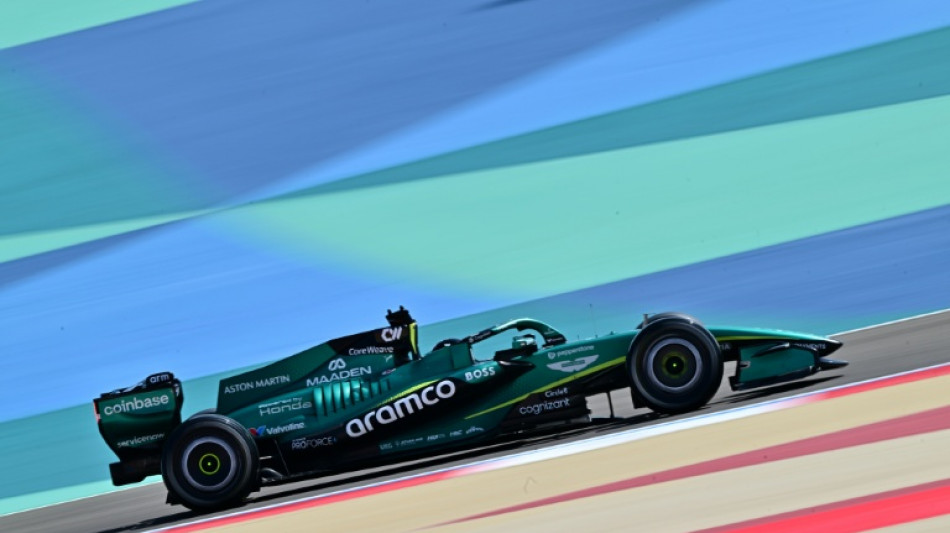
A rough guide to F1 rule changes for 2026 / Photo: Giuseppe CACACE - AFP

A rough guide to F1 rule changes for 2026

The 2026 Formula One season has been flagged up as revolutionary because of the sweeping changes to chassis and power unit regulations, designed to create more overtaking opportunities and improve the sport's eco-sustainability.

Text size:

Four-time world champion Max Verstappen has already said the new cars are "not fun to drive" while Lando Norris, the man who took his crown last season, stirred the pot by saying they were fun before reversing at speed by remarking they were "certainly not the purest form of racing".

But what does that mean? How different will 2026 be to 2025 when McLaren ran away with the constructors' title with Red Bull, Mercedes and Ferrari choking on their fumes?

AFP Sport looks at the main changes:

THE CARS

The cars will look noticeably different to the 2025 models, notably the Adrian Newey-designed 'pelican-nose' Aston Martin. Overall, they are 30kg lighter and 20cm shorter and 10cm more narrow. The wheelbase has been shortened which should make them more nippy through corners.

TYRES

Pirelli's 18-inch wheel size, introduced in 2022, will remain. But the width of the front tyres will be reduced by 25mm and the rears by 30mm, which will cut drag.

WINGS

Changes aplenty here but the big one is the introduction of active aero which allows cars to adjust the angle of both front and rear wing elements depending on where they are on track. This, again, should cut drag and boost top speed.

THE SONS OF DRS

The drag reduction system (DRS) is no more. In its place come two aero-mode systems which will both help the driver find speed.

- 'Z-mode' opens elements on the front and rear wings to increase downforce and speed through corners.

- 'X-mode' reduces drag to maximise straight-line speed.

There is also a manual 'Overtake' mode, which the drivers access through the boost button when they are one second behind the car ahead, allowing them to unlock extra energy.

There is a risk to this strategy, though, as it could leave them vulnerable to being re-overtaken on the next straight as they try to recover the electrical energy.

POWER UNITS

The power units, of which the engine is the predominant factor, are set to deliver an almost 300 percent increase in electric power. There will also be an even split between internal combustion engine and electric power, giving cars three times more electric braking power.

The FIA is moving to close down a loophole which Audi, Honda and Ferrari believe Mercedes have found to use thermal expansion and materials technology to exceed the mandated compression ratio -- something that could gain them as much of 0.3 seconds per lap.

If they start the season with the advantage, however, it will not just benefit Mercedes as they also supply Alpine, Williams... and McLaren.

FUEL

No matter who runs away with the title no one is likely to be choking on fumes, as fuel in every car will be 100 percent sustainable, meaning no new fossil carbon will be burned.

Fuel will instead be derived from carbon that came from non-food sources, general waste or from carbon captured from the atmosphere.

O.Ruzicka--TPP