The Prague Post - Huge spiders to colonize US East Coast, but maybe it's a good thing

EUR -
AED 4.297884
AFN 76.656646
ALL 96.60712
AMD 442.746078
ANG 2.09491
AOA 1073.153901
ARS 1673.505309
AUD 1.720241
AWG 2.106519
AZN 1.997408
BAM 1.958215
BBD 2.362203
BDT 143.466951
BGN 1.965347
BHD 0.441182
BIF 3473.068808
BMD 1.170288
BND 1.50505
BOB 8.103961
BRL 6.226637
BSD 1.172842
BTN 107.414484
BWP 15.652238
BYN 3.374548
BYR 22937.653057
BZD 2.358799
CAD 1.617649
CDF 2521.971825
CHF 0.927606
CLF 0.02594
CLP 1024.121704
CNY 8.149779
CNH 8.1645
COP 4300.809948
CRC 574.406012
CUC 1.170288
CUP 31.012643
CVE 110.401168
CZK 24.31204
DJF 208.856709
DKK 7.468798
DOP 73.920857
DZD 151.97487
EGP 55.190684
ERN 17.554326
ETB 181.970942
FJD 2.647774
FKP 0.871564
GBP 0.871795
GEL 3.142266
GGP 0.871564
GHS 12.748724
GIP 0.871564
GMD 86.017222
GNF 10273.627489
GTQ 9.003104
GYD 245.381603
HKD 9.125377
HNL 30.989176
HRK 7.535837
HTG 153.568754
HUF 382.971623
IDR 19734.573648
ILS 3.682037
IMP 0.871564
INR 107.213691
IQD 1536.488524
IRR 49298.39993
ISK 146.005108
JEP 0.871564
JMD 184.386633
JOD 0.82967
JPY 185.567369
KES 150.967245
KGS 102.342031
KHR 4719.801187
KMF 493.862056
KPW 1053.167493
KRW 1718.042348
KWD 0.359781
KYD 0.977401
KZT 594.460662
LAK 25357.166922
LBP 105029.093032
LKR 363.176386
LRD 216.393199
LSL 19.185581
LTL 3.455558
LVL 0.707896
LYD 7.457166
MAD 10.761027
MDL 19.879434
MGA 5295.554651
MKD 61.695831
MMK 2457.577295
MNT 4174.356843
MOP 9.420078
MRU 46.820548
MUR 53.974086
MVR 18.092332
MWK 2033.699655
MXN 20.47601
MYR 4.728154
MZN 74.778435
NAD 19.185581
NGN 1664.10304
NIO 42.947038
NOK 11.566575
NPR 171.862239
NZD 1.991661
OMR 0.449982
PAB 1.172842
PEN 3.92748
PGK 5.014163
PHP 69.192722
PKR 327.622441
PLN 4.209358
PYG 7854.654288
QAR 4.261312
RON 5.094275
RSD 117.404356
RUB 88.645919
RWF 1701.599365
SAR 4.388298
SBD 9.514697
SCR 16.483274
SDG 703.916872
SEK 10.594433
SGD 1.502048
SHP 0.878019
SLE 28.76059
SLL 24540.362192
SOS 668.811915
SRD 44.716965
STD 24222.607517
STN 24.53015
SVC 10.262614
SYP 12942.892444
SZL 19.181576
THB 36.659866
TJS 10.936702
TMT 4.107712
TND 3.419117
TOP 2.817773
TRY 50.658391
TTD 7.961786
TWD 37.015634
TZS 2966.681111
UAH 50.617014
UGX 4057.987741
USD 1.170288
UYU 44.994727
UZS 14160.404793
VES 405.901689
VND 30742.891682
VUV 141.027467
WST 3.238014
XAF 656.76424
XAG 0.01252
XAU 0.000242
XCD 3.162763
XCG 2.113798
XDR 0.816804
XOF 653.021198
XPF 119.331742
YER 278.874797
ZAR 18.969966
ZMK 10534.002513
ZMW 23.604012
ZWL 376.832394
  • SCS

    0.0200

    16.14

    +0.12%

  • CMSC

    0.1500

    23.61

    +0.64%

  • BCC

    1.1900

    85.01

    +1.4%

  • GSK

    0.4200

    48.07

    +0.87%

  • BCE

    0.1200

    24.51

    +0.49%

  • BTI

    1.3900

    57.71

    +2.41%

  • CMSD

    -0.0200

    24

    -0.08%

  • NGG

    0.8500

    80.85

    +1.05%

  • RIO

    3.1600

    88.84

    +3.56%

  • AZN

    0.6000

    90.54

    +0.66%

  • RBGPF

    0.0000

    84.04

    0%

  • BP

    0.7700

    35.92

    +2.14%

  • JRI

    0.0500

    13.72

    +0.36%

  • RELX

    0.0300

    40.32

    +0.07%

  • VOD

    0.1000

    13.6

    +0.74%

  • RYCEF

    -0.2900

    16.97

    -1.71%

Huge spiders to colonize US East Coast, but maybe it's a good thing

Huge spiders to colonize US East Coast, but maybe it's a good thing

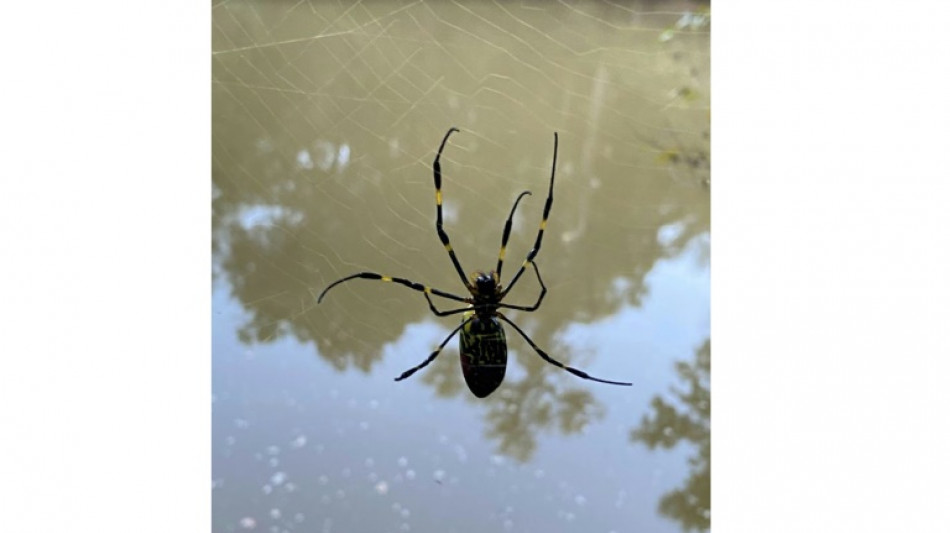
Big and scary-looking Joro spiders have spread from Asia to the southern United States and are now poised to colonize the country's cooler climes -- but they're nothing to fear and might end up actually helping local ecosystems.

Text size:

That's according to scientists who have been studying the arachnid invaders since they first arrived in Georgia around 2013.

In a few short years, the golden webs spun by the bright yellow, dark blue and red spiders -- usually built at head height -- have become a common sight throughout the state, and new research suggests they will clamber up the Eastern Seaboard next.

"The reason we got involved in this project was because they literally fell in our lap," Andy Davis, an ecologist at the University of Georgia, told AFP on Friday.

"They're kind of everywhere here in North Georgia, they're all over my backyard."

Davis set about studying the new resident, comparing it to the golden silk spider, which came to the southeastern US some 160 years ago from the tropics.

Writing in a paper published in the journal Physiological Entomology, he and his co-author Ben Frick found similarities but also striking differences between the relatives.

The Joro spider's metabolic rate is about double that of its cousin, its heart beats 77 percent faster, and it can survive brief freezes.

Together, these traits mean it can better survive colder climates, which is not completely surprising, given that it is native to temperate Japan.

The paper also examined records from iNaturalist, which tracks sightings of animals, and found that the spider's range had already spread far beyond Georgia to encompass the nearby states of South Carolina, North Carolina, and Tennessee. There was even a report from faraway Oklahoma.

Left to themselves, Joros would probably work their way up the coast over 20 years, but it'll probably happen faster if they hitchhike on vehicles, said Davis.

- Call for clemency -

That's likely how they arrived in the United States in the first place -- either a female stowaway laid her eggs when she landed on a ship, or an egg sac was brought over and hatched in spring.

Invasive species are often linked to destruction -- such as the spotted lanternfly, a native of Southeast Asia which came to the US state of Pennsylvania in 2014 and is known to decimate fruit trees and ornamental plants.

But the Joros' exploding numbers aren't necessarily a cause for concern, argued Davis.

"The golden silk spider is everywhere in the southeast, and it's not causing any harm. It's been here so long, it's integrated itself into the ecosystem, and the Joro could follow the same trajectory," he said.

In fact, it could provide a hearty meal for native predators, such as mud dauber wasps, which hunt spiders. Other beneficiaries could include local lizards.

They're also not aggressive towards humans, nor are their fangs big enough to pose any kind of threat, stressed Davis, who called for clemency and understanding, not stigmatization.

"I don't really think the Joros deserve to be squashed or killed like the spotted lanternfly -- they're really not out to get us and it's not their fault either that they're here. They were literally along for the ride," he said.

Q.Pilar--TPP