The Prague Post - Artemis astronauts to shed light on space health risks

EUR -
AED 4.267356
AFN 76.113966
ALL 92.166078
AMD 421.736293
ANG 2.079682
AOA 1066.692995
ARS 1752.149424
AUD 1.615424
AWG 2.091554
AZN 1.97997
BAM 1.955505
BBD 2.340246
BDT 142.798429
BGN 1.971134
BHD 0.438034
BIF 3474.775108
BMD 1.161974
BND 1.472378
BOB 14.378828
BRL 5.956518
BSD 1.161924
BTN 109.727425
BWP 15.55765
BYN 3.579359
BYR 22774.699702
BZD 2.336947
CAD 1.607883
CDF 2649.302222
CHF 0.936198
CLF 0.027477
CLP 1081.856577
CNY 7.798364
CNH 7.794298
COP 3650.748526
CRC 527.020389
CUC 1.161974
CUP 30.792324
CVE 110.248346
CZK 24.209785
DJF 206.908745
DKK 7.478589
DOP 68.77961
DZD 154.811068
EGP 59.198758
ERN 17.429617
ETB 188.646703
FJD 2.550476
FKP 0.859603
GBP 0.855053
GEL 3.02699
GGP 0.859603
GHS 13.211004
GIP 0.859603
GMD 85.986524
GNF 10213.457177
GTQ 8.87066
GYD 243.093279
HKD 9.110287
HNL 31.192288
HRK 7.538663
HTG 151.957046
HUF 362.37381
IDR 20486.539566
ILS 3.500326
IMP 0.859603
INR 109.795554
IQD 1522.170064
IRR 1597250.113151
ISK 140.878234
JEP 0.859603
JMD 184.182178
JOD 0.823886
JPY 181.564367
KES 150.527262
KGS 101.613627
KHR 4702.289682
KMF 492.677584
KPW 1045.777368
KRW 1564.122666
KWD 0.359039
KYD 0.968354
KZT 529.20006
LAK 26055.064177
LBP 104052.182095
LKR 381.282404
LRD 203.339284
LSL 18.563896
LTL 3.431009
LVL 0.702867
LYD 7.372886
MAD 10.893055
MDL 20.014977
MGA 4985.246939
MKD 61.515708
MMK 2440.225622
MNT 4180.195488
MOP 9.383183
MRU 46.744939
MUR 54.415704
MVR 17.964565
MWK 2014.795649
MXN 19.6225
MYR 4.699378
MZN 74.254502
NAD 18.563896
NGN 1537.536682
NIO 42.76354
NOK 10.815547
NPR 175.56348
NZD 1.968948
OMR 0.446784
PAB 1.161924
PEN 3.897011
PGK 5.238209
PHP 72.879474
PKR 322.223826
PLN 4.31354
PYG 6951.949853
QAR 4.246958
RON 5.254493
RSD 117.332276
RUB 100.55481
RWF 1710.341639
SAR 4.360694
SBD 9.296391
SCR 16.009729
SDG 698.931918
SEK 11.123238
SGD 1.474318
SHP 0.860867
SLE 28.643102
SLL 24366.022846
SOS 664.099682
SRD 43.841882
STD 24050.525606
STN 24.4963
SVC 10.167464
SYP 15107.992009
SZL 18.567195
THB 38.252628
TJS 10.713082
TMT 4.066911
TND 3.391288
TOP 2.797756
TRY 56.264319
TTD 7.865812
TWD 36.818095
TZS 3076.23531
UAH 51.757782
UGX 4386.337409
USD 1.161974
UYU 46.772935
UZS 13704.929762
VES 936.989612
VND 30281.054807
VUV 135.944268
WST 3.15838
XAF 655.857927
XAG 0.01755
XAU 0.000262
XCD 3.140295
XCG 2.094084
XDR 0.821576
XOF 655.857927
XPF 119.331742
YER 275.388335
ZAR 18.555513
ZMK 10459.168805
ZMW 22.222643
ZWL 374.155307
  • CMSC

    -0.1100

    20.81

    -0.53%

  • RBGPF

    0.0000

    70

    0%

  • RIO

    0.4300

    103.27

    +0.42%

  • RYCEF

    0.1400

    19.92

    +0.7%

  • BTI

    -0.6200

    55.35

    -1.12%

  • RELX

    -1.1400

    35.51

    -3.21%

  • AZN

    -2.0700

    162.7

    -1.27%

  • NGG

    -0.0500

    78.12

    -0.06%

  • BCE

    -0.1400

    23.67

    -0.59%

  • GSK

    -0.9800

    49.89

    -1.96%

  • BCC

    2.0900

    79.21

    +2.64%

  • VOD

    0.3200

    16.9

    +1.89%

  • CMSD

    -0.0700

    20.69

    -0.34%

  • JRI

    -0.0700

    12.14

    -0.58%

  • BP

    0.2300

    43.81

    +0.52%

Artemis astronauts to shed light on space health risks
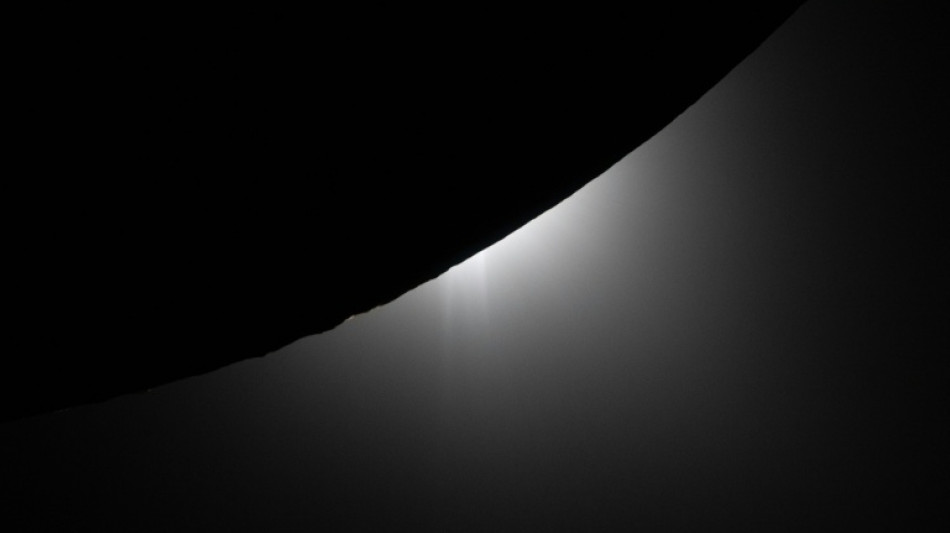
Artemis astronauts to shed light on space health risks / Photo: Handout - NASA/AFP

Artemis astronauts to shed light on space health risks

While the Artemis II astronauts have been protected from the icy vacuum of space on their journey, their bodies have nonetheless been left exposed to possibly high levels of radiation -- a danger of space travel that NASA is anxiously waiting to study.

Text size:

Their trip around the Moon has taken the four astronauts farther into space than any human before -- more than 1,000 times the distance from Earth to the International Space Station.

Earth's magnetosphere offers some protection against radioactive cosmic rays and solar particles to the orbiting ISS, but no such cover on the Moon.

Studying the impacts of radiation is essential as NASA hopes to eventually build a Moon base and send astronauts on the long trip to Mars.

The US space agency installed radiation sensors on the Orion capsule and took blood samples of the astronauts before takeoff to compare with samples post-trip. The crew's saliva samples are gathered throughout the journey and their health is monitored via smartwatches.

NASA has also placed state-of-the-art computer chips in the capsule that can replicate certain physiological functions, like that of an organ.

Mission planners chose to mimic bone marrow, which produces blood cells and is one of the tissues "most quickly affected by radiation and other stressors," NASA Human Research Program chief scientist Steven Platts told AFP.

With all of the data, Platts said his team hoped to better understand the variation between low earth orbit and deep space.

"It will be good research information for us to see the level of radiation, but also the type of radiation," he said.

"Our prediction is that we'll see a lot more galactic cosmic radiation... which is from supernovas and is everywhere," versus radiation coming from the Sun, he said.

- Mental health -

Platts said while most people associate radiation with cancer risk, it also can impact the central nervous system and blood circulation.

"It can lead to inflammation in the brain, and that's one of the things that can increase the risk of Parkinson's disease," he said.

With the Artemis II astronauts spending just 10 days in space, radiation is not a major concern, but the danger could rise dramatically with longer stays on the Moon.

Extensive health studies were conducted on the Apollo astronauts, but technology has advanced greatly in the 50 years since, said Bruce Betts, chief scientist at the Planetary Society, a space advocacy group.

"There will be a lot of information on the medical side of things," he said.

The other major focus is on psychological risks of spending long periods of time on the Moon or Mars.

With greater disconnection from home and tight living quarters, mental health could pose the greatest danger to astronauts on such missions, Platts said.

He compared the difference between the ISS and the tiny Orion capsule as like going from a "six-bedroom house, like a mansion... to a camper van."

F.Prochazka--TPP