The Prague Post - Studies to see if mutations behind monkeypox spread: WHO

EUR -
AED 4.265018
AFN 73.164365
ALL 95.984408
AMD 438.161514
ANG 2.078485
AOA 1064.9476
ARS 1644.194061
AUD 1.643978
AWG 2.093314
AZN 1.976241
BAM 1.964688
BBD 2.339183
BDT 142.042616
BGN 1.913476
BHD 0.438345
BIF 3269.169352
BMD 1.161339
BND 1.487228
BOB 8.054021
BRL 6.044998
BSD 1.161414
BTN 107.135694
BWP 15.782587
BYN 3.394758
BYR 22762.244868
BZD 2.335666
CAD 1.578626
CDF 2508.492034
CHF 0.903545
CLF 0.026921
CLP 1062.997138
CNY 8.026131
CNH 8.006854
COP 4370.792324
CRC 552.882256
CUC 1.161339
CUP 30.775484
CVE 110.849219
CZK 24.360278
DJF 206.393051
DKK 7.47108
DOP 70.259233
DZD 152.768643
EGP 61.314287
ERN 17.420085
ETB 182.330711
FJD 2.561507
FKP 0.865868
GBP 0.865285
GEL 3.170779
GGP 0.865868
GHS 12.524983
GIP 0.865868
GMD 84.777707
GNF 10190.75001
GTQ 8.907994
GYD 242.981366
HKD 9.081549
HNL 30.868682
HRK 7.531981
HTG 152.153117
HUF 387.724069
IDR 19617.338792
ILS 3.602578
IMP 0.865868
INR 107.385304
IQD 1520.773452
IRR 1534012.71618
ISK 145.09754
JEP 0.865868
JMD 181.943917
JOD 0.823385
JPY 183.378336
KES 150.156059
KGS 101.559174
KHR 4662.776229
KMF 493.569554
KPW 1045.204775
KRW 1708.863903
KWD 0.357286
KYD 0.967887
KZT 578.346502
LAK 24777.168142
LBP 103997.909634
LKR 361.719573
LRD 212.525118
LSL 19.208356
LTL 3.429132
LVL 0.702482
LYD 7.415117
MAD 10.926748
MDL 20.127231
MGA 4854.397313
MKD 61.613196
MMK 2438.894557
MNT 4144.927437
MOP 9.349858
MRU 46.581564
MUR 53.595493
MVR 17.942852
MWK 2016.670191
MXN 20.551009
MYR 4.58383
MZN 74.221197
NAD 19.209044
NGN 1623.830144
NIO 42.632671
NOK 11.149122
NPR 171.417511
NZD 1.959818
OMR 0.446539
PAB 1.161455
PEN 4.05133
PGK 5.011171
PHP 68.884814
PKR 324.420344
PLN 4.249049
PYG 7473.876987
QAR 4.228427
RON 5.09677
RSD 117.425337
RUB 90.875244
RWF 1697.996542
SAR 4.359873
SBD 9.343184
SCR 15.774659
SDG 697.39312
SEK 10.622495
SGD 1.481259
SHP 0.871305
SLE 28.481821
SLL 24352.697907
SOS 663.709652
SRD 43.74416
STD 24037.37306
STN 25.026856
SVC 10.162062
SYP 128.420772
SZL 19.208617
THB 36.883826
TJS 11.131774
TMT 4.064687
TND 3.39095
TOP 2.796226
TRY 51.19705
TTD 7.880653
TWD 36.950358
TZS 2996.254949
UAH 51.041457
UGX 4372.782945
USD 1.161339
UYU 46.460593
UZS 14185.75567
VES 502.42505
VND 30517.0862
VUV 138.634464
WST 3.182637
XAF 658.938108
XAG 0.013282
XAU 0.000226
XCD 3.138577
XCG 2.09317
XDR 0.823103
XOF 657.317509
XPF 119.331742
YER 277.095098
ZAR 18.975461
ZMK 10453.442713
ZMW 22.445546
ZWL 373.950692
  • RBGPF

    0.1000

    82.5

    +0.12%

  • CMSD

    -0.0400

    23.16

    -0.17%

  • CMSC

    0.0350

    23.22

    +0.15%

  • JRI

    0.0100

    12.58

    +0.08%

  • BCC

    -0.8600

    74.49

    -1.15%

  • NGG

    0.5500

    90.41

    +0.61%

  • RYCEF

    -0.3000

    16.7

    -1.8%

  • RELX

    0.0000

    35.68

    0%

  • RIO

    0.1400

    90.35

    +0.15%

  • BCE

    -0.1800

    25.88

    -0.7%

  • VOD

    -0.0300

    14.48

    -0.21%

  • GSK

    1.0000

    55.51

    +1.8%

  • AZN

    0.7300

    194.95

    +0.37%

  • BTI

    0.4600

    58.33

    +0.79%

  • BP

    0.2100

    40.65

    +0.52%

Studies to see if mutations behind monkeypox spread: WHO
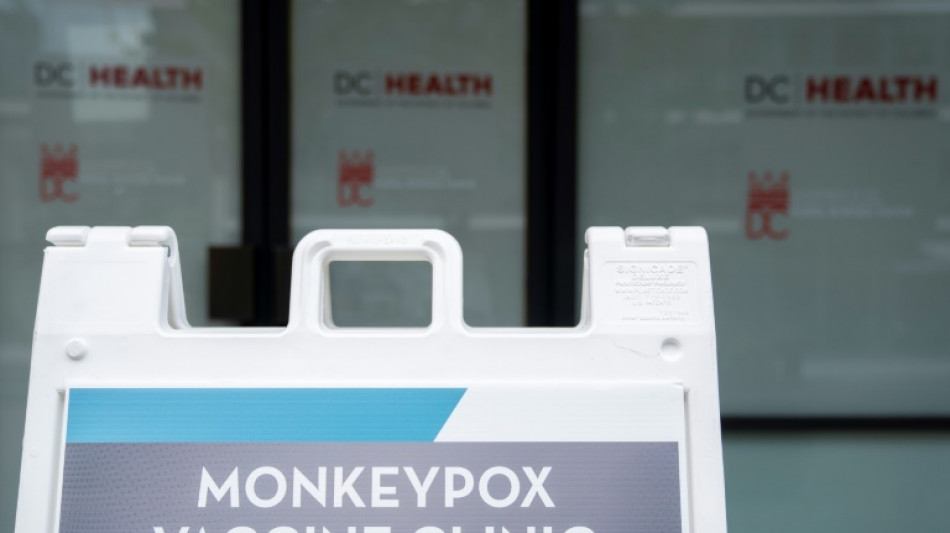
Studies to see if mutations behind monkeypox spread: WHO / Photo: Stefani Reynolds - AFP/File

Studies to see if mutations behind monkeypox spread: WHO

Studies are under way to see whether genetic changes in the monkeypox virus are driving the rapid spread of the disease, the World Health Organization told AFP on Wednesday.

Text size:

The two distinct clades, or variants, of the virus were called the Congo Basin (Central African) and West African clades, after the two regions where they are each endemic.

On Friday, the WHO renamed the groupings as Clade I and Clade II respectively, to avert the risk of geographic stigmatisation.

It also announced that Clade II had two sub-clades, IIa and IIb, with viruses within the latter identified as being behind the the current global outbreak.

On Wednesday, the UN health agency specified that Clades IIa and IIb are related and share a recent common ancestor -- therefore IIb is not an offshoot of IIa.

- Research into mutations -

Clade IIb contains viruses collected in the 1970s, and from 2017 onwards.

"Looking through the genome, indeed there are a few genetic differences between the viruses from the current outbreak and the older Clade IIb viruses," the WHO told AFP.

"However, nothing is known about the significance of these genetic changes, and research is ongoing to establish the effects (if any) of these mutations on transmission and disease severity.

"It is still early on in both the outbreak and laboratory studies to tell if the rise in infections could be driven by the observed genotypic changes in the virus, or are due to host (human) factors."

There is also no information yet on what the mutations mean in terms of how the virus interacts with the human immune response.

A surge in monkeypox infections has been reported since early May outside the endemic African countries.

The WHO declared the situation an international public health emergency on July 23.

More than 35,000 cases in 92 countries, and 12 deaths, have now been reported to the WHO.

Almost all new cases are being reported from Europe and the Americas.

Experts have been studying samples from cases.

"The diversity between the viruses responsible for the current outbreak is minimal, and there is no obvious genotypic differences between the viruses from the non-endemic countries," the WHO said.

- Renaming monkeypox could take months -

Meanwhile the WHO said its drive to rename monkeypox could take "a number of months".

The organisation has for weeks voiced concern about the name, with experts concerned that it is misleading.

Monkeypox received its name because the virus was originally identified in monkeys kept for research in Denmark in 1958.

However, the disease is found most frequently in rodents, and the current outbreak is being spread through human-to-human close contact.

The WHO has called for help from the public in coming up with a new name, with a dedicated website where anyone can make suggestions.

"We will update the public by the end of the year," the WHO said.

M.Soucek--TPP