The Prague Post - Fossil fuels make up 90% of Middle East air pollution: study

EUR -
AED 4.118085
AFN 72.327475
ALL 90.580734
AMD 404.578149
ANG 2.00694
AOA 1028.259752
ARS 1712.747989
AUD 1.598703
AWG 2.021198
AZN 1.903137
BAM 1.954737
BBD 2.257372
BDT 138.614608
BGN 1.959896
BHD 0.422928
BIF 3361.771555
BMD 1.12133
BND 1.431721
BOB 13.174834
BRL 5.665411
BSD 1.12079
BTN 106.199765
BWP 15.396626
BYN 3.314197
BYR 21978.070272
BZD 2.254074
CAD 1.570614
CDF 2597.000736
CHF 0.920786
CLF 0.028087
CLP 1105.418227
CNY 7.488298
CNH 7.481834
COP 3575.349861
CRC 511.47164
CUC 1.12133
CUP 26.89837
CVE 110.197694
CZK 24.281841
DJF 199.581449
DKK 7.474596
DOP 68.775847
DZD 151.142973
EGP 62.00673
ERN 16.819952
ETB 183.578653
FJD 2.508639
FKP 0.838026
GBP 0.837129
GEL 2.903798
GGP 0.838026
GHS 12.989935
GIP 0.838026
GMD 82.978397
GNF 9919.604792
GTQ 8.565303
GYD 234.442488
HKD 8.793319
HNL 30.086636
HRK 7.534896
HTG 146.849475
HUF 366.175937
IDR 20248.250369
ILS 3.491152
IMP 0.838026
INR 106.312468
IQD 1699.075884
IRR 2054697.270937
ISK 136.19673
JEP 0.838026
JMD 177.933223
JOD 0.79498
JPY 175.966951
KES 145.61615
KGS 98.059312
KHR 4559.377873
KMF 492.842984
KPW 1009.197061
KRW 1485.594095
KWD 0.348038
KYD 0.933992
KZT 502.066929
LAK 25227.279049
LBP 100365.711751
LKR 372.037651
LRD 191.095212
LSL 18.485046
LTL 3.310997
LVL 0.678282
LYD 7.180095
MAD 11.000817
MDL 20.129052
MGA 5082.235805
MKD 61.586768
MMK 2355.184548
MNT 4036.851961
MOP 9.051777
MRU 44.786641
MUR 52.713464
MVR 17.335666
MWK 1943.442974
MXN 20.998112
MYR 4.579406
MZN 71.602163
NAD 18.485046
NGN 1492.434425
NIO 41.247566
NOK 10.457865
NPR 169.903923
NZD 1.969269
OMR 0.431087
PAB 1.12079
PEN 3.850406
PGK 5.01927
PHP 71.105777
PKR 310.203282
PLN 4.377565
PYG 6426.504666
QAR 4.096754
RON 5.3474
RSD 117.507568
RUB 91.832024
RWF 1656.499041
SAR 4.209702
SBD 9.054269
SCR 15.747974
SDG 674.478168
SEK 11.115
SGD 1.432353
SHP 0.83797
SLE 25.734597
SLL 23513.736798
SOS 640.551608
SRD 42.217519
STD 23209.269443
STN 24.486682
SVC 9.806666
SYP 14579.533814
SZL 18.482947
THB 37.822525
TJS 10.305503
TMT 3.935869
TND 3.340268
TOP 2.699893
TRY 55.772268
TTD 7.605863
TWD 36.560186
TZS 2965.91809
UAH 50.505031
UGX 4802.388013
USD 1.12133
UYU 44.935159
UZS 13345.741339
VES 986.533792
VND 28976.852191
VUV 133.357612
WST 3.100149
XAF 655.957
XAG 0.020789
XAU 0.000279317907
XCD 3.03045
XCG 2.019901
XDR 0.792839
XOF 655.957
XPF 119.331742
YER 264.744902
ZAR 18.51282
ZMK 10093.325175
ZMW 22.499763
ZWL 361.06784
SSP 6442.957706
MXV 2.370051
  • RBGPF

    -1.1000

    70.15

    -1.57%

  • RYCEF

    -0.3500

    17

    -2.06%

  • CMSC

    -0.0700

    19.6

    -0.36%

  • NGG

    1.8600

    82.64

    +2.25%

  • RIO

    -2.7800

    84.14

    -3.3%

  • CMSD

    -0.0250

    19.6

    -0.13%

  • GSK

    1.1900

    51.21

    +2.32%

  • BCE

    0.8300

    20.81

    +3.99%

  • RELX

    1.4900

    40.62

    +3.67%

  • VOD

    0.2700

    16.12

    +1.67%

  • BP

    0.2000

    50.05

    +0.4%

  • BCC

    2.7000

    78.29

    +3.45%

  • BTI

    1.5700

    60.47

    +2.6%

  • AZN

    4.1200

    172.57

    +2.39%

  • JRI

    0.0600

    10.68

    +0.56%

Fossil fuels make up 90% of Middle East air pollution: study
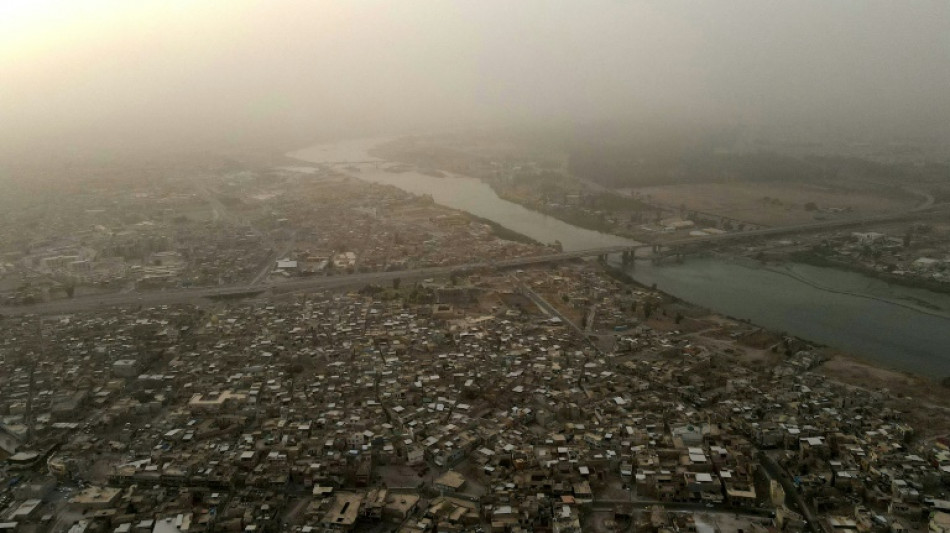
Fossil fuels make up 90% of Middle East air pollution: study / Photo: Zaid AL-OBEIDI - AFP/File

Fossil fuels make up 90% of Middle East air pollution: study

More than 90 percent of harmful air pollution in the Middle East and parts of North Africa comes from fossil fuels, according to research Thursday that showed the region "permanently exceeded" dangerous air quality levels.

Text size:

The World Health Organization this year said the MENA region had some of the poorest air quality on Earth.

The long-standing assumption was that the smog choking most of the region's cities was primarily composed of desert sand, given their location on the world's "dust belt" where there are frequently more than 20 major sand storms each year.

In 2017, an international team of researchers set off on an epic voyage across the eastern Mediterranean, through the Suez Canal and around the Gulf, using specialised equipment to analyse air quality and particulate matter on shore.

They found that the vast majority of small particles -- which can penetrate deep into the lungs, resulting in greater health risk -- were manmade, mainly from the production and use of fossil fuels.

Writing in the journal Communications Earth & Environment, they showed how the region is blanketed in particularly harmful compounds such as sulphur dioxide, which is a direct result of oil extraction.

Emissions from container vessels in one of the busiest shipping lanes in the world also contributed to the smog.

"We have refineries such as those in Saudi Arabia and the United Arab Emirates that are a big source of air pollution as well as ships on the Red Sea, and in the Suez Canal region," said Jos Lelieveld, lead study author from Germany's Max Planck Institute for Chemistry.

"So the combination of all of these means that the air is much more polluted than what most people hope it to be."

The team used health and mortality metrics to calculate the number of excess deaths caused by air pollution in the MENA region annually.

The percentage of fossil-fuel driven mortality varied between nations, with 5.9 percent of deaths in Cyprus attributable to air pollution versus 15.9 in Kuwait.

This is a far higher mortality rate than in other industrialised regions. The US and Germany, for example, have 3 percent and 3.7 percent mortality due to air pollution, respectively.

Region-wide, the team calculated that air pollution from fossil fuel use caused one in eight deaths, noting that air quality there "permanently exceeded" WHO guidelines.

"It is very comparable with things that are really of great concern, for example, tobacco smoking and high cholesterol, which are major health risks in the region," Lelieveld told AFP.

"And the realisation of this in the region is practically zero."

He said that while governments in the region counted on fossil fuel production for the majority of their income, the time would come when the health costs due to pollution compounded growing pressure to decarbonise their economies.

"They're not stupid, they know that fossil fuels will end at some point," said Lelieveld.

"I'm hoping this is an additional incentive."

S.Danek--TPP