The Prague Post - Climate change fuelled rains behind deadly Nigeria floods: study

EUR -
AED 4.328076
AFN 77.196987
ALL 96.978789
AMD 446.737554
ANG 2.109624
AOA 1080.692392
ARS 1690.455255
AUD 1.714016
AWG 2.123082
AZN 2.008143
BAM 1.963059
BBD 2.372775
BDT 144.143008
BGN 1.979151
BHD 0.444326
BIF 3489.845793
BMD 1.178508
BND 1.507187
BOB 8.142805
BRL 6.23907
BSD 1.178056
BTN 108.16448
BWP 16.344702
BYN 3.335801
BYR 23098.759435
BZD 2.369867
CAD 1.617456
CDF 2569.148159
CHF 0.926961
CLF 0.025957
CLP 1024.925421
CNY 8.218449
CNH 8.197543
COP 4295.70929
CRC 583.056147
CUC 1.178508
CUP 31.230466
CVE 110.69643
CZK 24.253403
DJF 209.444929
DKK 7.467983
DOP 74.224483
DZD 152.769943
EGP 55.574206
ERN 17.677622
ETB 183.549505
FJD 2.652002
FKP 0.873623
GBP 0.866622
GEL 3.170647
GGP 0.873623
GHS 12.844168
GIP 0.873623
GMD 86.031513
GNF 10321.314016
GTQ 9.044326
GYD 246.530833
HKD 9.189871
HNL 31.075919
HRK 7.532675
HTG 154.54429
HUF 382.155427
IDR 19789.508593
ILS 3.694447
IMP 0.873623
INR 108.176209
IQD 1543.407536
IRR 49644.655348
ISK 145.793696
JEP 0.873623
JMD 185.484484
JOD 0.835609
JPY 184.37937
KES 151.886582
KGS 103.06007
KHR 4742.544022
KMF 494.973829
KPW 1060.668137
KRW 1710.086465
KWD 0.361308
KYD 0.982027
KZT 593.189455
LAK 25464.570091
LBP 105521.456212
LKR 364.979698
LRD 217.991453
LSL 19.015018
LTL 3.479829
LVL 0.712868
LYD 7.497284
MAD 10.793366
MDL 20.055163
MGA 5330.84436
MKD 61.871665
MMK 2474.620729
MNT 4202.8741
MOP 9.464488
MRU 47.101181
MUR 54.105754
MVR 18.208396
MWK 2043.28085
MXN 20.527927
MYR 4.720519
MZN 75.318899
NAD 19.015018
NGN 1674.731214
NIO 43.35031
NOK 11.558036
NPR 173.062967
NZD 1.987778
OMR 0.453137
PAB 1.178408
PEN 3.952316
PGK 5.039642
PHP 69.522597
PKR 329.634291
PLN 4.205771
PYG 7879.77762
QAR 4.29608
RON 5.092692
RSD 117.390062
RUB 88.976957
RWF 1718.634689
SAR 4.419135
SBD 9.573741
SCR 17.480412
SDG 708.876975
SEK 10.590994
SGD 1.501956
SHP 0.884186
SLE 28.75992
SLL 24712.725461
SOS 672.225646
SRD 44.925953
STD 24392.738984
STN 24.590938
SVC 10.310271
SYP 13033.798977
SZL 19.014349
THB 36.589736
TJS 11.017775
TMT 4.124778
TND 3.429683
TOP 2.837565
TRY 51.106058
TTD 8.002594
TWD 37.06385
TZS 3011.088678
UAH 50.808321
UGX 4164.399991
USD 1.178508
UYU 44.623918
UZS 14298.877386
VES 415.147657
VND 30929.945988
VUV 141.50141
WST 3.256437
XAF 658.526344
XAG 0.011639
XAU 0.000237
XCD 3.184978
XCG 2.123704
XDR 0.818309
XOF 658.523539
XPF 119.331742
YER 280.842718
ZAR 19.032086
ZMK 10607.991644
ZMW 23.117392
ZWL 379.479138
  • SCS

    0.0200

    16.14

    +0.12%

  • CMSC

    0.0777

    23.7079

    +0.33%

  • BCC

    -1.4700

    84.04

    -1.75%

  • JRI

    0.0000

    13.67

    0%

  • RBGPF

    0.0000

    84.04

    0%

  • BCE

    0.4450

    25.155

    +1.77%

  • NGG

    1.0520

    81.232

    +1.3%

  • GSK

    0.2330

    48.883

    +0.48%

  • BTI

    0.8550

    59.075

    +1.45%

  • RYCEF

    0.0300

    17

    +0.18%

  • RIO

    2.7400

    90.04

    +3.04%

  • CMSD

    0.0900

    24.13

    +0.37%

  • AZN

    1.0300

    92.72

    +1.11%

  • RELX

    0.0050

    39.845

    +0.01%

  • VOD

    0.1900

    14.13

    +1.34%

  • BP

    1.1400

    36.57

    +3.12%

Climate change fuelled rains behind deadly Nigeria floods: study
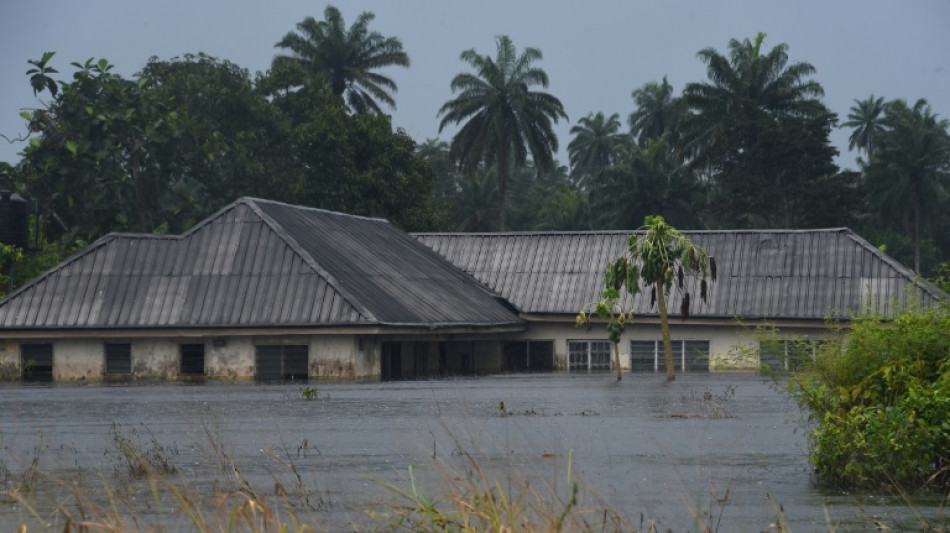
Climate change fuelled rains behind deadly Nigeria floods: study / Photo: PIUS UTOMI EKPEI - AFP

Climate change fuelled rains behind deadly Nigeria floods: study

Heavy rains behind floods that killed over 600 people in Nigeria this year were about 80 times likelier because of human-induced climate change, scientists reported Wednesday.

Text size:

The floods mainly struck Nigeria but also Niger, Chad and neighbouring countries, displacing over 1.4 million people and devastating homes and farmland in a region already vulnerable to food insecurity.

Researchers from the World Weather Attribution (WWA) consortium said in a study that the floods -- among the deadliest on record in the region -- were directly linked to human activity that is exacerbating climate change.

They matched long-term data on climate -- which shows the planet has warmed by about 1.2 degrees Celsius (2.2 degrees Fahrenheit) since 1800 as carbon emissions have risen -- against weather events.

The heavy rainfall that sparked the floods was 80 times likelier because of "human-caused climate change," according to their findings.

In addition, "this year's rainy season was 20 percent wetter than it would have been without the influence of climate change," they said.

"The influence of climate change means the prolonged rain that led to the floods is no longer a rare event," the study found.

"The above-average rain over the wet season now has approximately a one in 10 chance of happening each year; without human activities it would have been an extremely rare event."

Over 600 people were killed in Nigeria alone because of the floods from June to October this year, and nearly 200 in Niger and 22 in Chad.

- 'Real and present problem' -

The report comes as COP27 climate talks are underway in Egypt's Sharm el-Sheikh, where developing nations are demanding rich polluters pay for climate-change linked calamities.

Africa is home to some of the countries least responsible for carbon emissions but hardest hit by an onslaught of weather extremes, with the Horn of Africa currently in the grips of a severe drought.

"This is a real and present problem, and it's particularly the poorest countries that are getting hit very hard. So it's clear that solutions are needed," Maarten van Aalst, director of the Red Cross Red Crescent Climate Centre, said at a WWA press conference.

In a separate WWA study also released Wednesday, researchers examined a 2021 drought that reduced crop production in Mali, Burkina Faso, Niger, Nigeria and Chad that contributed to a food crisis this year.

The study failed to find concrete climate change links, because of "a lack of reliable weather station data", but showed "that even small shifts in rainfall can have major effects in the region".

It added that high global food prices deepened the crisis, along with the Russian invasion of Ukraine which disrupted deliveries of key fertilisers to Africa.

The WWA publishes rapid-response reports following extreme climate events.

Their studies are not peer-reviewed, a process that can take months, but are widely backed by scientists.

U.Ptacek--TPP