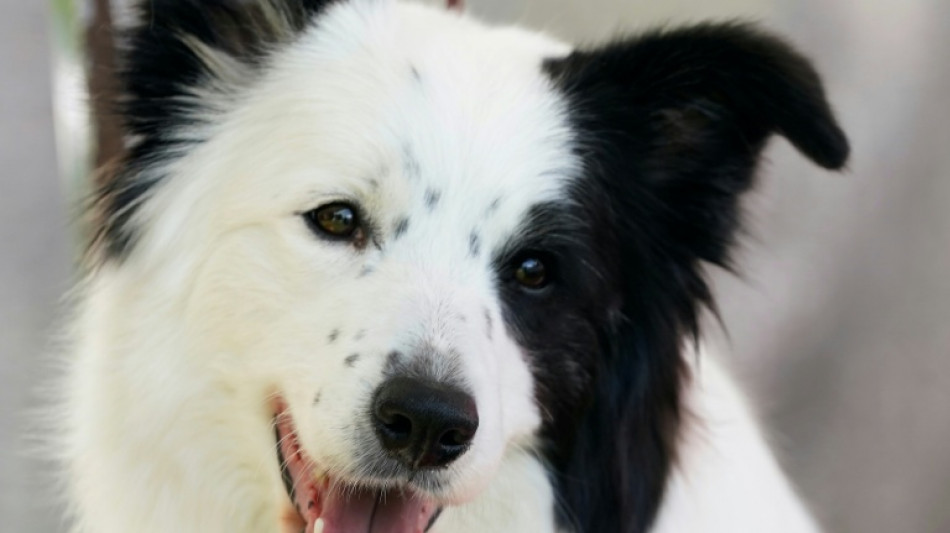
Rare genius dogs learn vocabulary by eavesdropping: study / Photo: TIMOTHY A. CLARY - AFP
There's a few special words that will perk the ears of many a dog -- hungry, park, and of course T-R-E-A-T.
But a choice group of gifted canines appear to have remarkable capacity for learning human vocabulary, to the point that they acquire language by eavesdropping the way young toddlers do.
That's according to a new study published Thursday in the journal Science, which shows that some "gifted word learner" dogs already known capable of learning toy names through training and play can also pick up words simply by overhearing people speak to each other.
Cognitive researcher Shany Dror of the Veterinary University of Vienna's Clever Dog Lab has spent years running a "Genius Dog Challenge" that recruits canines who've demonstrated particular ability to learn language through social interactions.
In her research she noticed that some dogs seemed to be listening in on their owners: "They would tell me stories, like we were talking about ordering a pizza, and then the dog came into the living room with the toy named pizza," Dror told AFP.
So she and a team out of Hungary's Eotvos Lorand University set out to test whether their group of particularly intelligent dogs could create the association of a new word to a new object without being directly taught the connection.
And in a new development they found the gifted dogs could learn new toy names just as well from overheard speech as they did when directly addressed, proving it by later retrieving the toys.
These dogs are considered outliers: Dror said her team has been searching for some seven years for dogs who know toy names, and have found about 45.
Yet she said the findings offer some clues about the "complex machinery needed for social learning, to see if it exists in an animal that does not have language."
"We found that it does exist," Dror said. "This gives us a kind of hint to the fact that before humans developed language, they first had this very complex cognitive ability to learn from others."
- Canine savants? -
Clive Wynne, a canine behaviorist at Arizona State University, called the study "very nicely done," but cautioned that the animals studied were "deeply exceptional" and that people shouldn't expect genius qualities from their family pets.
But how do these intelligent pups become so smart?
"One obvious possibility is that these dogs are true canine savants," said Wynne.
"But another possibility is that it's not their cognition that's exceptional, it's their motivational system -- that they have motivational systems that can be activated and yet never fill up."
Wynne gave the example of the dog Chaser, who had a phenomenal vocabulary of more than a 1,000 words -- and who also had a phenomenal capacity for training and play that isn't representative of the species.
Chaser was a Border Collie, a working dog breed Dror said is among the top dog types among gifted word learners.
But she said they have seen a "surprising" range of breeds represented including a Shih Tzu, a Pekingese, Yorkshires along with mixed breeds including a rescue.
Even though "typical" dogs aren't likely to learn from overheard speech, Dror emphasized that dogs in general still "are really good at understanding human communicative cues."
"Even if our dogs do not know the names of objects, I think we can still pay more attention to how we are conducting ourselves when we're interacting with our dogs," Drof said, "with the underlying thought that maybe our dogs are learning something from this."
K.Pokorny--TPP