The Prague Post - Israel-Iran: USA Strikes

EUR -
AED 4.273889
AFN 73.306066
ALL 96.171614
AMD 439.013911
ANG 2.082526
AOA 1067.01832
ARS 1647.19984
AUD 1.645564
AWG 2.097384
AZN 1.976855
BAM 1.968508
BBD 2.343731
BDT 142.318793
BGN 1.917196
BHD 0.439216
BIF 3275.525677
BMD 1.163597
BND 1.49012
BOB 8.069681
BRL 6.055587
BSD 1.163673
BTN 107.344
BWP 15.813273
BYN 3.401359
BYR 22806.502048
BZD 2.340208
CAD 1.580258
CDF 2513.369561
CHF 0.904934
CLF 0.026945
CLP 1063.957983
CNY 8.041732
CNH 8.01439
COP 4375.881221
CRC 553.957239
CUC 1.163597
CUP 30.835322
CVE 111.064986
CZK 24.373984
DJF 206.794079
DKK 7.472855
DOP 70.394186
DZD 152.999217
EGP 61.42954
ERN 17.453956
ETB 182.684384
FJD 2.564743
FKP 0.867551
GBP 0.866029
GEL 3.176634
GGP 0.867551
GHS 12.54937
GIP 0.867551
GMD 84.942452
GNF 10210.563927
GTQ 8.925314
GYD 243.453801
HKD 9.099503
HNL 30.928172
HRK 7.536149
HTG 152.448952
HUF 386.049498
IDR 19657.808449
ILS 3.609583
IMP 0.867551
INR 107.594096
IQD 1523.730328
IRR 1536995.334055
ISK 145.111903
JEP 0.867551
JMD 182.297675
JOD 0.825029
JPY 183.484169
KES 150.455617
KGS 101.756645
KHR 4671.842376
KMF 494.529182
KPW 1047.236992
KRW 1701.004652
KWD 0.357888
KYD 0.969769
KZT 579.470995
LAK 24825.342738
LBP 104200.115308
LKR 362.422873
LRD 212.938311
LSL 19.246217
LTL 3.4358
LVL 0.703848
LYD 7.429534
MAD 10.947993
MDL 20.166365
MGA 4863.835631
MKD 61.748406
MMK 2443.636559
MNT 4152.986519
MOP 9.368037
MRU 46.672245
MUR 55.7716
MVR 17.977844
MWK 2020.583363
MXN 20.502574
MYR 4.611363
MZN 74.365901
NAD 19.246231
NGN 1626.987959
NIO 42.715755
NOK 11.173335
NPR 171.750803
NZD 1.961458
OMR 0.4474
PAB 1.163713
PEN 4.059212
PGK 5.020909
PHP 68.426481
PKR 325.050623
PLN 4.249166
PYG 7488.408626
QAR 4.236643
RON 5.097837
RSD 117.399925
RUB 91.051314
RWF 1701.297997
SAR 4.368348
SBD 9.361351
SCR 16.491288
SDG 698.736459
SEK 10.632374
SGD 1.483118
SHP 0.872999
SLE 28.537196
SLL 24400.047443
SOS 664.993921
SRD 43.829222
STD 24084.109503
STN 25.075516
SVC 10.18182
SYP 128.670464
SZL 19.246056
THB 36.850841
TJS 11.153418
TMT 4.07259
TND 3.397511
TOP 2.801663
TRY 51.258891
TTD 7.895975
TWD 36.985516
TZS 3002.079898
UAH 51.140698
UGX 4381.285052
USD 1.163597
UYU 46.550927
UZS 14213.337644
VES 503.401927
VND 30576.421305
VUV 138.904014
WST 3.188825
XAF 660.219297
XAG 0.013372
XAU 0.000226
XCD 3.14468
XCG 2.09724
XDR 0.824703
XOF 658.595681
XPF 119.331742
YER 277.629268
ZAR 18.959072
ZMK 10473.776004
ZMW 22.489188
ZWL 374.677773
  • RBGPF

    0.1000

    82.5

    +0.12%

  • CMSD

    -0.0400

    23.16

    -0.17%

  • CMSC

    0.0350

    23.22

    +0.15%

  • BCE

    -0.1800

    25.88

    -0.7%

  • GSK

    1.0000

    55.51

    +1.8%

  • BCC

    -0.8600

    74.49

    -1.15%

  • AZN

    0.7300

    194.95

    +0.37%

  • RIO

    0.1400

    90.35

    +0.15%

  • NGG

    0.5500

    90.41

    +0.61%

  • RYCEF

    -0.3000

    16.7

    -1.8%

  • BTI

    0.4600

    58.33

    +0.79%

  • RELX

    0.0000

    35.68

    0%

  • JRI

    0.0100

    12.58

    +0.08%

  • VOD

    -0.0300

    14.48

    -0.21%

  • BP

    0.2100

    40.65

    +0.52%


Israel-Iran: USA Strikes


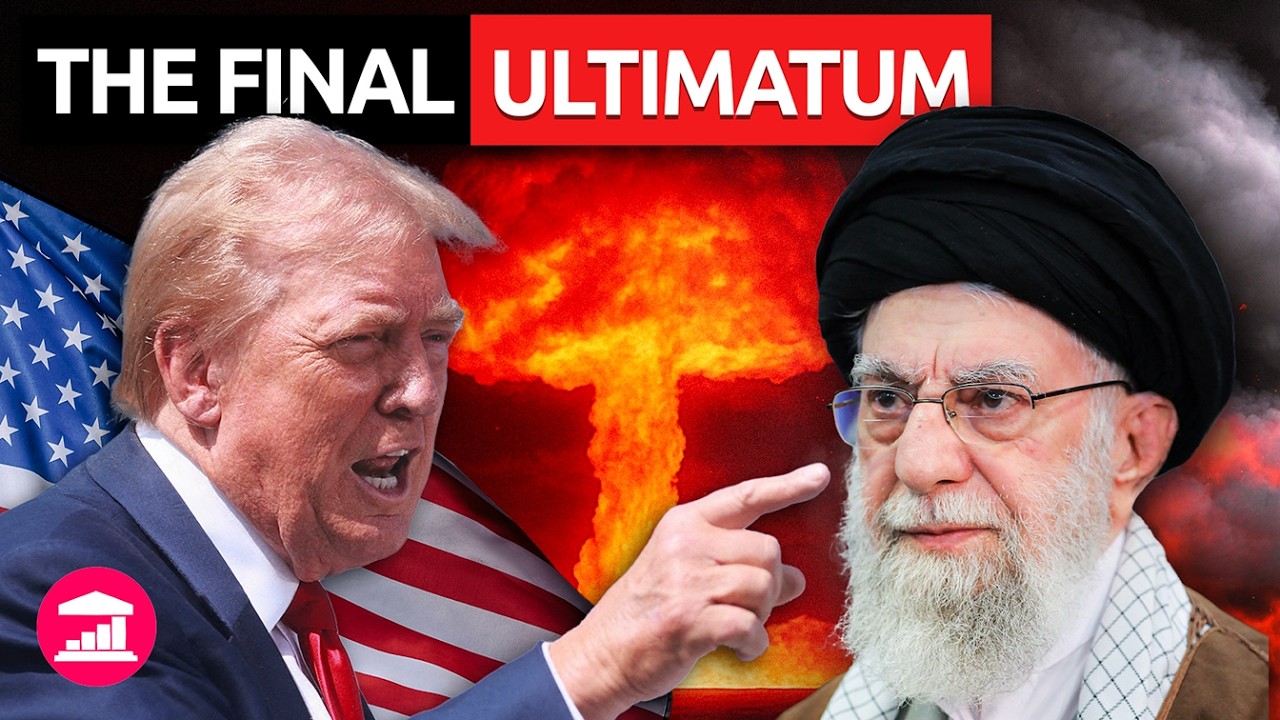
The ongoing conflict between Israel and Iran has reached a critical juncture, with the United States becoming increasingly embroiled in the hostilities. Recent military actions, including U.S. strikes on Iranian nuclear sites, have escalated tensions in the Middle East, drawing global attention and concern. This article explores the latest developments in the Israel-Iran conflict, the role of the United States, and the potential implications for international security.

Background of the Conflict
The Israel-Iran conflict has deep historical roots, but recent events have brought the tensions to a boiling point. Israel has long viewed Iran’s nuclear programme as an existential threat, while Iran has consistently denied seeking nuclear weapons, insisting its programme is for peaceful purposes. The conflict intensified in June 2025, when Israel launched a series of airstrikes on Iranian nuclear facilities, including Fordow, Natanz, and Isfahan. These strikes were aimed at crippling Iran’s ability to develop nuclear weapons, a goal Israel has pursued with increasing urgency.

In response, Iran retaliated by firing missiles at Israeli targets, including Ben Gurion Airport and military command centres. The Iranian Revolutionary Guard Corps (IRGC) also deployed advanced missiles, such as the Kheibar Shekan, in what it described as retaliatory measures. The conflict has resulted in significant casualties, with over 430 deaths reported in Iran and 24 in Israel, along with thousands of injuries on both sides.

U.S. Involvement: A Turning Point
The United States, a long-standing ally of Israel, initially maintained a cautious stance, focusing on diplomatic efforts to de-escalate the situation. However, on June 22, 2025, the U.S. military launched airstrikes on three key Iranian nuclear sites—Fordow, Natanz, and Isfahan—marking a significant escalation in the conflict. U.S. President Donald Trump described the operation, dubbed "Operation Midnight Hammer," as a "spectacular military success" and warned Iran of further strikes if Voiceit retaliated.

The U.S. strikes were carried out using B-2 stealth bombers and submarine-launched Tomahawk cruise missiles, targeting Iran's nuclear infrastructure. While Trump claimed that the sites were "completely and fully obliterated," Iranian officials downplayed the damage, stating that no contamination or radiation leaks had occurred. The strikes have raised concerns about the potential for a broader regional war, with fears that the conflict could spiral out of control.

International Reactions and Diplomatic Efforts
The international community has reacted with alarm to the escalating conflict. United Nations Secretary-General António Guterres expressed grave concern, warning that the situation could lead to "catastrophic consequences for civilians, the region, and the world." He called for an immediate cessation of hostilities and a return to negotiations. Similarly, the European Union’s foreign policy chief, Kaja Kallas, urged all parties to exercise restraint and prevent further escalation.

Several countries, including China, Russia, and members of the Arab League, have condemned the U.S. and Israeli actions, calling them violations of international law. China’s official stance criticised the U.S. strikes as a "further step toward the abyss," while Oman, which had been mediating nuclear talks between the U.S. and Iran, described the attacks as a "serious violation of international law." Despite these condemnations, the U.S. and Israel have defended their actions as necessary to prevent Iran from acquiring nuclear weapons.

Diplomatic efforts to resolve the conflict have thus far failed. Iran’s foreign ministry has stated that the time for diplomacy has passed, and the country has the right to defend itself. Meanwhile, U.S. officials have indicated that they do not seek a full-scale war but are prepared to take further action if necessary. The situation remains highly volatile, with both sides exchanging threats and preparing for potential further military engagements.

Iran's Response and Internal Dynamics
Iran’s leadership has vowed to retaliate against both Israel and the United States. Supreme Leader Ayatollah Ali Khamenei has warned that the "punishment" of Israel will continue, and Iranian officials have hinted at targeting U.S. military assets in the region. Despite the external pressure, Iran’s nuclear agency has reported that its facilities remain operational, with no significant damage to its nuclear programme. However, the conflict has taken a toll on Iran’s civilian population, with hundreds of deaths and widespread disruption to daily life.

Internally, Iran faces growing unrest, as the conflict exacerbates economic hardships and fuels public discontent. Reports from Tehran indicate that many residents have fled the city to escape the violence, while others have taken to the streets in protest against the government’s handling of the crisis. The Iranian regime, already weakened by years of sanctions and internal dissent, now faces the dual challenge of managing a war with Israel and the U.S. while maintaining domestic stability.

The Role of Regional Actors
The conflict has also drawn in other regional actors, though their involvement has been limited. Iran’s proxy forces, such as Hezbollah in Lebanon and the Houthis in Yemen, have remained largely silent, offering little concrete support to Tehran. This lack of backing has left Iran increasingly isolated, as its allies face their own domestic pressures and are reluctant to engage in a wider conflict. Israel, on the other hand, has received tacit support from several Gulf states, which view Iran as a common adversary.

The United States’ decision to intervene militarily has further complicated the regional dynamics. While some Arab nations have privately welcomed the strikes as a blow to Iran’s nuclear ambitions, others have publicly condemned the U.S. actions, fearing that the conflict could destabilise the entire Middle East. The situation remains fluid, with the potential for further escalation depending on Iran’s next moves.

Final Conclusion
The Israel-Iran conflict, now involving the United States, represents one of the most dangerous flashpoints in the Middle East in decades. With both sides entrenched in their positions and the international community divided on how to respond, the risk of a broader war looms large. The coming days will be critical in determining whether diplomatic efforts can prevail or if the region will descend into further violence. As the world watches, the stakes for global security have never been higher.

Featured


Marhabaan, welcome to the UAE and Dubai!

Marhabaan, welcome to the UAE and Dubai! The "skyward striving" Dubai next to ancient desert cities. Mysterious Bedouins and magnificent mosques exist peacefully alongside futuristic cities. Discover wadis and oases, golden sandy deserts, paradisiacal beaches and Arabian hospitality. The modern and the ancient Orient united in a book for dreaming.On this journey to Dubai and Abu Dhabi in the United Arab Emirates, the fairy tales of 1001 Arabian Nights meet the modern Arab world. These cascading cities enchant with their sky-high skyscrapers, fragrant souks, huge shopping centres and the ancient cultural heritage of the sheikhs.You can choose to stay in 4- or 5-star hotels with breakfast and swimming pools. You also have more options to book excursions so you can feel the magic of the East even more. If you want to do something out of the ordinary, you can spend an extra night in an enchanting hotel in the middle of the emirate's desert. Experience your own fairytale from 1001 nights and look forward to a holiday with plenty of casual extravagance in two superlative desert cities!

Trade and business at the Dubai Gold Souk

If Naif Deira is associated with a specific context, organization, or field, providing more details could help me offer more relevant information. Keep in mind that privacy considerations and ethical guidelines limit the amount of information available about private individuals, especially those who are not public figures. The Dubai Gold Souk is one of the most famous gold markets in the world and is located in the heart of Dubai's commercial business district in Deira. It's a traditional market where you can find a wide variety of gold, silver, and precious stone jewelry. The Gold Souk is known for its extensive selection of jewelry, including rings, bracelets, necklaces, and earrings, often crafted with intricate designs.Variety: The Gold Souk offers a vast array of jewelry designs, with a focus on gold. You can find items ranging from traditional to modern styles.Competitive Pricing: The market is known for its competitive pricing, and bargaining is a common practice. Prices are typically based on the weight of the gold and the craftsmanship involved.Gold and More: While gold is the primary focus, the souk also offers other precious metals such as silver and platinum, as well as a selection of gemstones.Cultural Experience: Visiting the Gold Souk provides not only a shopping experience but also a glimpse into the traditional trading culture of Dubai. The vibrant market is a popular destination for both tourists and locals.Security: The market is generally safe, and there are numerous shops with security measures in place. However, as with any crowded area, it's advisable to take standard precautions regarding personal belongings.Gold Souk is just one part of the larger Deira Souk complex, which also includes the Spice Souk and the Textile Souk. It's a must-visit for those interested in jewelry, and it reflects the rich cultural and trading history of Dubai.

Dubai: Amazing City Center, Night Walking Tour

During this excursion, we leisurely explore Dubai Downtown and Burj Khalifa in the evening, giving you the chance to witness the captivating transformation of the district as it comes alive with the vibrant glow of thousands of lights. As the sun sets, the illuminated facade of Burj Khalifa and the enchanting Dubai Fountain collaborate to produce a genuinely magical atmosphere.Dubai Downtown, also known as Downtown Dubai, is a distinguished and iconic district situated in the heart of Dubai, United Arab Emirates. It is a renowned neighborhood celebrated for its striking architecture, luxurious living, and exceptional entertainment options. At the core of Downtown Dubai stands the Burj Khalifa, a towering skyscraper that holds the title of the world's tallest man-made structure and serves as an emblem of modern Dubai.Burj Khalifa: The focal point of Downtown Dubai, Burj Khalifa, is famous for its groundbreaking height, reaching an impressive 828 meters (2,722 feet). Designed by architect Adrian Smith, its distinctive Y-shaped design encompasses a mix of residential, commercial, and hotel spaces.Dubai Mall: Adjacent to Burj Khalifa is the Dubai Mall, one of the largest shopping malls globally, featuring an extensive array of retail outlets, from high-end boutiques to international brands. The mall also provides various dining options, and entertainment attractions like an indoor ice rink and an aquarium, and hosts the mesmerizing Dubai Fountain.Dubai Fountain: Located just outside the Dubai Mall, the Dubai Fountain is a captivating attraction that presents a nightly spectacle of water, music, and light, captivating visitors with its perfectly synchronized performances.Emaar Boulevard: Stretching through Downtown Dubai, this boulevard is adorned with restaurants, cafes, and shops, making it a popular spot for leisurely strolls, dining, and people-watching.Luxury Living: Downtown Dubai boasts numerous upscale residential buildings and hotels, making it an appealing locale for those seeking a sophisticated urban lifestyle.Cultural Attractions: The Dubai Opera, an iconic cultural venue within the district, hosts a diverse range of performances, including opera, ballet, concerts, and theater productions.Transportation: Downtown Dubai is well-connected through public transportation, including the Dubai Metro, facilitating easy access to other parts of the city.In summary, Downtown Dubai is a dynamic and vibrant district that stands as a testament to Dubai's modernity and grandeur. It seamlessly combines architectural wonders with shopping, entertainment, and cultural offerings, creating a truly extraordinary destination.