The Prague Post - Bolivia at breaking point

EUR -
AED 4.236794
AFN 73.256092
ALL 96.168788
AMD 432.00641
ANG 2.064732
AOA 1057.901005
ARS 1632.707954
AUD 1.650341
AWG 2.076578
AZN 1.962687
BAM 1.941002
BBD 2.33411
BDT 140.340056
BGN 1.900814
BHD 0.434902
BIF 3439.179547
BMD 1.153655
BND 1.484959
BOB 7.929546
BRL 6.090721
BSD 1.158937
BTN 105.397456
BWP 15.727713
BYN 3.410359
BYR 22611.630316
BZD 2.330803
CAD 1.566253
CDF 2564.001789
CHF 0.900058
CLF 0.026899
CLP 1062.123892
CNY 7.956467
CNH 7.9914
COP 4352.99264
CRC 553.366124
CUC 1.153655
CUP 30.571847
CVE 109.430707
CZK 24.436308
DJF 206.369498
DKK 7.470923
DOP 68.99787
DZD 151.919449
EGP 60.938564
ERN 17.304819
ETB 179.754385
FJD 2.558118
FKP 0.860138
GBP 0.866268
GEL 3.143677
GGP 0.860138
GHS 12.416339
GIP 0.860138
GMD 84.792546
GNF 10161.986777
GTQ 8.80388
GYD 240.079647
HKD 9.015609
HNL 30.674184
HRK 7.540862
HTG 152.033906
HUF 398.909501
IDR 19568.28946
ILS 3.595016
IMP 0.860138
INR 106.498414
IQD 1518.134074
IRR 1523631.640721
ISK 145.106468
JEP 0.860138
JMD 181.493692
JOD 0.817939
JPY 182.914258
KES 149.049487
KGS 100.887332
KHR 4650.519642
KMF 489.149421
KPW 1038.288803
KRW 1719.325918
KWD 0.355383
KYD 0.965785
KZT 572.575186
LAK 24816.242783
LBP 103779.402072
LKR 360.53711
LRD 209.423369
LSL 19.384733
LTL 3.406443
LVL 0.697834
LYD 7.384801
MAD 10.701711
MDL 20.043426
MGA 4825.958322
MKD 61.659677
MMK 2422.756737
MNT 4117.501039
MOP 9.334114
MRU 46.379112
MUR 55.03661
MVR 17.835472
MWK 2009.563123
MXN 20.742854
MYR 4.579577
MZN 73.721532
NAD 19.384649
NGN 1612.151544
NIO 42.646468
NOK 11.125124
NPR 170.31168
NZD 1.959984
OMR 0.443568
PAB 1.147551
PEN 3.952566
PGK 4.991312
PHP 68.618796
PKR 323.709451
PLN 4.291405
PYG 7582.249906
QAR 4.184696
RON 5.098803
RSD 117.415549
RUB 90.837282
RWF 1690.352943
SAR 4.330804
SBD 9.281362
SCR 17.173013
SDG 693.916514
SEK 10.691771
SGD 1.478599
SHP 0.86554
SLE 28.293392
SLL 24191.559552
SOS 661.106909
SRD 43.442595
STD 23878.321165
STN 24.555652
SVC 10.139937
SYP 127.57103
SZL 19.390113
THB 37.03173
TJS 11.033382
TMT 4.049328
TND 3.371397
TOP 2.777724
TRY 50.858575
TTD 7.852763
TWD 36.732604
TZS 2987.965563
UAH 50.64059
UGX 4234.714794
USD 1.153655
UYU 45.145811
UZS 13994.308251
VES 490.467033
VND 30322.080888
VUV 137.717139
WST 3.161578
XAF 657.455586
XAG 0.013776
XAU 0.000226
XCD 3.117809
XCG 2.088625
XDR 0.817657
XOF 657.45273
XPF 119.331742
YER 275.146234
ZAR 19.456604
ZMK 10384.272772
ZMW 22.406977
ZWL 371.476313
  • RBGPF

    0.1000

    82.5

    +0.12%

  • RYCEF

    -0.2400

    16.96

    -1.42%

  • AZN

    -3.3000

    194.22

    -1.7%

  • CMSC

    -0.1050

    23.185

    -0.45%

  • RELX

    0.5000

    35.68

    +1.4%

  • BCE

    0.0800

    26.06

    +0.31%

  • NGG

    0.1200

    89.86

    +0.13%

  • VOD

    -0.1100

    14.51

    -0.76%

  • GSK

    -0.7600

    54.51

    -1.39%

  • RIO

    -0.6200

    90.21

    -0.69%

  • CMSD

    -0.0100

    23.2

    -0.04%

  • JRI

    -0.2300

    12.57

    -1.83%

  • BP

    1.1400

    40.44

    +2.82%

  • BCC

    -1.9600

    75.35

    -2.6%

  • BTI

    -0.7200

    57.87

    -1.24%


Bolivia at breaking point


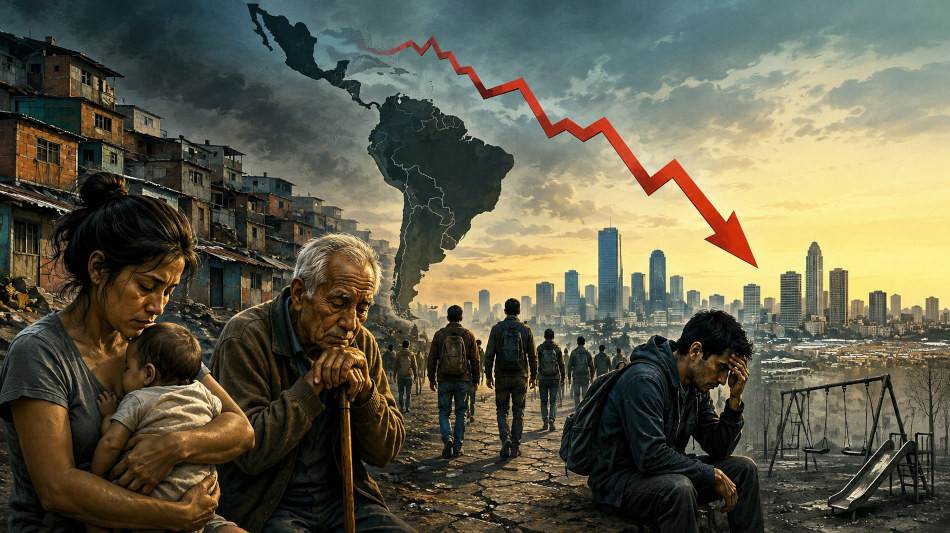
In recent months, Bolivia has lurched from crisis to crisis. Long queues at gas stations, sporadic road blockades, and clashes between rival political camps have fed fears of a broader internal conflict. A year after a failed military putsch shook La Paz, the country now faces a decisive political transition against the backdrop of a rapidly deteriorating economy. As of August 18, 2025, preliminary results point to an October 19 runoff that ends two decades of dominance by the ruling movement—an inflection point that could steer the country toward stabilization or push it closer to a dangerous spiral. 

A political rupture with violent undertones
Bolivia’s governing bloc fractured into warring factions after the split between President Luis Arce and his onetime mentor, former president Evo Morales. That rift spilled into the streets this year: blockades, counter-mobilizations, and deadly confrontations were recorded in mining towns and highland corridors, with church leaders warning of a “spiral of violence.” Those tensions sit atop the still-raw memory of June 26, 2024, when armored vehicles briefly surrounded the presidential palace before the putsch collapsed and commanders were arrested.

The economic picture is grim. In January, a major rating agency cut Bolivia to CCC-, citing vanishing foreign-exchange buffers and looming external payments; by its estimate, the country faced around $110 million in Eurobond coupons this year with only about $47 million in liquid reserves at one point. Fuel imports—long subsidized—have repeatedly faltered, triggering national transport strikes, border disruptions, and days-long lines for gasoline and diesel. Inflation, once among South America’s lowest, surged to multi-decade highs through mid-2025. 

A chronic dollar shortage has fractured the currency regime: while the official rate stayed near 6.96 bolivianos per dollar, a thriving parallel market developed. By late July the street rate hovered around 14 BOB per USD—stronger than its worst levels earlier in the year, but still far from the peg—underscoring lost confidence. As households and small firms struggled to access currency, some turned to crypto and informal finance as workarounds. 

Gold and gas: lifelines with limits
To scrape together hard currency, authorities leaned on the country’s booming (and often opaque) gold trade, monetizing bullion to raise billions in fresh dollars—an emergency bridge, not a structural fix. Meanwhile, the gas engine that powered Bolivia for two decades has sputtered. Exports to Argentina ended in 2024 as output slumped, and in a symbolic reversal this year, Argentina began shipping Vaca Muerta gas through Bolivia toward Brazil using Bolivian pipelines—signaling how far the regional energy balance has shifted. 

Why fears of wider conflict are not far-fetched
No single spark guarantees a slide into civil war, but several risk factors now overlap: factionalized parties with loyal street bases, pockets of armed actors and hardliners, a legitimacy fight around barred candidacies and court rulings, and an economy that can no longer cushion shocks with cheap fuel or a steady dollar supply. Independent monitors have recorded lethal violence tied to the intra-left feud, while civic leaders in blockaded towns report confrontations between residents, protesters, and security forces. Each new blockade erodes livelihoods, deepens scarcity, and shortens tempers—a classic recipe for escalation. 

The runway to October—and what comes after
The first-round result has upended Bolivia’s political map: two opposition figures advanced and the ruling movement’s candidate finished far behind, all amid the worst macro stress in a generation. Whoever wins in October will inherit unpopular choices: rationalizing fuel subsidies, rebuilding reserves, restoring a functional FX market, and reviving the gas sector while speeding up transparent lithium and gold governance. Failure risks further shortages, more street battles over scarcity, and a dangerous normalization of political violence. Success demands a credible stabilization plan, broad buy-in from unions and regional elites, and early signals—like targeted cash transfers and a clear, time-bound subsidy path—to keep social peace while reforms bite.
Featured


Marhabaan, welcome to the UAE and Dubai!

Marhabaan, welcome to the UAE and Dubai! The "skyward striving" Dubai next to ancient desert cities. Mysterious Bedouins and magnificent mosques exist peacefully alongside futuristic cities. Discover wadis and oases, golden sandy deserts, paradisiacal beaches and Arabian hospitality. The modern and the ancient Orient united in a book for dreaming.On this journey to Dubai and Abu Dhabi in the United Arab Emirates, the fairy tales of 1001 Arabian Nights meet the modern Arab world. These cascading cities enchant with their sky-high skyscrapers, fragrant souks, huge shopping centres and the ancient cultural heritage of the sheikhs.You can choose to stay in 4- or 5-star hotels with breakfast and swimming pools. You also have more options to book excursions so you can feel the magic of the East even more. If you want to do something out of the ordinary, you can spend an extra night in an enchanting hotel in the middle of the emirate's desert. Experience your own fairytale from 1001 nights and look forward to a holiday with plenty of casual extravagance in two superlative desert cities!

Trade and business at the Dubai Gold Souk

If Naif Deira is associated with a specific context, organization, or field, providing more details could help me offer more relevant information. Keep in mind that privacy considerations and ethical guidelines limit the amount of information available about private individuals, especially those who are not public figures. The Dubai Gold Souk is one of the most famous gold markets in the world and is located in the heart of Dubai's commercial business district in Deira. It's a traditional market where you can find a wide variety of gold, silver, and precious stone jewelry. The Gold Souk is known for its extensive selection of jewelry, including rings, bracelets, necklaces, and earrings, often crafted with intricate designs.Variety: The Gold Souk offers a vast array of jewelry designs, with a focus on gold. You can find items ranging from traditional to modern styles.Competitive Pricing: The market is known for its competitive pricing, and bargaining is a common practice. Prices are typically based on the weight of the gold and the craftsmanship involved.Gold and More: While gold is the primary focus, the souk also offers other precious metals such as silver and platinum, as well as a selection of gemstones.Cultural Experience: Visiting the Gold Souk provides not only a shopping experience but also a glimpse into the traditional trading culture of Dubai. The vibrant market is a popular destination for both tourists and locals.Security: The market is generally safe, and there are numerous shops with security measures in place. However, as with any crowded area, it's advisable to take standard precautions regarding personal belongings.Gold Souk is just one part of the larger Deira Souk complex, which also includes the Spice Souk and the Textile Souk. It's a must-visit for those interested in jewelry, and it reflects the rich cultural and trading history of Dubai.

Dubai: Amazing City Center, Night Walking Tour

During this excursion, we leisurely explore Dubai Downtown and Burj Khalifa in the evening, giving you the chance to witness the captivating transformation of the district as it comes alive with the vibrant glow of thousands of lights. As the sun sets, the illuminated facade of Burj Khalifa and the enchanting Dubai Fountain collaborate to produce a genuinely magical atmosphere.Dubai Downtown, also known as Downtown Dubai, is a distinguished and iconic district situated in the heart of Dubai, United Arab Emirates. It is a renowned neighborhood celebrated for its striking architecture, luxurious living, and exceptional entertainment options. At the core of Downtown Dubai stands the Burj Khalifa, a towering skyscraper that holds the title of the world's tallest man-made structure and serves as an emblem of modern Dubai.Burj Khalifa: The focal point of Downtown Dubai, Burj Khalifa, is famous for its groundbreaking height, reaching an impressive 828 meters (2,722 feet). Designed by architect Adrian Smith, its distinctive Y-shaped design encompasses a mix of residential, commercial, and hotel spaces.Dubai Mall: Adjacent to Burj Khalifa is the Dubai Mall, one of the largest shopping malls globally, featuring an extensive array of retail outlets, from high-end boutiques to international brands. The mall also provides various dining options, and entertainment attractions like an indoor ice rink and an aquarium, and hosts the mesmerizing Dubai Fountain.Dubai Fountain: Located just outside the Dubai Mall, the Dubai Fountain is a captivating attraction that presents a nightly spectacle of water, music, and light, captivating visitors with its perfectly synchronized performances.Emaar Boulevard: Stretching through Downtown Dubai, this boulevard is adorned with restaurants, cafes, and shops, making it a popular spot for leisurely strolls, dining, and people-watching.Luxury Living: Downtown Dubai boasts numerous upscale residential buildings and hotels, making it an appealing locale for those seeking a sophisticated urban lifestyle.Cultural Attractions: The Dubai Opera, an iconic cultural venue within the district, hosts a diverse range of performances, including opera, ballet, concerts, and theater productions.Transportation: Downtown Dubai is well-connected through public transportation, including the Dubai Metro, facilitating easy access to other parts of the city.In summary, Downtown Dubai is a dynamic and vibrant district that stands as a testament to Dubai's modernity and grandeur. It seamlessly combines architectural wonders with shopping, entertainment, and cultural offerings, creating a truly extraordinary destination.