The Prague Post - The Fall of South Korea?

EUR -
AED 4.273443
AFN 75.625431
ALL 96.4801
AMD 443.523657
ANG 2.083065
AOA 1066.894695
ARS 1701.912184
AUD 1.737028
AWG 2.071834
AZN 1.982504
BAM 1.954291
BBD 2.34379
BDT 142.199583
BGN 1.939135
BHD 0.44028
BIF 3447.336657
BMD 1.163462
BND 1.496931
BOB 8.058742
BRL 6.249888
BSD 1.163801
BTN 104.808068
BWP 15.613876
BYN 3.407469
BYR 22803.846938
BZD 2.340383
CAD 1.619248
CDF 2629.423588
CHF 0.931845
CLF 0.026547
CLP 1041.449823
CNY 8.117879
CNH 8.116355
COP 4319.932841
CRC 578.650681
CUC 1.163462
CUP 30.831732
CVE 110.766073
CZK 24.284473
DJF 206.770849
DKK 7.471029
DOP 73.589402
DZD 151.944393
EGP 55.14207
ERN 17.451924
ETB 180.744212
FJD 2.646996
FKP 0.866012
GBP 0.867802
GEL 3.135576
GGP 0.866012
GHS 12.478172
GIP 0.866012
GMD 86.09657
GNF 10169.818071
GTQ 8.923033
GYD 243.430977
HKD 9.069474
HNL 30.791057
HRK 7.533069
HTG 152.410999
HUF 385.606522
IDR 19595.776155
ILS 3.662623
IMP 0.866012
INR 105.023757
IQD 1524.134668
IRR 49010.819177
ISK 147.155069
JEP 0.866012
JMD 184.287694
JOD 0.82494
JPY 183.692014
KES 150.086952
KGS 101.737157
KHR 4688.750569
KMF 493.308117
KPW 1047.142312
KRW 1695.547908
KWD 0.357753
KYD 0.969747
KZT 594.470951
LAK 25130.770501
LBP 104173.873684
LKR 359.762193
LRD 209.598047
LSL 19.209194
LTL 3.4354
LVL 0.703767
LYD 6.318039
MAD 10.741664
MDL 19.724684
MGA 5331.567053
MKD 61.540852
MMK 2443.28323
MNT 4141.81393
MOP 9.344344
MRU 44.514481
MUR 53.996692
MVR 17.987556
MWK 2020.933163
MXN 20.916833
MYR 4.762635
MZN 74.349534
NAD 19.201452
NGN 1663.098957
NIO 42.786345
NOK 11.747011
NPR 167.692508
NZD 2.029412
OMR 0.449072
PAB 1.163696
PEN 3.912766
PGK 4.96071
PHP 68.988663
PKR 325.769639
PLN 4.212022
PYG 7701.05327
QAR 4.236455
RON 5.088869
RSD 117.457308
RUB 92.244961
RWF 1692.836597
SAR 4.363372
SBD 9.459194
SCR 16.186944
SDG 699.826416
SEK 10.711646
SGD 1.497419
SHP 0.872898
SLE 28.068555
SLL 24397.211834
SOS 664.922553
SRD 44.433805
STD 24081.305655
STN 24.956251
SVC 10.182094
SYP 12867.390465
SZL 19.226247
THB 36.60293
TJS 10.833987
TMT 4.072116
TND 3.371134
TOP 2.801337
TRY 49.972192
TTD 7.898867
TWD 36.775047
TZS 2905.749514
UAH 50.193325
UGX 4189.764676
USD 1.163462
UYU 45.304821
UZS 14106.972028
VES 378.104839
VND 30564.135667
VUV 140.633034
WST 3.229122
XAF 655.448048
XAG 0.01455
XAU 0.000258
XCD 3.144314
XCG 2.097271
XDR 0.814765
XOF 654.451318
XPF 119.331742
YER 277.427836
ZAR 19.18319
ZMK 10472.554531
ZMW 22.546493
ZWL 374.634154
  • RBGPF

    0.0000

    81.57

    0%

  • SCS

    0.0200

    16.14

    +0.12%

  • NGG

    0.6400

    80.12

    +0.8%

  • RELX

    0.7900

    43.14

    +1.83%

  • CMSC

    0.2600

    23.27

    +1.12%

  • RYCEF

    0.2500

    17.4

    +1.44%

  • AZN

    0.6400

    94.65

    +0.68%

  • BP

    0.1600

    34.29

    +0.47%

  • BCE

    -0.0100

    23.74

    -0.04%

  • BTI

    1.4000

    55.19

    +2.54%

  • RIO

    -3.0600

    81.13

    -3.77%

  • CMSD

    0.1900

    23.69

    +0.8%

  • JRI

    0.0600

    13.8

    +0.43%

  • VOD

    -0.3200

    13.5

    -2.37%

  • BCC

    5.0200

    83.05

    +6.04%

  • GSK

    0.1700

    50.39

    +0.34%


The Fall of South Korea?


On 3 December 2024 the unthinkable happened in Seoul. President Yoon Suk Yeol, stung by allegations of corruption and facing sliding approval ratings, issued a midnight proclamation of martial law. He deployed special forces around the National Assembly and attempted to suspend the constitution. Video footage of parliamentarians climbing over fences, riot police blocking the legislature and helicopters circling above shocked the nation. Within hours, however, the attempted emergency rule collapsed. Lawmakers across party lines defied the order, reconvened under heavy security and voted unanimously to annul the decree. Enormous street protests erupted, demanding the restoration of democracy and Yoon’s resignation. By early morning the president rescinded his decree and insisted he had simply wanted to protect the state.

The crisis did not end there. The opposition-led parliament impeached Yoon nine days later and refused to allow him back into office. In April 2025 the Constitutional Court unanimously upheld the impeachment, citing an unlawful attempt to paralyse the constitution. South Korea’s institutions thus repelled the first attempted coup in its modern democratic era. A snap presidential election took place on 3 June 2025. Lee Jae‑myung, a social democratic opposition leader, won with nearly half of the vote and turnout approaching 80 %. He pledged to heal the rifts caused by the upheaval, strengthen the rule of law and place the country back on a steady course. In his inauguration speech he called the failed coup a “watershed moment” that proved citizens’ commitment to democracy.

Trade friction, not collapse
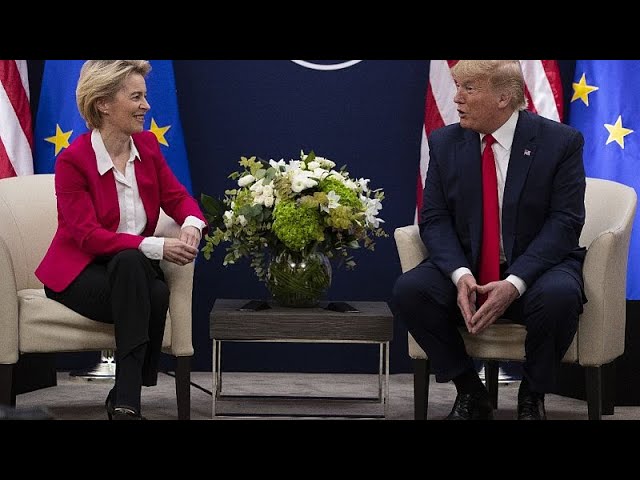
The political upheaval came against a backdrop of intense trade negotiations between Seoul and Washington. Former U.S. president Donald Trump returned to the White House in January 2025 and revived his campaign promise to rebalance trade with allies. In a phone call with president‑elect Lee in June 2025 he insisted on higher tariffs on South Korean vehicle exports and demanded that Seoul finance most of a proposed $350 billion investment fund for critical minerals. South Korea argued that such sums were unaffordable and offered phased funding instead. Negotiations stalled over Washington’s insistence on control over the fund.

Contrary to claims of a trade breakdown, exports recovered. By October 2025 South Korea’s shipments were growing again, buoyed by strong demand for semiconductors and ships. A compromise deal reached on 29 October limited U.S. tariffs on South Korean vehicles to 15 % and split investment flows to protect Korea’s currency. This partially defused tensions, though negotiations on the investment fund continued. South Korean companies accelerated diversification of markets to ASEAN countries and Europe, while domestic stimulus cushioned households from higher import prices.

Alliance strains and abandonment fears
Episodes outside the trade talks fuelled fears that Washington was abandoning Seoul. In February 2025 U.S. immigration officers raided a battery factory jointly owned by Hyundai and LG in Georgia and detained over 300 South Korean technicians for alleged visa violations. The images of handcuffed engineers sparked outrage at home and calls for Seoul to invest more in its own nuclear deterrent. The fiasco came after Trump had publicly complained that South Korea was “unstable” and should pay more for stationing U.S. troops. Policymakers in Seoul worried that ambiguous statements about troop reductions could invite provocations from North Korea and China.

Analysts caution that such fears often stem from misunderstandings rather than policy shifts. U.S. defence officials reiterated America’s security commitment and quietly increased joint exercises in the spring of 2025. Think‑tank studies noted that changes in the U.S. force posture should be accompanied by other deployments to reassure allies. President Lee has doubled down on the alliance and sought to deepen security cooperation with Japan and NATO. While domestic voices call for strategic autonomy, there is no evidence that the United States is planning a withdrawal.

Resilience instead of collapse
The narrative of South Korea’s “fall” exaggerates and conflates real challenges. The attempted coup was thwarted within hours by constitutional institutions and mass mobilisation. The political crisis led to a lawful impeachment and free election, demonstrating democratic resilience. Trade friction with the United States has been bruising, but it has not upended South Korea’s export‑driven economy or its role in supply chains. Even at the height of negotiations, U.S. troops remained on the peninsula and the two governments reaffirmed their mutual defence treaty.

South Korea faces serious questions about inequality, an ageing population, and dependence on exports. Yet rather than collapsing, it has adapted through political renewal and pragmatic economic policy. Early signs suggest that president Lee’s government is stabilising domestic politics, diversifying trade and working to rebuild trust with Washington. The “fall” narrative obscures a more nuanced reality: a vibrant democracy navigating turmoil, emerging chastened but intact.
Featured


Marhabaan, welcome to the UAE and Dubai!

Marhabaan, welcome to the UAE and Dubai! The "skyward striving" Dubai next to ancient desert cities. Mysterious Bedouins and magnificent mosques exist peacefully alongside futuristic cities. Discover wadis and oases, golden sandy deserts, paradisiacal beaches and Arabian hospitality. The modern and the ancient Orient united in a book for dreaming.On this journey to Dubai and Abu Dhabi in the United Arab Emirates, the fairy tales of 1001 Arabian Nights meet the modern Arab world. These cascading cities enchant with their sky-high skyscrapers, fragrant souks, huge shopping centres and the ancient cultural heritage of the sheikhs.You can choose to stay in 4- or 5-star hotels with breakfast and swimming pools. You also have more options to book excursions so you can feel the magic of the East even more. If you want to do something out of the ordinary, you can spend an extra night in an enchanting hotel in the middle of the emirate's desert. Experience your own fairytale from 1001 nights and look forward to a holiday with plenty of casual extravagance in two superlative desert cities!

Trade and business at the Dubai Gold Souk

If Naif Deira is associated with a specific context, organization, or field, providing more details could help me offer more relevant information. Keep in mind that privacy considerations and ethical guidelines limit the amount of information available about private individuals, especially those who are not public figures. The Dubai Gold Souk is one of the most famous gold markets in the world and is located in the heart of Dubai's commercial business district in Deira. It's a traditional market where you can find a wide variety of gold, silver, and precious stone jewelry. The Gold Souk is known for its extensive selection of jewelry, including rings, bracelets, necklaces, and earrings, often crafted with intricate designs.Variety: The Gold Souk offers a vast array of jewelry designs, with a focus on gold. You can find items ranging from traditional to modern styles.Competitive Pricing: The market is known for its competitive pricing, and bargaining is a common practice. Prices are typically based on the weight of the gold and the craftsmanship involved.Gold and More: While gold is the primary focus, the souk also offers other precious metals such as silver and platinum, as well as a selection of gemstones.Cultural Experience: Visiting the Gold Souk provides not only a shopping experience but also a glimpse into the traditional trading culture of Dubai. The vibrant market is a popular destination for both tourists and locals.Security: The market is generally safe, and there are numerous shops with security measures in place. However, as with any crowded area, it's advisable to take standard precautions regarding personal belongings.Gold Souk is just one part of the larger Deira Souk complex, which also includes the Spice Souk and the Textile Souk. It's a must-visit for those interested in jewelry, and it reflects the rich cultural and trading history of Dubai.

Dubai: Amazing City Center, Night Walking Tour

During this excursion, we leisurely explore Dubai Downtown and Burj Khalifa in the evening, giving you the chance to witness the captivating transformation of the district as it comes alive with the vibrant glow of thousands of lights. As the sun sets, the illuminated facade of Burj Khalifa and the enchanting Dubai Fountain collaborate to produce a genuinely magical atmosphere.Dubai Downtown, also known as Downtown Dubai, is a distinguished and iconic district situated in the heart of Dubai, United Arab Emirates. It is a renowned neighborhood celebrated for its striking architecture, luxurious living, and exceptional entertainment options. At the core of Downtown Dubai stands the Burj Khalifa, a towering skyscraper that holds the title of the world's tallest man-made structure and serves as an emblem of modern Dubai.Burj Khalifa: The focal point of Downtown Dubai, Burj Khalifa, is famous for its groundbreaking height, reaching an impressive 828 meters (2,722 feet). Designed by architect Adrian Smith, its distinctive Y-shaped design encompasses a mix of residential, commercial, and hotel spaces.Dubai Mall: Adjacent to Burj Khalifa is the Dubai Mall, one of the largest shopping malls globally, featuring an extensive array of retail outlets, from high-end boutiques to international brands. The mall also provides various dining options, and entertainment attractions like an indoor ice rink and an aquarium, and hosts the mesmerizing Dubai Fountain.Dubai Fountain: Located just outside the Dubai Mall, the Dubai Fountain is a captivating attraction that presents a nightly spectacle of water, music, and light, captivating visitors with its perfectly synchronized performances.Emaar Boulevard: Stretching through Downtown Dubai, this boulevard is adorned with restaurants, cafes, and shops, making it a popular spot for leisurely strolls, dining, and people-watching.Luxury Living: Downtown Dubai boasts numerous upscale residential buildings and hotels, making it an appealing locale for those seeking a sophisticated urban lifestyle.Cultural Attractions: The Dubai Opera, an iconic cultural venue within the district, hosts a diverse range of performances, including opera, ballet, concerts, and theater productions.Transportation: Downtown Dubai is well-connected through public transportation, including the Dubai Metro, facilitating easy access to other parts of the city.In summary, Downtown Dubai is a dynamic and vibrant district that stands as a testament to Dubai's modernity and grandeur. It seamlessly combines architectural wonders with shopping, entertainment, and cultural offerings, creating a truly extraordinary destination.