The Prague Post - Miracle in Germany: VW soars

EUR -
AED 4.114065
AFN 72.259582
ALL 90.790621
AMD 404.158249
ANG 2.004979
AOA 1027.255243
ARS 1706.277137
AUD 1.605841
AWG 2.019222
AZN 1.908846
BAM 1.955598
BBD 2.254667
BDT 138.445698
BGN 1.95798
BHD 0.422456
BIF 3355.553362
BMD 1.120234
BND 1.430852
BOB 13.181638
BRL 5.562192
BSD 1.119484
BTN 106.219027
BWP 15.421407
BYN 3.28696
BYR 21956.591821
BZD 2.251367
CAD 1.568609
CDF 2594.46299
CHF 0.92428
CLF 0.028243
CLP 1105.065844
CNY 7.480981
CNH 7.472639
COP 3552.732992
CRC 510.847228
CUC 1.120234
CUP 26.866225
CVE 110.25361
CZK 24.330933
DJF 199.339408
DKK 7.473811
DOP 68.662907
DZD 150.487454
EGP 61.701626
ERN 16.803514
ETB 182.080891
FJD 2.506193
FKP 0.83772
GBP 0.83759
GEL 2.901844
GGP 0.83772
GHS 12.979659
GIP 0.83772
GMD 82.897735
GNF 9906.976581
GTQ 8.557116
GYD 234.45578
HKD 8.78527
HNL 30.053895
HRK 7.537165
HTG 146.714844
HUF 366.731529
IDR 20269.350965
ILS 3.478944
IMP 0.83772
INR 106.361208
IQD 1697.024692
IRR 2052689.282929
ISK 136.422562
JEP 0.83772
JMD 177.661647
JOD 0.79429
JPY 175.72038
KES 145.354984
KGS 97.962924
KHR 4573.527541
KMF 492.347215
KPW 1008.210806
KRW 1482.658115
KWD 0.348046
KYD 0.932904
KZT 508.267495
LAK 25190.397759
LBP 100245.344367
LKR 371.711601
LRD 190.860284
LSL 18.546684
LTL 3.307761
LVL 0.677619
LYD 7.169259
MAD 10.995664
MDL 20.205913
MGA 5062.477032
MKD 61.598637
MMK 2352.610992
MNT 4031.902629
MOP 9.043866
MRU 44.738378
MUR 52.830672
MVR 17.319246
MWK 1941.099479
MXN 20.912986
MYR 4.576498
MZN 71.587148
NAD 18.546684
NGN 1492.219693
NIO 41.195744
NOK 10.482469
NPR 169.950444
NZD 1.961367
OMR 0.429016
PAB 1.119384
PEN 3.844503
PGK 5.013482
PHP 71.267107
PKR 309.775499
PLN 4.40251
PYG 6474.331183
QAR 4.080578
RON 5.3545
RSD 117.487863
RUB 89.990404
RWF 1653.929144
SAR 4.204519
SBD 9.045421
SCR 15.663382
SDG 673.825035
SEK 11.125947
SGD 1.430432
SHP 0.837151
SLE 25.709792
SLL 23490.757589
SOS 639.733914
SRD 42.176265
STD 23186.587781
STN 24.497469
SVC 9.794988
SYP 14565.285711
SZL 18.546084
THB 37.830725
TJS 10.315634
TMT 3.932022
TND 3.342755
TOP 2.697255
TRY 55.679905
TTD 7.606214
TWD 36.503734
TZS 2963.693842
UAH 50.679165
UGX 4931.490563
USD 1.120234
UYU 44.895362
UZS 13396.616091
VES 985.569686
VND 28949.654292
VUV 132.885547
WST 3.100575
XAF 655.957
XAG 0.020782
XAU 0.000280356799
XCD 3.02749
XCG 2.017492
XDR 0.792064
XOF 655.957
XPF 119.331742
YER 264.491333
ZAR 18.566461
ZMK 10083.456786
ZMW 22.506675
ZWL 360.71498
SSP 6436.081715
MXV 2.360302
  • NGG

    -0.7800

    81.86

    -0.95%

  • BTI

    -0.9900

    59.48

    -1.66%

  • BCE

    -0.4100

    20.4

    -2.01%

  • BCC

    -0.5500

    77.74

    -0.71%

  • RIO

    -0.7200

    83.42

    -0.86%

  • CMSC

    0.0000

    19.6

    0%

  • GSK

    -0.4600

    50.75

    -0.91%

  • RBGPF

    2.6200

    72.77

    +3.6%

  • RELX

    -0.0800

    40.54

    -0.2%

  • CMSD

    0.1800

    19.78

    +0.91%

  • BP

    1.2700

    51.32

    +2.47%

  • RYCEF

    -1.7500

    15.26

    -11.47%

  • VOD

    -0.3800

    15.74

    -2.41%

  • AZN

    -1.0800

    171.49

    -0.63%

  • JRI

    0.0700

    10.75

    +0.65%


Miracle in Germany: VW soars


After years of sluggish performance and a dramatic plunge in profits, Volkswagen Group has stunned investors with a remarkable rebound. The company that once seemed mired in structural problems and market headwinds has recalibrated its strategy, restructured operations and embraced electrification to deliver a turnaround that many thought impossible. This article explains how the German carmaker fell so far and what has propelled its recent surge.

The long slide: profits and shares collapse
Volkswagen’s troubles became starkly apparent in late 2024. The group’s earnings before tax for the third quarter crashed almost 60 percent to €2.4 billion, down from €5.8 billion a year earlier. Sales slumped in China, its most important market, and costly electric vehicles (EVs) struggled to find buyers after Germany ended purchase subsidies. Management acknowledged that cutbacks were looming as it planned to close under‑utilised assembly lines and trim labour costs.

The slump was mirrored in the stock market. By mid‑2024 the share price had tumbled 72 percent from its 2021 peak to a 14‑year low near €91, wiping billions from investors’ holdings. Analysts blamed structural problems: high wage costs and overstaffing in Germany, expensive energy, and the legacy of Dieselgate litigation. Its operating margin for the first nine months of 2024 was just 2.1 percent, far below peers, raising fears that Europe’s largest carmaker was becoming uncompetitive.

Further pain arrived in early 2025. U.S. tariffs on cars exported from Europe, introduced by the Trump administration, led to a €1.5‑billion hit in the first half and forced Volkswagen to cut its sales and profit margin guidance. At the same time, the company booked a 4.7‑billion‑euro charge at Porsche related to a reversal of its electric‑vehicle strategy. The passenger‑car division’s operating profit plummeted 84.9 percent as electric models remained costly to build.

Strategic reset: cost‑cutting and partnerships
Recognising the severity of the situation, chief executive Oliver Blume launched an aggressive restructuring programme. Management promised to cut over 35 000 jobs through natural attrition by the end of the decade and aimed to save €1 billion annually by trimming bureaucracy and simplifying product lines. The company also reduced its five‑year investment plan by €15 billion, focusing resources on core brands and promising to make electric models profitable.

A key catalyst for renewed investor confidence was Volkswagen’s decision to accelerate electrification and seek external expertise. In June 2024 the group announced a joint venture with U.S. start‑up Rivian. Volkswagen committed to invest up to US$5 billion in Rivian and to develop a next‑generation software‑defined vehicle platform combining Rivian’s advanced electronics and software with Volkswagen’s scale. Executives highlighted that the partnership would allow both companies to share components, reduce costs and deliver connected vehicles faster.

Volkswagen also expanded its battery‑cell operations through subsidiary PowerCo and renegotiated supply agreements to lower input costs. By building new battery plants in Germany, Spain and Canada, the group aims to secure up to 170 gigawatt‑hours of capacity, although some projects have been delayed in response to weaker near‑term EV demand.

Electrification pays off: EV sales surge
The pivot toward electrification began to bear fruit in 2025. In the first half of the year, the group’s battery‑electric vehicle (BEV) deliveries rose by about 50 percent compared with the previous year. Total BEV sales reached 465 500, raising the battery‑electric share of total deliveries from 7 percent to 11 percent. The improvement was driven by strong demand in Europe, where BEV deliveries jumped about 90 percent; the group captured roughly 28 percent of the European BEV market and became the regional leader. New models such as the long‑range ID.7 sedan and the refreshed ID.4 crossover helped attract customers, while Skoda and Audi expanded their electric line‑ups.

Robust order inflows underscored growing confidence: the company reported that outstanding BEV orders in Western Europe were more than 60 percent higher than a year earlier. This surge indicated that the supply‑chain problems and software glitches that had plagued earlier launches were being resolved.

Investor sentiment improves
Despite the heavy tariff hit, the second half of 2025 brought signs of stabilisation. In July the company trimmed its full‑year sales and margin guidance, acknowledging that tariffs and restructuring costs would weigh on results, but shares recovered from a 4.6 percent fall to end the day 1 percent higher as investors were reassured that losses were contained and that luxury brands Audi and Porsche would recover in 2026. Chief executive Blume told investors that cost‑cutting had to be accelerated and expressed confidence that a trade deal reducing U.S. tariffs from 25 percent to 15 percent would materially improve margins.

In October, ahead of third‑quarter results, Volkswagen held a pre‑close call with investors. Analysts described the message as “reassuring”: management said operating profit would likely stay within guidance despite the tariff drag. Investors were comforted by solid sales momentum in the core brand, and the share price gained about 1.2 percent in early trading.

The group’s long‑term outlook remains cautious. In March it forecast a 2025 operating profit margin of 5.5–6.5 percent, only slightly above 2024 levels, as the costs of ramping up EV and battery production and uncertainties around U.S. trade policy continue to weigh on earnings. Yet analysts noted that the upper end of the margin range exceeded market expectations and called the plan credible.

Conclusion: from despair to cautious optimism
Volkswagen’s dramatic rebound after a 60 percent profit collapse illustrates how quickly fortunes can change when decisive action meets shifting market dynamics. Aggressive cost‑cutting, a strategic partnership with Rivian and a renewed focus on battery‑electric vehicles have begun to lift profits and restore investor confidence. While challenges remain – including unresolved trade tensions, high manufacturing costs and intense competition from Chinese EV manufacturers – the German giant has demonstrated that it can adapt. The “miracle” is not a sudden transformation but the result of disciplined restructuring, technological collaboration and a growing appetite for electric vehicles. Investors who once despaired at sinking margins now see signs of a sustainable turnaround.

Featured


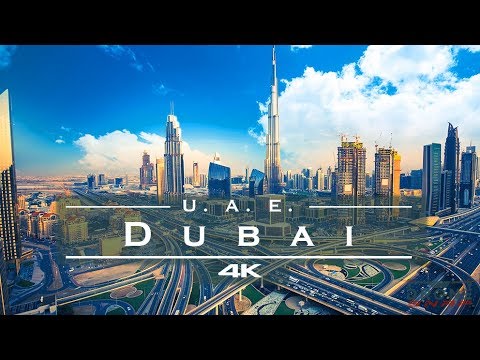
Marhabaan, welcome to the UAE and Dubai!

Marhabaan, welcome to the UAE and Dubai! The "skyward striving" Dubai next to ancient desert cities. Mysterious Bedouins and magnificent mosques exist peacefully alongside futuristic cities. Discover wadis and oases, golden sandy deserts, paradisiacal beaches and Arabian hospitality. The modern and the ancient Orient united in a book for dreaming.On this journey to Dubai and Abu Dhabi in the United Arab Emirates, the fairy tales of 1001 Arabian Nights meet the modern Arab world. These cascading cities enchant with their sky-high skyscrapers, fragrant souks, huge shopping centres and the ancient cultural heritage of the sheikhs.You can choose to stay in 4- or 5-star hotels with breakfast and swimming pools. You also have more options to book excursions so you can feel the magic of the East even more. If you want to do something out of the ordinary, you can spend an extra night in an enchanting hotel in the middle of the emirate's desert. Experience your own fairytale from 1001 nights and look forward to a holiday with plenty of casual extravagance in two superlative desert cities!

Trade and business at the Dubai Gold Souk

If Naif Deira is associated with a specific context, organization, or field, providing more details could help me offer more relevant information. Keep in mind that privacy considerations and ethical guidelines limit the amount of information available about private individuals, especially those who are not public figures. The Dubai Gold Souk is one of the most famous gold markets in the world and is located in the heart of Dubai's commercial business district in Deira. It's a traditional market where you can find a wide variety of gold, silver, and precious stone jewelry. The Gold Souk is known for its extensive selection of jewelry, including rings, bracelets, necklaces, and earrings, often crafted with intricate designs.Variety: The Gold Souk offers a vast array of jewelry designs, with a focus on gold. You can find items ranging from traditional to modern styles.Competitive Pricing: The market is known for its competitive pricing, and bargaining is a common practice. Prices are typically based on the weight of the gold and the craftsmanship involved.Gold and More: While gold is the primary focus, the souk also offers other precious metals such as silver and platinum, as well as a selection of gemstones.Cultural Experience: Visiting the Gold Souk provides not only a shopping experience but also a glimpse into the traditional trading culture of Dubai. The vibrant market is a popular destination for both tourists and locals.Security: The market is generally safe, and there are numerous shops with security measures in place. However, as with any crowded area, it's advisable to take standard precautions regarding personal belongings.Gold Souk is just one part of the larger Deira Souk complex, which also includes the Spice Souk and the Textile Souk. It's a must-visit for those interested in jewelry, and it reflects the rich cultural and trading history of Dubai.

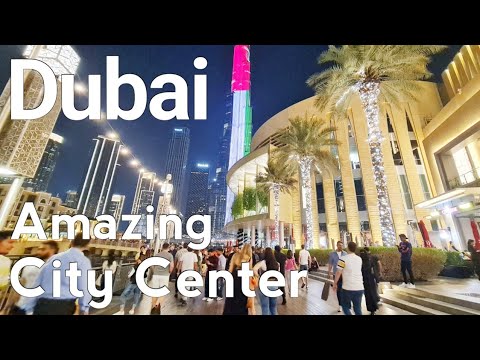
Dubai: Amazing City Center, Night Walking Tour

During this excursion, we leisurely explore Dubai Downtown and Burj Khalifa in the evening, giving you the chance to witness the captivating transformation of the district as it comes alive with the vibrant glow of thousands of lights. As the sun sets, the illuminated facade of Burj Khalifa and the enchanting Dubai Fountain collaborate to produce a genuinely magical atmosphere.Dubai Downtown, also known as Downtown Dubai, is a distinguished and iconic district situated in the heart of Dubai, United Arab Emirates. It is a renowned neighborhood celebrated for its striking architecture, luxurious living, and exceptional entertainment options. At the core of Downtown Dubai stands the Burj Khalifa, a towering skyscraper that holds the title of the world's tallest man-made structure and serves as an emblem of modern Dubai.Burj Khalifa: The focal point of Downtown Dubai, Burj Khalifa, is famous for its groundbreaking height, reaching an impressive 828 meters (2,722 feet). Designed by architect Adrian Smith, its distinctive Y-shaped design encompasses a mix of residential, commercial, and hotel spaces.Dubai Mall: Adjacent to Burj Khalifa is the Dubai Mall, one of the largest shopping malls globally, featuring an extensive array of retail outlets, from high-end boutiques to international brands. The mall also provides various dining options, and entertainment attractions like an indoor ice rink and an aquarium, and hosts the mesmerizing Dubai Fountain.Dubai Fountain: Located just outside the Dubai Mall, the Dubai Fountain is a captivating attraction that presents a nightly spectacle of water, music, and light, captivating visitors with its perfectly synchronized performances.Emaar Boulevard: Stretching through Downtown Dubai, this boulevard is adorned with restaurants, cafes, and shops, making it a popular spot for leisurely strolls, dining, and people-watching.Luxury Living: Downtown Dubai boasts numerous upscale residential buildings and hotels, making it an appealing locale for those seeking a sophisticated urban lifestyle.Cultural Attractions: The Dubai Opera, an iconic cultural venue within the district, hosts a diverse range of performances, including opera, ballet, concerts, and theater productions.Transportation: Downtown Dubai is well-connected through public transportation, including the Dubai Metro, facilitating easy access to other parts of the city.In summary, Downtown Dubai is a dynamic and vibrant district that stands as a testament to Dubai's modernity and grandeur. It seamlessly combines architectural wonders with shopping, entertainment, and cultural offerings, creating a truly extraordinary destination.