The Prague Post - Australian economy Crisis

EUR -
AED 4.177857
AFN 75.655231
ALL 93.77151
AMD 415.873647
AOA 1043.183623
ARS 1703.139744
AUD 1.632144
AWG 2.047688
AZN 1.938444
BAM 1.955206
BBD 2.292004
BDT 140.367353
BHD 0.42917
BIF 3399.667097
BMD 1.137604
BND 1.468954
BOB 12.637161
BRL 5.783017
BSD 1.137954
BTN 109.829631
BWP 15.719224
BYN 3.264008
BYR 22297.045604
BZD 2.288705
CAD 1.60408
CDF 2570.986282
CHF 0.931214
CLF 0.027331
CLP 1075.683181
CNY 7.703975
CNH 7.703527
COP 3641.493624
CRC 517.842667
CUC 1.137604
CUP 30.146516
CVE 110.231509
CZK 24.15874
DJF 202.638433
DKK 7.478957
DOP 66.269866
DZD 151.755893
EGP 58.441244
ERN 17.064066
ETB 183.671796
FJD 2.561093
FKP 0.852678
GBP 0.854089
GEL 2.986257
GGP 0.852678
GHS 13.233979
GIP 0.852678
GMD 84.183128
GNF 9983.966623
GTQ 8.681362
GYD 238.077666
HKD 8.921265
HNL 30.479739
HRK 7.538112
HTG 148.784795
HUF 361.246708
IDR 20388.145475
ILS 3.465542
IMP 0.852678
INR 109.855614
IQD 1490.261721
IRR 1564206.005764
ISK 143.114968
JEP 0.852678
JMD 180.495161
JOD 0.806606
JPY 186.402209
KES 147.365227
KGS 99.483939
KHR 4601.601919
KMF 493.720694
KRW 1660.345386
KWD 0.352749
KYD 0.948312
KZT 541.065611
LAK 25767.171293
LBP 101903.839083
LKR 382.413813
LRD 205.967422
LSL 19.146315
LTL 3.35905
LVL 0.688126
LYD 7.281788
MAD 10.650825
MDL 20.112889
MGA 5042.467973
MKD 61.556298
MMK 2389.236914
MNT 4090.293783
MOP 9.191907
MRU 45.561486
MUR 53.957006
MVR 17.576418
MWK 1976.019179
MXN 19.890107
MYR 4.654399
MZN 72.697161
NAD 19.14631
NGN 1553.403001
NIO 41.877277
NOK 10.89723
NPR 175.72761
NZD 1.971414
OMR 0.437597
PAB 1.137954
PEN 3.870703
PGK 5.090453
PHP 70.173169
PKR 316.095262
PLN 4.3192
PYG 6879.909713
QAR 4.145601
RON 5.218476
RSD 117.354345
RUB 88.93298
RWF 1676.790549
SAR 4.282815
SBD 9.1931
SCR 16.541191
SDG 683.135604
SEK 11.056268
SGD 1.46825
SLE 27.558509
SOS 650.145062
SRD 42.992917
STD 23546.113594
STN 24.492559
SVC 9.956975
SZL 19.146301
THB 38.342998
TJS 10.497611
TMT 3.981615
TND 3.370887
TRY 53.857039
TTD 7.731651
TWD 36.813295
TZS 3004.187253
UAH 50.997906
UGX 4289.696684
USD 1.137604
UYU 45.696116
UZS 13771.81578
VES 843.307715
VND 29941.746954
VUV 134.789885
WST 3.135591
XAF 655.757765
XAG 0.019523
XAU 0.000281
XCD 3.074433
XCG 2.050877
XDR 0.815552
XOF 655.757765
XPF 119.331742
YER 271.375935
ZAR 19.150778
ZMK 10239.808511
ZMW 21.080595
ZWL 366.308142
  • CMSC

    -0.0650

    21.725

    -0.3%

  • CMSD

    -0.0200

    21.98

    -0.09%

  • BCC

    1.3800

    77.84

    +1.77%

  • BCE

    0.0900

    21.3

    +0.42%

  • JRI

    0.1600

    13.06

    +1.23%

  • RIO

    -0.2900

    91.22

    -0.32%

  • RELX

    1.5500

    34.41

    +4.5%

  • NGG

    -0.0700

    82.3

    -0.09%

  • GSK

    0.6100

    51.35

    +1.19%

  • VOD

    -0.1000

    15.15

    -0.66%

  • RYCEF

    -0.1900

    18.17

    -1.05%

  • RBGPF

    -0.7300

    66

    -1.11%

  • BP

    -0.1100

    43.82

    -0.25%

  • BTI

    1.1200

    60.96

    +1.84%

  • AZN

    0.9900

    169.26

    +0.58%


Australian economy Crisis


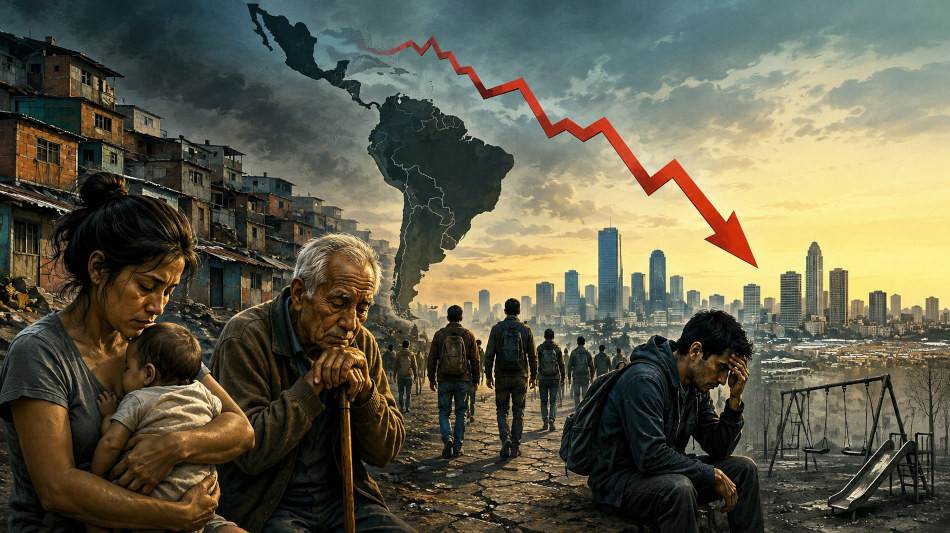
Australia is facing a suite of troubling economic trends. Growth is slowing, prices are rising and people’s living standards are slipping. Despite a headline unemployment rate that remains around 4.3 %, officials warn that the economy may be trapped in a slow‑growth, high‑inflation environment unless investment and productivity improve. Households are feeling the strain as wages fail to keep pace with costs and the housing market becomes increasingly inaccessible.

Official national accounts show that the economy grew by only 0.6 % in the June 2025 quarter and by 1.3 % over the year; the terms of trade fell and the household saving ratio slid to 4.2 %. Living cost indexes rose between 0.6 % and 1.5 % in the September quarter, with housing and recreation costs making the biggest contribution. Consumer prices increased 1.3 % in the September quarter and 3.2 % over the year, while wages grew only 0.8 % in the June quarter and 3.4 % annually. The resulting squeeze on household budgets is causing real incomes to stagnate.

Underlying inflation has accelerated to around 3 %, reflecting higher electricity, fuel and services prices. The September inflation pulse overshot forecasts and dashed hopes of a quick rate cut; electricity prices jumped 9 % in the quarter, holiday travel costs rose 2.5 % and local government charges climbed 6.3 %. Analysts note that real wages are unlikely to regain their 2011 purchasing power until the latter part of this decade.

Housing is the most visible symptom of the malaise. About one‑third of households rent, and median advertised rents have increased by roughly 48 % over the past decade; they rose 5.5 % between the first quarter of 2024 and the first quarter of 2025. More than 1.26 million low‑income households spend over 30 % of their disposable income on housing, including 44.5 % of mortgage holders and 20.5 % of renters. Median house prices have risen by 8.6 % in the past year, far outpacing incomes, and home values rose 1.1 % in October alone. Investor lending now accounts for two in every five new home loans, with the value of these loans rising 17.6 % and calls emerging for regulators to curb landlord credit growth. A government scheme allowing first‑home buyers to borrow with a 5 % deposit effectively grants buyers the equivalent of a $120 000 deposit on an $800 000 home; critics warn that this incentive fuels investor speculation and pushes up prices.

Mortgage stress is spreading. Research shows that 27.9 % of mortgage holders were at risk of stress in the three months to August 2025, with 17.9 % extremely at risk. Nearly one million Australians now work two or more jobs – 6.6 % of the employed population – because rising living costs and inflation are outpacing wage growth. Taking on additional employment has become a coping strategy for households trying to meet mortgage repayments and other bills.

Young Australians are particularly pessimistic. A national survey found that 85 % of young people experienced financial difficulty in the past year and almost four‑fifths believe they will be worse off than their parents. Fewer than half expect to own a home, and about 44 % have experienced unemployment while 60 % have endured underemployment. Poverty is widespread: more than one in seven people (14.2 %) and one in six children live below the poverty line, defined at 50 % of median after‑tax household income, and more than 57 % of low‑income renters are in housing stress. Rents in major cities have risen between 34 % and 41 % since 2021, deepening financial hardship.

Beneath the veneer of a modestly strong labour market lie deepening structural problems. Per‑capita economic output has contracted at various points over the past two years, and productivity growth has slowed. Officials acknowledge that without a revival of investment and productivity, the country risks a prolonged period of sluggish growth and persistent inflation. Rising housing costs, real wage stagnation, mortgage stress and youth pessimism all point to an economy that is leaving many behind. Unless these issues are addressed with urgency, something terrible will indeed continue to happen in the Australian economy.
Featured


Marhabaan, welcome to the UAE and Dubai!

Marhabaan, welcome to the UAE and Dubai! The "skyward striving" Dubai next to ancient desert cities. Mysterious Bedouins and magnificent mosques exist peacefully alongside futuristic cities. Discover wadis and oases, golden sandy deserts, paradisiacal beaches and Arabian hospitality. The modern and the ancient Orient united in a book for dreaming.On this journey to Dubai and Abu Dhabi in the United Arab Emirates, the fairy tales of 1001 Arabian Nights meet the modern Arab world. These cascading cities enchant with their sky-high skyscrapers, fragrant souks, huge shopping centres and the ancient cultural heritage of the sheikhs.You can choose to stay in 4- or 5-star hotels with breakfast and swimming pools. You also have more options to book excursions so you can feel the magic of the East even more. If you want to do something out of the ordinary, you can spend an extra night in an enchanting hotel in the middle of the emirate's desert. Experience your own fairytale from 1001 nights and look forward to a holiday with plenty of casual extravagance in two superlative desert cities!

Trade and business at the Dubai Gold Souk

If Naif Deira is associated with a specific context, organization, or field, providing more details could help me offer more relevant information. Keep in mind that privacy considerations and ethical guidelines limit the amount of information available about private individuals, especially those who are not public figures. The Dubai Gold Souk is one of the most famous gold markets in the world and is located in the heart of Dubai's commercial business district in Deira. It's a traditional market where you can find a wide variety of gold, silver, and precious stone jewelry. The Gold Souk is known for its extensive selection of jewelry, including rings, bracelets, necklaces, and earrings, often crafted with intricate designs.Variety: The Gold Souk offers a vast array of jewelry designs, with a focus on gold. You can find items ranging from traditional to modern styles.Competitive Pricing: The market is known for its competitive pricing, and bargaining is a common practice. Prices are typically based on the weight of the gold and the craftsmanship involved.Gold and More: While gold is the primary focus, the souk also offers other precious metals such as silver and platinum, as well as a selection of gemstones.Cultural Experience: Visiting the Gold Souk provides not only a shopping experience but also a glimpse into the traditional trading culture of Dubai. The vibrant market is a popular destination for both tourists and locals.Security: The market is generally safe, and there are numerous shops with security measures in place. However, as with any crowded area, it's advisable to take standard precautions regarding personal belongings.Gold Souk is just one part of the larger Deira Souk complex, which also includes the Spice Souk and the Textile Souk. It's a must-visit for those interested in jewelry, and it reflects the rich cultural and trading history of Dubai.

Dubai: Amazing City Center, Night Walking Tour

During this excursion, we leisurely explore Dubai Downtown and Burj Khalifa in the evening, giving you the chance to witness the captivating transformation of the district as it comes alive with the vibrant glow of thousands of lights. As the sun sets, the illuminated facade of Burj Khalifa and the enchanting Dubai Fountain collaborate to produce a genuinely magical atmosphere.Dubai Downtown, also known as Downtown Dubai, is a distinguished and iconic district situated in the heart of Dubai, United Arab Emirates. It is a renowned neighborhood celebrated for its striking architecture, luxurious living, and exceptional entertainment options. At the core of Downtown Dubai stands the Burj Khalifa, a towering skyscraper that holds the title of the world's tallest man-made structure and serves as an emblem of modern Dubai.Burj Khalifa: The focal point of Downtown Dubai, Burj Khalifa, is famous for its groundbreaking height, reaching an impressive 828 meters (2,722 feet). Designed by architect Adrian Smith, its distinctive Y-shaped design encompasses a mix of residential, commercial, and hotel spaces.Dubai Mall: Adjacent to Burj Khalifa is the Dubai Mall, one of the largest shopping malls globally, featuring an extensive array of retail outlets, from high-end boutiques to international brands. The mall also provides various dining options, and entertainment attractions like an indoor ice rink and an aquarium, and hosts the mesmerizing Dubai Fountain.Dubai Fountain: Located just outside the Dubai Mall, the Dubai Fountain is a captivating attraction that presents a nightly spectacle of water, music, and light, captivating visitors with its perfectly synchronized performances.Emaar Boulevard: Stretching through Downtown Dubai, this boulevard is adorned with restaurants, cafes, and shops, making it a popular spot for leisurely strolls, dining, and people-watching.Luxury Living: Downtown Dubai boasts numerous upscale residential buildings and hotels, making it an appealing locale for those seeking a sophisticated urban lifestyle.Cultural Attractions: The Dubai Opera, an iconic cultural venue within the district, hosts a diverse range of performances, including opera, ballet, concerts, and theater productions.Transportation: Downtown Dubai is well-connected through public transportation, including the Dubai Metro, facilitating easy access to other parts of the city.In summary, Downtown Dubai is a dynamic and vibrant district that stands as a testament to Dubai's modernity and grandeur. It seamlessly combines architectural wonders with shopping, entertainment, and cultural offerings, creating a truly extraordinary destination.