The Prague Post - Trump preps Allies for Ven Op

EUR -
AED 4.300196
AFN 77.011363
ALL 96.436432
AMD 445.083541
ANG 2.096415
AOA 1073.731614
ARS 1720.98646
AUD 1.742566
AWG 2.107653
AZN 1.992705
BAM 1.953087
BBD 2.349536
BDT 142.641826
BGN 1.951575
BHD 0.441411
BIF 3455.225844
BMD 1.170918
BND 1.501282
BOB 8.089761
BRL 6.333142
BSD 1.166579
BTN 105.249225
BWP 15.579422
BYN 3.467682
BYR 22949.99731
BZD 2.34614
CAD 1.612138
CDF 2571.336694
CHF 0.928652
CLF 0.026965
CLP 1057.749415
CNY 8.183138
CNH 8.171218
COP 4391.083873
CRC 580.081701
CUC 1.170918
CUP 31.029333
CVE 110.11249
CZK 24.211369
DJF 207.731396
DKK 7.472783
DOP 73.666082
DZD 151.975463
EGP 55.349189
ERN 17.563773
ETB 181.526927
FJD 2.660093
FKP 0.865787
GBP 0.865741
GEL 3.155615
GGP 0.865787
GHS 12.39478
GIP 0.865787
GMD 86.057448
GNF 10202.607569
GTQ 8.947607
GYD 244.050937
HKD 9.118578
HNL 30.749623
HRK 7.533569
HTG 152.684614
HUF 385.018984
IDR 19646.836983
ILS 3.705207
IMP 0.865787
INR 105.541305
IQD 1528.176887
IRR 49324.930261
ISK 147.219195
JEP 0.865787
JMD 185.488339
JOD 0.830159
JPY 183.076584
KES 151.048415
KGS 102.389183
KHR 4684.391906
KMF 491.785987
KPW 1053.829494
KRW 1695.45459
KWD 0.359846
KYD 0.972149
KZT 598.258832
LAK 25211.972722
LBP 104893.228856
LKR 361.56767
LRD 207.641521
LSL 19.204419
LTL 3.457417
LVL 0.708276
LYD 6.32721
MAD 10.708423
MDL 19.667675
MGA 5392.508128
MKD 61.560679
MMK 2458.726063
MNT 4167.103284
MOP 9.3571
MRU 46.520375
MUR 54.239658
MVR 18.09073
MWK 2022.789715
MXN 21.040219
MYR 4.738761
MZN 74.822467
NAD 19.204419
NGN 1675.384537
NIO 42.928892
NOK 11.725353
NPR 168.394452
NZD 2.022369
OMR 0.450221
PAB 1.166579
PEN 3.919754
PGK 5.042929
PHP 69.378663
PKR 326.746243
PLN 4.211969
PYG 7850.093776
QAR 4.25251
RON 5.089861
RSD 117.322496
RUB 94.842817
RWF 1700.19434
SAR 4.391337
SBD 9.550879
SCR 15.865702
SDG 704.310154
SEK 10.763315
SGD 1.498008
SHP 0.878492
SLE 28.113713
SLL 24553.574117
SOS 665.458421
SRD 44.784697
STD 24235.643288
STN 24.465696
SVC 10.20682
SYP 12946.725607
SZL 19.199408
THB 36.605833
TJS 10.796201
TMT 4.109923
TND 3.409578
TOP 2.819291
TRY 50.397614
TTD 7.918998
TWD 36.858743
TZS 2903.838573
UAH 49.527668
UGX 4225.129979
USD 1.170918
UYU 45.556708
UZS 14003.544717
VES 352.007012
VND 30766.461955
VUV 141.910381
WST 3.246249
XAF 655.030177
XAG 0.014935
XAU 0.000262
XCD 3.164465
XCG 2.102379
XDR 0.814668
XOF 655.046936
XPF 119.331742
YER 279.234709
ZAR 19.184792
ZMK 10539.653724
ZMW 24.759601
ZWL 377.035192
  • SCS

    0.0200

    16.14

    +0.12%

  • RYCEF

    0.5800

    16.68

    +3.48%

  • CMSD

    0.0600

    23.65

    +0.25%

  • CMSC

    0.1000

    22.99

    +0.43%

  • RBGPF

    -0.5400

    80.21

    -0.67%

  • GSK

    -0.6100

    49.02

    -1.24%

  • NGG

    -0.4400

    78.26

    -0.56%

  • BCC

    1.4800

    75.6

    +1.96%

  • BCE

    0.0600

    23.72

    +0.25%

  • BTI

    -1.0500

    55.5

    -1.89%

  • RIO

    1.7800

    83.21

    +2.14%

  • VOD

    0.2300

    13.57

    +1.69%

  • BP

    0.2900

    36.12

    +0.8%

  • JRI

    0.0200

    13.64

    +0.15%

  • RELX

    2.3100

    42.11

    +5.49%

  • AZN

    -0.3500

    91.22

    -0.38%


Trump preps Allies for Ven Op


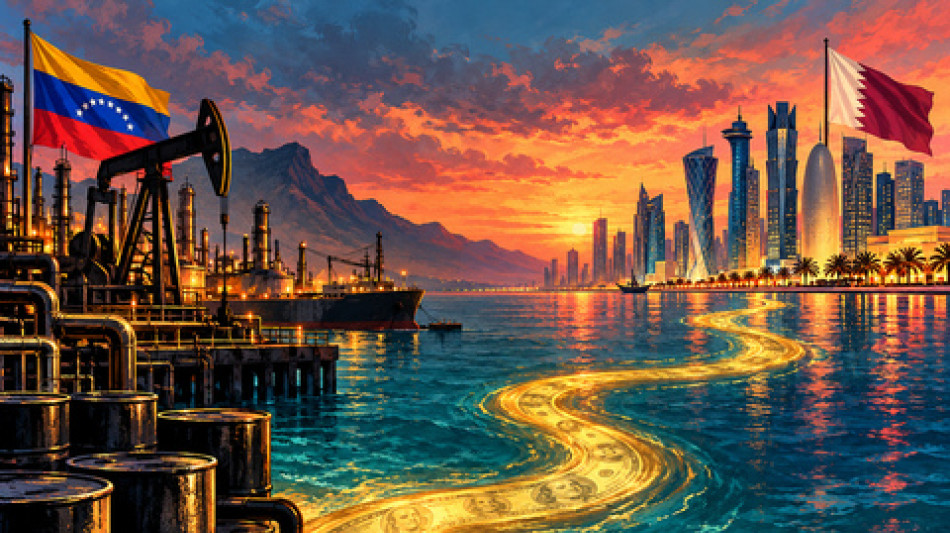
The United States has entered a new and perilous phase of its confrontation with Venezuela. After securing another term in November 2024, President Donald Trump broadened what had long been a maximum‑pressure campaign into a formal military offensive aimed at alleged narco‑terrorists. Officials in Washington now routinely describe the offensive as a war against cartel‑run shipping networks, yet the mission also seeks to force President Nicolás Maduro from power and seize control of Venezuela’s vast energy resources. The shift has reshaped the strategic landscape in the Caribbean and Latin America, and Washington is marshaling regional allies to prepare for what insiders call the third phase of the operation.

The first land strike and the build‑up at sea
After months of bombing vessels suspected of carrying cocaine, the United States moved ashore for the first time in late December. Trump confirmed that U.S. forces—working through the Central Intelligence Agency—used drones to destroy a dock on the Venezuelan coast that had been used to load boats with narcotics. He described a “major explosion” and said that all of the vessels at the site were destroyed. The covert strike, which caused no casualties because workers were absent, marked the first acknowledged land operation in Venezuela. It came after more than thirty attacks on alleged drug boats in the Caribbean and eastern Pacific that killed over one hundred people. These raids, authorized without congressional approval, have been accompanied by the seizure of at least two oil tankers carrying Venezuelan crude, signalling that the operation is as much about energy as it is about drugs.

The dock strike coincided with an extraordinary U.S. military build‑up. By December the Pentagon had deployed about 15,000 troops and nearly a dozen Navy ships—among them the aircraft carrier USS Gerald R. Ford—to waters near Venezuela. Air assets including F‑35 fighter jets, AC‑130J gunships and P‑8A maritime patrol aircraft operate out of Puerto Rico and the Dominican Republic. The U.S. Coast Guard has increased patrols and is interdicting tankers suspected of smuggling sanctioned oil. Officials have also installed radars and long‑dwell robotic vessels in the Caribbean to track shipping. Defense Secretary Pete Hegseth has compared the mission to the “war on terror,” arguing that lethal force is necessary to deter traffickers. Human rights advocates argue that the killings are extrajudicial executions and that the United States is not legally at war with drug cartels; they have called on other governments to resist complicity in what they see as unlawful operations.

Recruiting partners across the hemisphere
A hallmark of the operation has been the quiet diplomacy used to secure regional support. Over the span of a few weeks in December, Washington concluded security agreements with Paraguay, Ecuador, Peru and Trinidad and Tobago. These deals grant U.S. forces access to airports, permit joint operations against so‑called narco‑terrorists and allow the temporary deployment of troops. Similar arrangements already exist with the Dominican Republic, Panama, and Guyana, while the U.S. territory of Puerto Rico serves as the nerve centre of the build‑up, hosting thousands of troops, F‑35 fighters and MQ‑9 drones. El Salvador’s Comalapa airbase hosts U.S. AC‑130J aircraft and P‑8 patrol planes, and joint training has expanded in Panama. Trinidad and Tobago’s prime minister has publicly endorsed the U.S. naval build‑up, promising to provide airspace and ports if Venezuela retaliates against its neighbours. Meanwhile, Ecuador, Paraguay and Argentina have designated the Venezuelan military’s Cartel de los Soles as a terrorist organization, providing legal cover for Washington’s campaign.

This network of bases and partnerships effectively surrounds Venezuela and is seen by analysts as a prelude to more direct action. Officials at the Defense Department say that having access to runways, refueling points and radar sites across the Caribbean would be essential if Washington decided to conduct wider airstrikes or an invasion. Critics describe the strategy as “gunboat diplomacy on steroids,” arguing that the United States is rewarding compliant governments and intimidating those that refuse to cooperate. Countries such as Brazil and Chile have remained neutral or sceptical, while Colombia’s President Gustavo Petro has warned that an invasion could destabilize the region and questioned whether the strikes truly target the drug trade. Canada and the United Kingdom, which once cooperated closely in maritime interdiction, have reportedly scaled back intelligence sharing over legal concerns.

Domestic politics and strategic aims
At home, the operation has been championed by Trump as evidence that he is tough on crime. He has repeatedly said that Venezuela “emptied its prisons into the United States” and that the U.S. will “kill people that are bringing drugs into our country.” In October he quietly authorized the CIA to conduct lethal operations in Venezuela. He also doubled the reward for Maduro’s arrest to $50 million and designated the Cartel de los Soles a foreign terrorist organization. A newly released national security strategy frames the campaign as part of a broader doctrine that reasserts U.S. dominance in the Western Hemisphere; it revives the rhetoric of the 19th‑century Monroe Doctrine by declaring that the hemisphere is America’s “neighbourhood” and that Washington will not tolerate external influence or hostile regimes.

These moves have coincided with turmoil inside the Pentagon. Admiral Alvin Holsey, head of U.S. Southern Command, retired two years early in December. Three U.S. officials told reporters that Defense Secretary Hegseth forced him out amid frustration over planning and a desire for more aggressive action. The administration has also created a new West Hemisphere Command to oversee operations against Venezuela and designated Peru a major non‑NATO ally, further integrating partners into the campaign. Human rights lawyers and some members of Congress, however, challenge the administration’s assertion that it is engaged in an armed conflict, noting that only Congress can authorize the use of force. Legislators from both parties have demanded greater oversight after reports that a second strike was ordered to kill survivors of an earlier attack on a boat.

Venezuela’s response and regional fallout
In Caracas, Maduro has branded the campaign a neo‑colonial aggression and insisted that Venezuela will “resist by any means.” He has mobilized hundreds of thousands of militia volunteers across 284 “battlefronts” and announced plans for a massive deployment of ground, air, naval and militia forces. Venezuelan state media reports that nine foreign aircraft have been shot down and that government forces destroyed nine drug‑trafficking planes. Officials have also said that any country allowing its territory to be used for attacks would be considered an enemy. Venezuela has sought help from Russia, China, Iran and Cuba, but analysts say those nations are unlikely to intervene directly.

The climate of confrontation has strained diplomatic relations throughout the hemisphere. Panama, whose vast shipping registry includes many of the tankers targeted under U.S. sanctions, has begun de‑flagging ships that violate maritime rules. Guyana, embroiled in a territorial dispute with Venezuela, has welcomed U.S. military cooperation; its officials say American presence deters aggression. Other governments, mindful of public opinion and their own sovereignty, have offered only political support or have remained silent. The resulting patchwork of cooperation and abstention underscores how divisive Washington’s campaign has become.

Preparing for an uncertain future
Whether a full‑scale invasion will materialize remains unclear. In interviews, Trump has refused to rule out “regime change” and suggested that seized Venezuelan oil should be kept to repay the costs of intervention. The Pentagon continues to augment its forces and test new robotic vessels and drones that could support amphibious landings. The CIA strike on the dock is widely seen as a trial balloon to gauge international reaction. For now, the United States appears committed to a campaign of attrition: destroying boats, seizing tankers and pushing Venezuela’s economy toward collapse.

As the new year begins, the people of Venezuela and neighbouring countries watch anxiously. Trump’s operation has inflamed debates over sovereignty, international law and the militarization of counternarcotics efforts. By enlisting regional allies and framing the mission as a fight against narcoterrorists, the White House has prepared a platform for further escalation. Whether that escalation leads to regime change, prolonged guerrilla warfare or diplomatic compromise may depend as much on regional solidarity as on Washington’s resolve.
Featured


Marhabaan, welcome to the UAE and Dubai!

Marhabaan, welcome to the UAE and Dubai! The "skyward striving" Dubai next to ancient desert cities. Mysterious Bedouins and magnificent mosques exist peacefully alongside futuristic cities. Discover wadis and oases, golden sandy deserts, paradisiacal beaches and Arabian hospitality. The modern and the ancient Orient united in a book for dreaming.On this journey to Dubai and Abu Dhabi in the United Arab Emirates, the fairy tales of 1001 Arabian Nights meet the modern Arab world. These cascading cities enchant with their sky-high skyscrapers, fragrant souks, huge shopping centres and the ancient cultural heritage of the sheikhs.You can choose to stay in 4- or 5-star hotels with breakfast and swimming pools. You also have more options to book excursions so you can feel the magic of the East even more. If you want to do something out of the ordinary, you can spend an extra night in an enchanting hotel in the middle of the emirate's desert. Experience your own fairytale from 1001 nights and look forward to a holiday with plenty of casual extravagance in two superlative desert cities!

Trade and business at the Dubai Gold Souk

If Naif Deira is associated with a specific context, organization, or field, providing more details could help me offer more relevant information. Keep in mind that privacy considerations and ethical guidelines limit the amount of information available about private individuals, especially those who are not public figures. The Dubai Gold Souk is one of the most famous gold markets in the world and is located in the heart of Dubai's commercial business district in Deira. It's a traditional market where you can find a wide variety of gold, silver, and precious stone jewelry. The Gold Souk is known for its extensive selection of jewelry, including rings, bracelets, necklaces, and earrings, often crafted with intricate designs.Variety: The Gold Souk offers a vast array of jewelry designs, with a focus on gold. You can find items ranging from traditional to modern styles.Competitive Pricing: The market is known for its competitive pricing, and bargaining is a common practice. Prices are typically based on the weight of the gold and the craftsmanship involved.Gold and More: While gold is the primary focus, the souk also offers other precious metals such as silver and platinum, as well as a selection of gemstones.Cultural Experience: Visiting the Gold Souk provides not only a shopping experience but also a glimpse into the traditional trading culture of Dubai. The vibrant market is a popular destination for both tourists and locals.Security: The market is generally safe, and there are numerous shops with security measures in place. However, as with any crowded area, it's advisable to take standard precautions regarding personal belongings.Gold Souk is just one part of the larger Deira Souk complex, which also includes the Spice Souk and the Textile Souk. It's a must-visit for those interested in jewelry, and it reflects the rich cultural and trading history of Dubai.

Dubai: Amazing City Center, Night Walking Tour

During this excursion, we leisurely explore Dubai Downtown and Burj Khalifa in the evening, giving you the chance to witness the captivating transformation of the district as it comes alive with the vibrant glow of thousands of lights. As the sun sets, the illuminated facade of Burj Khalifa and the enchanting Dubai Fountain collaborate to produce a genuinely magical atmosphere.Dubai Downtown, also known as Downtown Dubai, is a distinguished and iconic district situated in the heart of Dubai, United Arab Emirates. It is a renowned neighborhood celebrated for its striking architecture, luxurious living, and exceptional entertainment options. At the core of Downtown Dubai stands the Burj Khalifa, a towering skyscraper that holds the title of the world's tallest man-made structure and serves as an emblem of modern Dubai.Burj Khalifa: The focal point of Downtown Dubai, Burj Khalifa, is famous for its groundbreaking height, reaching an impressive 828 meters (2,722 feet). Designed by architect Adrian Smith, its distinctive Y-shaped design encompasses a mix of residential, commercial, and hotel spaces.Dubai Mall: Adjacent to Burj Khalifa is the Dubai Mall, one of the largest shopping malls globally, featuring an extensive array of retail outlets, from high-end boutiques to international brands. The mall also provides various dining options, and entertainment attractions like an indoor ice rink and an aquarium, and hosts the mesmerizing Dubai Fountain.Dubai Fountain: Located just outside the Dubai Mall, the Dubai Fountain is a captivating attraction that presents a nightly spectacle of water, music, and light, captivating visitors with its perfectly synchronized performances.Emaar Boulevard: Stretching through Downtown Dubai, this boulevard is adorned with restaurants, cafes, and shops, making it a popular spot for leisurely strolls, dining, and people-watching.Luxury Living: Downtown Dubai boasts numerous upscale residential buildings and hotels, making it an appealing locale for those seeking a sophisticated urban lifestyle.Cultural Attractions: The Dubai Opera, an iconic cultural venue within the district, hosts a diverse range of performances, including opera, ballet, concerts, and theater productions.Transportation: Downtown Dubai is well-connected through public transportation, including the Dubai Metro, facilitating easy access to other parts of the city.In summary, Downtown Dubai is a dynamic and vibrant district that stands as a testament to Dubai's modernity and grandeur. It seamlessly combines architectural wonders with shopping, entertainment, and cultural offerings, creating a truly extraordinary destination.