RBGPF
2.6200
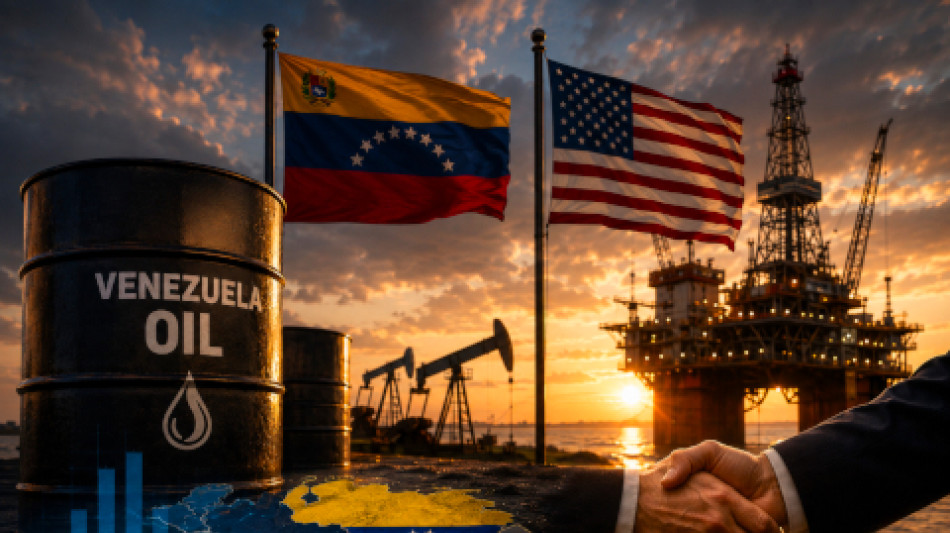
For decades Venezuela was synonymous with oil wealth. With more than 300 billion barrels of crude in the ground, the country was once among the top global producers, pumping more than 3 million barrels per day in the late 1990s. Today that legacy has been squandered. A combination of nationalization, decades of under‑investment, corruption and increasingly severe sanctions left the once‑mighty industry in disrepair. Production fell to roughly half a million barrels a day during the pandemic and only recovered to about one million barrels per day by the end of 2025. Analysts warn that reviving output to historic levels would require annual investments of around US$10 billion for at least a decade.
The heavy, extra‑viscous crude that constitutes most of Venezuela’s reserves requires diluents such as condensate to flow through pipelines and be exported. With domestic production of light hydrocarbons down to a few tens of thousands of barrels per day, the industry depends on imports to make its oil marketable. Infrastructure has also deteriorated: many refineries operate at a fraction of their capacity, pipelines leak into Lake Maracaibo and other waterways, and some equipment has been cannibalized for spare parts. Even modest increases in exports in early 2026 were achieved under tight supervision from the United States and did little to change the structural problems afflicting the sector. In short, the country with the world’s largest crude reserves is unlikely to flood the market any time soon.
Argentina’s shale revolution
While Venezuela languishes, Argentina has emerged as a bright spot in Latin American energy. At the heart of this renaissance is Vaca Muerta, an 8.6‑million‑acre shale formation in the Neuquén Basin. Energy officials estimate it contains roughly 16 billion barrels of technically recoverable shale oil and more than 300 trillion cubic feet of natural gas resources. Until recently these riches were largely untapped, but a combination of technological advances in horizontal drilling and hydraulic fracturing, favourable global oil prices, and improved infrastructure have unleashed a wave of production. Argentina’s oil output surged 50 % from early 2021 to September 2024, with unconventional wells providing the lion’s share of growth. By September 2025, total crude oil production averaged 833,874 barrels per day, a record for the country, and unconventional output alone hit 550,881 barrels per day — a 30 % increase year on year. Oil from Vaca Muerta now accounts for roughly two‑thirds of national output, while the same formation provides almost three‑quarters of Argentina’s natural gas.
Vaca Muerta’s geology makes it a highly attractive asset. Its shale layers are thicker than those of the Eagle Ford and Bakken plays in the United States and comparable in quality to the Permian Basin. Wells drilled there boast high productivity and low breakeven costs; estimates suggest producers can make money at US$36 to US$45 per barrel. The crude is light and low in sulfur, making it easier to refine and resulting in a smaller carbon footprint than many other petroleum grades. Yet only about a tenth of the formation is currently under development, hinting at decades of growth potential.
Infrastructure and policy – turning resources into exports
Rapid growth in shale output has forced Argentina to rethink its infrastructure. A wave of new pipelines and policy reforms is turning the country from a net importer of hydrocarbons into a potential exporter. On the oil side, the Vaca Muerta Norte pipeline to Chile came into service in 2023, and the massive Vaca Muerta Oil Sur (VMOS) project — now under construction — will connect the shale patch to the Atlantic coast with an eventual capacity of 180,000 barrels per day by late 2026. Five huge storage tanks, each more than 30 metres tall and 87 metres across, are being built to handle the flow. Crude oil exports rose by about one‑third per year between 2017 and 2023 as pipeline bottlenecks were eased, and new capacity is expected to unlock even more shipments.
On the gas side, the Perito Francisco Pascasio Moreno pipeline began operations in 2023, transporting up to 0.7 billion cubic feet per day northwards. A second phase will increase capacity to 1.2 billion cubic feet per day by 2028. Work is also underway to reverse the flow of the Gasoducto Norte pipeline so that Vaca Muerta gas can be exported to Brazil. These projects have already reduced Argentina’s dependence on imported natural gas; liquefied natural gas imports were down 43 % in the first nine months of 2024, and pipeline imports from Bolivia ended entirely in September 2024. Talks are underway to send Argentine gas through Bolivia to Brazil, underscoring the region’s shifting energy flows.
Policy has been just as important as bricks and mortar. In mid‑2024 the Argentine Congress approved the so‑called “Ley Bases,” sweeping economic reforms that limit government intervention in energy markets, allow permit holders to transport and export hydrocarbons freely, and authorize long‑term liquefied natural gas export licences. A complementary large‑investment regime offers 30 years of tax stability, duty‑free import of capital goods and free mobility of capital to investors in energy, mining and infrastructure projects. Together with the Plan Gas programs, which guarantee prices and long‑term contracts for producers, these measures have catalyzed investment from both domestic and foreign companies. The energy ministry envisions US$30 billion in annual energy exports by 2030. A consortium led by Argentina’s state‑controlled YPF, along with Pan American Energy, Pampa Energía and Harbour Energy, is fast‑tracking a floating LNG project expected to start shipping liquefied natural gas in 2027. The first phase has secured approval to export 11.5 million cubic metres of natural gas per day under a 30‑year licence, potentially generating about US$1 billion a year in revenue.
Economic impact and regional dynamics
This shale boom is reshaping Argentina’s economy. In 2025 the energy trade balance recorded a surplus of about US$7.8 billion — the largest in more than three decades. Energy exports reached record levels, providing much‑needed foreign currency to a country long plagued by chronic shortages. President Javier Milei’s administration sees the sector as a pillar of his broader strategy to stabilize public finances and attract private investment. Investors have responded: new drilling has propelled Argentina into the top tier of Latin American producers. By late 2025 the country ranked fourth in the region behind Brazil, Venezuela and Guyana, having briefly overtaken Colombia before Guyana’s offshore megaprojects came online. With projections for shale output to exceed one million barrels per day by the end of the decade, Argentina could soon challenge Venezuela’s fading dominance in regional oil markets.
The shift also has geopolitical implications. Argentina’s gas will soon flow north to Chile, Uruguay and potentially Brazil, reducing those countries’ reliance on Bolivian and LNG supplies. Meanwhile, Venezuela’s stagnation and the uncertainty surrounding sanctions have created openings for other producers. Even with some restrictions eased in early 2026 to allow U.S. companies to trade Venezuelan oil, production constraints remain and exports are effectively supervised by Washington. Export volumes around 800,000 barrels per day in early 2026 were still below what the country shipped a decade ago. As a result, Latin American refiners and importers are increasingly looking to Argentina’s light sweet crude and Brazil’s offshore barrels, rather than Venezuela’s heavy grades.
Challenges and prospects
Despite the upbeat trajectory, Argentina faces challenges. Rapid production growth has outpaced pipeline and storage capacity, leading to occasional flaring or forced well shut‑ins. Unconventional gas output dipped in late 2025 due to maintenance and infrastructure bottlenecks. The success of the energy export strategy hinges on finishing major pipelines on time, maintaining policy consistency across changes of government, and managing environmental impacts. Shale development requires large volumes of water and can provoke local opposition if not handled responsibly. Additionally, although the Ley Bases and investment regime are promising, Argentina’s history of policy reversals makes long‑term investors cautious.
Still, the contrast with Venezuela could not be starker. While one country struggles to maintain basic production amid sanctions, corruption and crumbling equipment, the other is building pipelines, signing long‑term LNG contracts, and capturing the attention of global energy investors. For those watching Latin America’s oil map, the message is clear: the future of the region’s hydrocarbon story may lie in the shale fields of Neuquén rather than the degraded refineries of Carabobo. The era when Venezuela’s vast reserves automatically translated into influence is over. Argentina, once a minor player, is now poised to become a significant exporter and a driver of regional energy integration. Investors, policymakers and neighbours are increasingly looking south of the Andes for supply security and economic opportunity.