The Prague Post - No red lines: Israel vs Iran

EUR -
AED 4.27463
AFN 75.657747
ALL 92.118447
AMD 423.105294
ANG 2.083227
AOA 1068.510923
ARS 1761.930037
AUD 1.613198
AWG 2.095119
AZN 1.978198
BAM 1.957254
BBD 2.344242
BDT 143.186392
BGN 1.974493
BHD 0.438826
BIF 3478.299435
BMD 1.163955
BND 1.472
BOB 14.577832
BRL 5.941062
BSD 1.163865
BTN 110.758297
BWP 15.62561
BYN 3.564749
BYR 22813.51521
BZD 2.340839
CAD 1.606921
CDF 2688.735863
CHF 0.941287
CLF 0.027315
CLP 1078.567041
CNY 7.810777
CNH 7.805475
COP 3621.959807
CRC 528.99306
CUC 1.163955
CUP 30.844804
CVE 110.34462
CZK 24.26043
DJF 207.264004
DKK 7.474924
DOP 68.400824
DZD 154.769662
EGP 59.537107
ERN 17.459323
ETB 190.137178
FJD 2.57979
FKP 0.859526
GBP 0.858574
GEL 3.034453
GGP 0.859526
GHS 13.297881
GIP 0.859526
GMD 85.543594
GNF 10231.470473
GTQ 8.892416
GYD 243.510937
HKD 9.126553
HNL 31.233207
HRK 7.534395
HTG 152.213754
HUF 363.964029
IDR 20401.800745
ILS 3.519631
IMP 0.859526
INR 110.770849
IQD 1524.732928
IRR 1599943.248122
ISK 139.80235
JEP 0.859526
JMD 183.676478
JOD 0.825265
JPY 178.702573
KES 150.673728
KGS 101.788117
KHR 4716.524798
KMF 493.517065
KPW 1047.559714
KRW 1556.917402
KWD 0.359278
KYD 0.969921
KZT 528.99306
LAK 26052.357779
LBP 104227.444501
LKR 382.404139
LRD 203.100911
LSL 18.683382
LTL 3.436856
LVL 0.704065
LYD 7.362471
MAD 10.882486
MDL 20.105939
MGA 4998.714213
MKD 61.570749
MMK 2443.652519
MNT 4188.246399
MOP 9.400092
MRU 46.590618
MUR 54.507962
MVR 17.983565
MWK 2018.19959
MXN 19.658855
MYR 4.730895
MZN 74.38818
NAD 18.683382
NGN 1539.667681
NIO 42.830905
NOK 10.706994
NPR 177.213676
NZD 1.988058
OMR 0.447546
PAB 1.163865
PEN 3.898697
PGK 5.251835
PHP 72.758652
PKR 322.720993
PLN 4.31464
PYG 6869.103976
QAR 4.243062
RON 5.251648
RSD 117.370889
RUB 98.936638
RWF 1716.175176
SAR 4.365012
SBD 9.304677
SCR 16.092445
SDG 700.119667
SEK 11.152678
SGD 1.47114
SHP 0.862335
SLE 28.63644
SLL 24407.550488
SOS 665.194262
SRD 43.922988
STD 24091.515538
STN 24.517902
SVC 10.184567
SYP 15133.74095
SZL 18.688886
THB 38.306885
TJS 10.748687
TMT 4.085482
TND 3.386944
TOP 2.802524
TRY 56.445177
TTD 7.902872
TWD 36.719251
TZS 3072.83844
UAH 52.000438
UGX 4405.273266
USD 1.163955
UYU 46.834196
UZS 13761.333469
VES 947.078001
VND 30149.922678
VUV 137.324794
WST 3.162941
XAF 656.444761
XAG 0.01719
XAU 0.000263
XCD 3.145646
XCG 2.097659
XDR 0.822976
XOF 656.444761
XPF 119.331742
YER 275.915052
ZAR 18.659791
ZMK 10476.992775
ZMW 22.404647
ZWL 374.792989
  • JRI

    -0.0900

    12.11

    -0.74%

  • NGG

    -0.7800

    77.28

    -1.01%

  • BTI

    -0.8200

    54.33

    -1.51%

  • CMSC

    -0.1300

    20.69

    -0.63%

  • BP

    0.8000

    45.68

    +1.75%

  • RIO

    -0.0900

    103.74

    -0.09%

  • BCE

    -0.3200

    23.33

    -1.37%

  • BCC

    -0.9300

    75.93

    -1.22%

  • GSK

    0.0900

    48.63

    +0.19%

  • CMSD

    -0.1300

    20.55

    -0.63%

  • RYCEF

    -0.3300

    19.63

    -1.68%

  • VOD

    -0.1800

    17.13

    -1.05%

  • RBGPF

    -1.2600

    67.74

    -1.86%

  • AZN

    -3.1000

    156.94

    -1.98%

  • RELX

    -0.4500

    34.25

    -1.31%


No red lines: Israel vs Iran


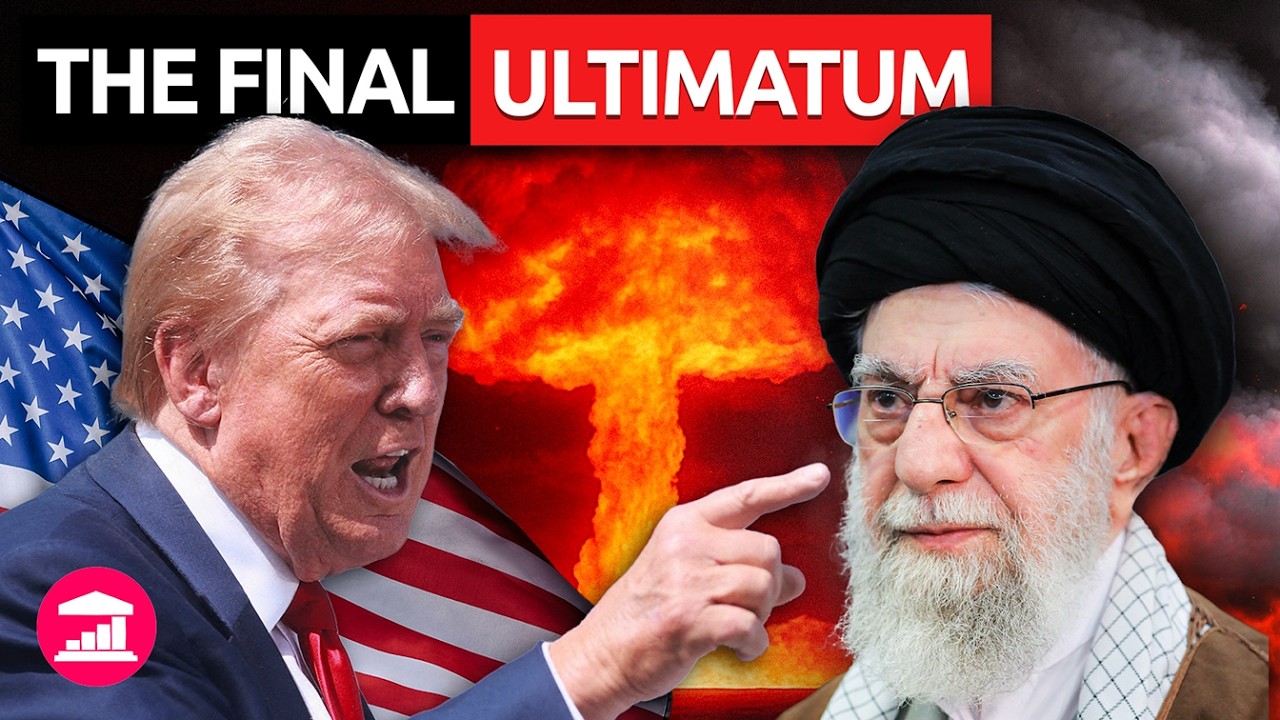
On 28 February 2026 a joint United States–Israeli operation launched hundreds of airstrikes across Iran. Fighter jets and drones pounded Tehran, Qom, Isfahan and other provincial capitals in a campaign designed to demolish Iran’s air defences, ballistic‑missile infrastructure and nuclear facilities. Among the dead were Iran’s supreme leader Ayatollah Ali Khamenei, the head of the Islamic Revolutionary Guard Corps (IRGC), and several senior commanders. The unprecedented strike also devastated civilian targets: a girls’ primary school near an IRGC complex was hit, killing scores of children, and human rights groups estimate that thousands of civilians died.

The strikes were as much psychological as military. By targeting the leadership’s command structures, the United States and Israel sought to demonstrate that no Iranian official was beyond reach. The Strait of Hormuz was closed after Iran retaliated with missiles against Gulf shipping, sending oil prices soaring and prompting panicked stockpiling worldwide. In the days that followed, scattered celebrations by anti‑government Iranians contrasted sharply with scenes of mourning and calls for revenge from regime loyalists.

Resilience of the Regime
The decapitation strategy did not produce the immediate collapse some in Washington and Jerusalem predicted. Iran’s political system is deliberately diffuse: power flows through parallel institutions, including the Artesh (regular armed forces), the IRGC and the Basij militias. A temporary council made up of the Iranian president, the head of the judiciary and a senior jurist from the Guardian Council assumed the duties of the supreme leader. Security forces continued to enforce order, arresting dissidents and suppressing protests.

Military analysts noted that Iran’s network of ballistic‑missile silos, drone bases and naval installations remained largely intact. The Red Crescent recorded hundreds of strikes across more than two dozen provinces, yet Iran still managed to launch retaliatory barrages against Israel. Western intelligence believes that Tehran preserved much of its missile arsenal and relocated key components underground.

Economic Targets and Regional Fallout
As the war escalated, Israeli jets struck the Asaluyeh natural‑gas hub and facilities at the South Pars field. Those attacks signalled a shift towards economic warfare. Asaluyeh is the heart of Iran’s gas industry, processing gas from the massive South Pars/North Dome field shared with Qatar. Damage there disrupted liquefied natural gas exports, rattled global energy markets and drew condemnation from Gulf states. Qatar responded by expelling Iran’s military attaché after Iranian forces retaliated near the Ras Laffan hub. Tehran warned that any attacks on its energy infrastructure would be met with strikes on regional facilities, raising fears of a broader conflict engulfing the Gulf.

International Reaction and Legal Concerns
The scale of civilian casualties drew sharp criticism from international organisations. The United Nations called for an immediate ceasefire, while Russia and China denounced the strikes as reckless and destabilising. Reports that cluster munitions were used on populated areas sparked debate about violations of international humanitarian law. Humanitarian agencies warned of a looming crisis as hospitals overflowed with casualties and millions faced disrupted water and electricity supplies.

Meanwhile, the United States increased its military presence in the Gulf and Eastern Mediterranean, arguing that deterrence required persistent force. European leaders struggled to keep critical shipping lanes open as insurance rates spiked and crews refused to navigate the Strait of Hormuz. Energy importers began drawing down strategic reserves, fearing a protracted closure.

Debate Over Decapitation
Security experts are divided over the efficacy of targeting leaders. Critics argue that the Islamic Republic is not a one‑man show. Removing a supreme leader eliminates a symbol but does little to dismantle the structures that sustain the regime. The Iranian constitution provides for succession mechanisms; killing moderates may simply elevate more radical figures. Experiences with non‑state actors such as Hamas and Hezbollah show that leadership decapitation often hardens movements rather than dissolving them. Moreover, Western analysts warn that Iran’s dual military structure and deeply entrenched institutions make a decisive defeat unlikely without a large‑scale occupation.

Proponents of the strikes counter that the removal of charismatic leaders weakens coherence and sows confusion. They point to public anger over economic hardship, corruption and repression as evidence that Iranian society is nearing a tipping point. In their view, prolonged pressure could erode the regime’s legitimacy and encourage defections.

Public Sentiment and Uncertain Future
Among foreign observers and diasporic communities, the strikes generated a wave of commentary. Some expressed astonishment at the reach of Israeli intelligence, joking that Tehran must now confront a wave of “vacancies” in its hierarchy. Others questioned how much further hard‑line policies could go when the government already controlled the judiciary, the media and the armed forces. There is speculation that younger cadres of ideologues are waiting to step into the power vacuum and that the system has trained successors precisely for such crises. Skeptics, however, note that any replacement could be removed just as swiftly and that the underlying grievances – economic mismanagement, political repression and regional isolation – will continue to feed unrest.

There is also unease about the long‑term consequences. Some fear that decapitation will radicalise the state further, pushing it towards more indiscriminate violence at home and abroad. Others warn that a leaderless Iran could fracture, plunging the region into chaos. Conversely, optimists hope that the loss of revered figures will open space for reformist voices, though hard‑liners currently dominate. Even those who welcome the blows against a repressive regime acknowledge that prolonged conflict risks humanitarian catastrophe and escalates the chances of miscalculation.

Conclusion and Future?
The strikes on Iran’s leadership have reshaped the Middle East. By demonstrating that no bunker or compound is impregnable, Israel and the United States have shattered a key pillar of the Islamic Republic’s authority. Yet the regime’s structural resilience and the complex web of regional alliances mean that an end to the conflict is far from certain. Iran’s capacity to absorb punishment, reorganise and retaliate suggests that the war will drag on, with devastating consequences for civilians and the global economy. As oil tankers queue outside the Strait of Hormuz and hospitals in Tehran overflow, the world watches anxiously to see whether the decapitation strategy will hasten change or entrench the cycle of violence.

Featured


Marhabaan, welcome to the UAE and Dubai!

Marhabaan, welcome to the UAE and Dubai! The "skyward striving" Dubai next to ancient desert cities. Mysterious Bedouins and magnificent mosques exist peacefully alongside futuristic cities. Discover wadis and oases, golden sandy deserts, paradisiacal beaches and Arabian hospitality. The modern and the ancient Orient united in a book for dreaming.On this journey to Dubai and Abu Dhabi in the United Arab Emirates, the fairy tales of 1001 Arabian Nights meet the modern Arab world. These cascading cities enchant with their sky-high skyscrapers, fragrant souks, huge shopping centres and the ancient cultural heritage of the sheikhs.You can choose to stay in 4- or 5-star hotels with breakfast and swimming pools. You also have more options to book excursions so you can feel the magic of the East even more. If you want to do something out of the ordinary, you can spend an extra night in an enchanting hotel in the middle of the emirate's desert. Experience your own fairytale from 1001 nights and look forward to a holiday with plenty of casual extravagance in two superlative desert cities!

Trade and business at the Dubai Gold Souk

If Naif Deira is associated with a specific context, organization, or field, providing more details could help me offer more relevant information. Keep in mind that privacy considerations and ethical guidelines limit the amount of information available about private individuals, especially those who are not public figures. The Dubai Gold Souk is one of the most famous gold markets in the world and is located in the heart of Dubai's commercial business district in Deira. It's a traditional market where you can find a wide variety of gold, silver, and precious stone jewelry. The Gold Souk is known for its extensive selection of jewelry, including rings, bracelets, necklaces, and earrings, often crafted with intricate designs.Variety: The Gold Souk offers a vast array of jewelry designs, with a focus on gold. You can find items ranging from traditional to modern styles.Competitive Pricing: The market is known for its competitive pricing, and bargaining is a common practice. Prices are typically based on the weight of the gold and the craftsmanship involved.Gold and More: While gold is the primary focus, the souk also offers other precious metals such as silver and platinum, as well as a selection of gemstones.Cultural Experience: Visiting the Gold Souk provides not only a shopping experience but also a glimpse into the traditional trading culture of Dubai. The vibrant market is a popular destination for both tourists and locals.Security: The market is generally safe, and there are numerous shops with security measures in place. However, as with any crowded area, it's advisable to take standard precautions regarding personal belongings.Gold Souk is just one part of the larger Deira Souk complex, which also includes the Spice Souk and the Textile Souk. It's a must-visit for those interested in jewelry, and it reflects the rich cultural and trading history of Dubai.

Dubai: Amazing City Center, Night Walking Tour

During this excursion, we leisurely explore Dubai Downtown and Burj Khalifa in the evening, giving you the chance to witness the captivating transformation of the district as it comes alive with the vibrant glow of thousands of lights. As the sun sets, the illuminated facade of Burj Khalifa and the enchanting Dubai Fountain collaborate to produce a genuinely magical atmosphere.Dubai Downtown, also known as Downtown Dubai, is a distinguished and iconic district situated in the heart of Dubai, United Arab Emirates. It is a renowned neighborhood celebrated for its striking architecture, luxurious living, and exceptional entertainment options. At the core of Downtown Dubai stands the Burj Khalifa, a towering skyscraper that holds the title of the world's tallest man-made structure and serves as an emblem of modern Dubai.Burj Khalifa: The focal point of Downtown Dubai, Burj Khalifa, is famous for its groundbreaking height, reaching an impressive 828 meters (2,722 feet). Designed by architect Adrian Smith, its distinctive Y-shaped design encompasses a mix of residential, commercial, and hotel spaces.Dubai Mall: Adjacent to Burj Khalifa is the Dubai Mall, one of the largest shopping malls globally, featuring an extensive array of retail outlets, from high-end boutiques to international brands. The mall also provides various dining options, and entertainment attractions like an indoor ice rink and an aquarium, and hosts the mesmerizing Dubai Fountain.Dubai Fountain: Located just outside the Dubai Mall, the Dubai Fountain is a captivating attraction that presents a nightly spectacle of water, music, and light, captivating visitors with its perfectly synchronized performances.Emaar Boulevard: Stretching through Downtown Dubai, this boulevard is adorned with restaurants, cafes, and shops, making it a popular spot for leisurely strolls, dining, and people-watching.Luxury Living: Downtown Dubai boasts numerous upscale residential buildings and hotels, making it an appealing locale for those seeking a sophisticated urban lifestyle.Cultural Attractions: The Dubai Opera, an iconic cultural venue within the district, hosts a diverse range of performances, including opera, ballet, concerts, and theater productions.Transportation: Downtown Dubai is well-connected through public transportation, including the Dubai Metro, facilitating easy access to other parts of the city.In summary, Downtown Dubai is a dynamic and vibrant district that stands as a testament to Dubai's modernity and grandeur. It seamlessly combines architectural wonders with shopping, entertainment, and cultural offerings, creating a truly extraordinary destination.