The Prague Post - Pakistan’s Taliban dilemma

EUR -
AED 4.126854
AFN 73.041992
ALL 91.264799
AMD 406.843082
ANG 2.011211
AOA 1030.448522
ARS 1702.716467
AUD 1.613608
AWG 2.024095
AZN 1.914779
BAM 1.955046
BBD 2.266626
BDT 138.436605
BGN 1.964067
BHD 0.425636
BIF 3368.300856
BMD 1.123717
BND 1.439645
BOB 13.138932
BRL 5.691742
BSD 1.125366
BTN 106.809804
BWP 15.418053
BYN 3.388993
BYR 22024.845083
BZD 2.263427
CAD 1.590902
CDF 2599.722726
CHF 0.928113
CLF 0.027959
CLP 1100.405577
CNY 7.519017
CNH 7.51396
COP 3566.624364
CRC 511.402753
CUC 1.123717
CUP 27.009582
CVE 110.222488
CZK 24.323187
DJF 200.402705
DKK 7.474068
DOP 69.033374
DZD 150.380998
EGP 60.152199
ERN 16.855749
ETB 183.8243
FJD 2.548196
FKP 0.843011
GBP 0.845122
GEL 2.910865
GGP 0.843011
GHS 13.141931
GIP 0.843011
GMD 82.597496
GNF 9900.18153
GTQ 8.598684
GYD 235.449188
HKD 8.819097
HNL 30.211348
HRK 7.533176
HTG 147.373159
HUF 363.309245
IDR 20286.455525
ILS 3.47751
IMP 0.843011
INR 106.714312
IQD 1706.041985
IRR 2018057.337243
ISK 136.172409
JEP 0.843011
JMD 178.891002
JOD 0.79676
JPY 177.564121
KES 146.193614
KGS 98.269447
KHR 4574.235731
KMF 494.435691
KPW 1011.344884
KRW 1499.869907
KWD 0.349274
KYD 0.937838
KZT 509.263579
LAK 25322.23329
LBP 100778.729946
LKR 372.726241
LRD 191.875994
LSL 18.499065
LTL 3.318043
LVL 0.679725
LYD 7.227212
MAD 10.933383
MDL 20.189213
MGA 5065.046427
MKD 61.621233
MMK 2359.646377
MNT 4042.305032
MOP 9.097991
MRU 44.990647
MUR 53.07356
MVR 17.373083
MWK 1951.447333
MXN 20.780783
MYR 4.588364
MZN 71.80968
NAD 18.499065
NGN 1495.90318
NIO 41.414027
NOK 10.594067
NPR 170.896086
NZD 1.985892
OMR 0.429724
PAB 1.125366
PEN 3.871007
PGK 5.110029
PHP 70.778456
PKR 311.536341
PLN 4.369291
PYG 6427.520924
QAR 4.113613
RON 5.315858
RSD 117.384725
RUB 94.543535
RWF 1661.059334
SAR 4.217125
SBD 9.062378
SCR 15.625873
SDG 675.919657
SEK 11.138733
SGD 1.440721
SHP 0.84812
SLE 27.733742
SLL 23563.779889
SOS 643.151938
SRD 42.470311
STD 23258.664553
STN 24.490554
SVC 9.847202
SYP 14610.562695
SZL 18.491868
THB 37.582744
TJS 10.3705
TMT 3.944245
TND 3.357305
TOP 2.70564
TRY 55.639483
TTD 7.640053
TWD 36.468653
TZS 2973.852994
UAH 50.478331
UGX 4648.2072
USD 1.123717
UYU 45.302527
UZS 13566.767338
VES 987.646423
VND 29098.079133
VUV 134.573156
WST 3.132678
XAF 655.957
XAG 0.019723
XAU 0.00026976363
XCD 3.036901
XCG 2.028218
XDR 0.794526
XOF 655.957
XPF 119.331742
YER 265.36608
ZAR 18.534623
ZMK 10114.801761
ZMW 22.53031
ZWL 361.836282
SSP 6470.487369
MXV 2.346356
  • NGG

    2.1500

    81.22

    +2.65%

  • BCC

    0.6500

    76.13

    +0.85%

  • RBGPF

    3.9200

    75.42

    +5.2%

  • GSK

    0.4900

    49.51

    +0.99%

  • BCE

    0.1500

    20.33

    +0.74%

  • CMSC

    0.0100

    19.89

    +0.05%

  • CMSD

    0.0100

    19.86

    +0.05%

  • RIO

    0.1100

    90.32

    +0.12%

  • RYCEF

    -0.3900

    17.61

    -2.21%

  • JRI

    0.0800

    10.56

    +0.76%

  • RELX

    0.6400

    39.06

    +1.64%

  • VOD

    0.2600

    16.11

    +1.61%

  • BTI

    2.0000

    60

    +3.33%

  • BP

    1.7700

    50.21

    +3.53%

  • AZN

    -1.2700

    165.41

    -0.77%


Pakistan’s Taliban dilemma


Pakistan can strike deep inside Afghanistan. Whether it can turn that advantage into lasting security is a different question. Months of fighting have exposed the collapse of its relationship with the Afghan Taliban, but the evidence available in mid-October does not establish that the government in Kabul is approaching its end. A prolonged confrontation remains a more convincing prospect than an imminent change of regime.

The latest exchanges underline how little the underlying dispute has shifted. On 12 October, Pakistani Foreign Minister Ishaq Dar again demanded action against militants operating from Afghan territory. Taliban spokesman Zabihullah Mujahid rejected Pakistan’s accusations and argued that Islamabad was substituting blame for negotiations. A week earlier, Afghan Foreign Minister Amir Khan Muttaqi had told talks in Moscow that the differences could be addressed through diplomacy, while defending Afghanistan’s right to respond to attacks. Neither position amounts to an agreed mechanism for preventing the next confrontation.

The human cost is already substantial. Pakistani airstrikes in Helmand and Kunar reported on 1 October killed at least ten civilians and injured nine, according to Afghan officials and the United Nations. Most of those killed were children. Pakistan said it had struck militant facilities and killed 22 fighters; that claim was not independently verified. These competing accounts are a reminder that official battlefield figures require caution, particularly when civilian deaths become part of the struggle over legitimacy.

The confrontation became markedly more dangerous in February, when Pakistani attacks reached Kabul and Kandahar and Defence Minister Khawaja Asif described relations as an open war. Subsequent exchanges, including Afghan drone attacks and further Pakistani airstrikes, widened the conflict beyond isolated frontier incidents. Temporary pauses have interrupted the violence without resolving its cause. The central disagreement remains whether Kabul will dismantle the networks that Pakistan says sustain attacks on its territory.

Those networks cannot be understood by treating every group called Taliban as one organisation. The Afghan Taliban govern Afghanistan. Tehrik-e-Taliban Pakistan, usually known as the TTP, is a separate movement fighting the Pakistani state. Its relationship with Afghanistan’s rulers rests on ideological affinities, personal connections and cooperation during earlier wars. Pakistan’s demand is therefore politically more difficult than a request to arrest an unrelated criminal organisation. It asks Kabul to act against militants linked to parts of its own movement’s history.

For Pakistan, this represents the failure of a long-standing strategic assumption. Its support for the Afghan Taliban was expected to produce a friendly government and greater influence in Kabul. Instead, the Taliban’s return to power in 2021 was followed by a resurgence of the TTP. Past sponsorship has not delivered dependable control. An Afghan movement that benefited from Pakistani sanctuary now governs a country whose sovereignty it invokes against Pakistani pressure.

Military superiority gives Islamabad considerable destructive power, but no automatic route to a political settlement. Pakistan possesses a modern combat air fleet and substantially larger conventional forces. The Taliban have no comparable fighter capability. That disparity makes bases, equipment and fixed infrastructure vulnerable to attack. It says much less about whether scattered militant networks can be dismantled, whether local commanders will obey an agreement or whether cross-border violence will resume after aircraft return to base.

A campaign intended to weaken the Taliban could also strengthen their political position in particular circumstances. Foreign attacks allow the leadership to present resistance as a defence of Afghanistan, an argument that can reach beyond committed supporters. Civilian casualties may deepen hostility towards Pakistan and make concessions harder to justify internally. This is a strategic risk, not evidence that every Afghan supports the Taliban or that the movement benefits from every escalation.

Kabul nevertheless has vulnerabilities. Unrest in Badakhshan and Herat during 2026 has exposed friction between central authority, local communities and armed opponents. Disputes over mining revenues and the treatment of local leaders show how economic grievances can become security problems. Yet these episodes have remained localised. Armed opposition groups have not demonstrated the capacity for a sustained nationwide challenge, while Islamic State Khorasan remains a threat without becoming a credible replacement government.

The distinction matters when assessing predictions of collapse. A government’s inability to protect its airspace does not establish that it is losing control of its administration or armed forces. A more persuasive warning would be a combination of sustained territorial losses, major defections, disruption of revenue collection and a breakdown in command. Those are the developments that would turn military pressure into an existential crisis. Individual strikes and unverified claims of enemy losses cannot substitute for that assessment.

Pakistan faces constraints of its own. On 11 October, the federal authorities imposed emergency rule in Khyber Pakhtunkhwa and suspended the provincial government led by Imran Khan’s party, citing worsening militancy. The party rejected that justification and described the move as political. Detentions followed. Whatever the competing explanations, the episode demonstrates that insecurity along the Afghan frontier is entangled with a bitter domestic contest over authority. Air operations across the border cannot resolve that contest or replace effective policing and administration at home.

Economic pressure carries similarly uncertain returns. Border restrictions disrupt commercial activity, while the forced return of large numbers of Afghans places additional demands on communities already struggling to provide work and basic services. Such measures can increase the costs of confrontation for Kabul. They can also damage the livelihoods and local cooperation on which durable border security depends. Pressure on a population and pressure on the decisions of its rulers are not interchangeable.

The most plausible route out of repeated escalation remains a security arrangement that both sides can test in practice. That would require specific commitments on militant activity, a functioning channel for investigating incidents and a way to distinguish an unauthorised attack from a deliberate breach by the other government. Earlier mediation by Qatar, Türkiye and Saudi Arabia shows that diplomatic channels exist. Their value will depend on whether they can produce enforceable steps rather than another short pause.

A settlement would still leave difficult questions about the TTP, Afghan sovereignty and the disputed frontier. Nor would diplomatic engagement excuse the Taliban’s restrictions on women and girls or its repression of dissent. Security negotiations address an immediate danger; they do not confer approval on the government involved. Keeping those questions distinct is necessary if civilian protection is to remain an objective rather than a bargaining instrument.

Pakistan’s war has revealed the limits of its former influence in Kabul. It has also exposed the Taliban’s inability to shield Afghanistan from a stronger neighbour. Neither finding establishes that the movement is about to lose power. For now, the more defensible assessment is that both governments possess ways to hurt the other and lack a reliable means of securing the concessions they want. The danger is an enduring conflict in which political control survives while civilian security steadily deteriorates.
Featured


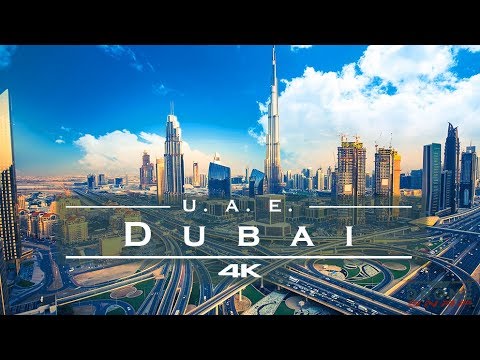
Marhabaan, welcome to the UAE and Dubai!

Marhabaan, welcome to the UAE and Dubai! The "skyward striving" Dubai next to ancient desert cities. Mysterious Bedouins and magnificent mosques exist peacefully alongside futuristic cities. Discover wadis and oases, golden sandy deserts, paradisiacal beaches and Arabian hospitality. The modern and the ancient Orient united in a book for dreaming.On this journey to Dubai and Abu Dhabi in the United Arab Emirates, the fairy tales of 1001 Arabian Nights meet the modern Arab world. These cascading cities enchant with their sky-high skyscrapers, fragrant souks, huge shopping centres and the ancient cultural heritage of the sheikhs.You can choose to stay in 4- or 5-star hotels with breakfast and swimming pools. You also have more options to book excursions so you can feel the magic of the East even more. If you want to do something out of the ordinary, you can spend an extra night in an enchanting hotel in the middle of the emirate's desert. Experience your own fairytale from 1001 nights and look forward to a holiday with plenty of casual extravagance in two superlative desert cities!

Trade and business at the Dubai Gold Souk

If Naif Deira is associated with a specific context, organization, or field, providing more details could help me offer more relevant information. Keep in mind that privacy considerations and ethical guidelines limit the amount of information available about private individuals, especially those who are not public figures. The Dubai Gold Souk is one of the most famous gold markets in the world and is located in the heart of Dubai's commercial business district in Deira. It's a traditional market where you can find a wide variety of gold, silver, and precious stone jewelry. The Gold Souk is known for its extensive selection of jewelry, including rings, bracelets, necklaces, and earrings, often crafted with intricate designs.Variety: The Gold Souk offers a vast array of jewelry designs, with a focus on gold. You can find items ranging from traditional to modern styles.Competitive Pricing: The market is known for its competitive pricing, and bargaining is a common practice. Prices are typically based on the weight of the gold and the craftsmanship involved.Gold and More: While gold is the primary focus, the souk also offers other precious metals such as silver and platinum, as well as a selection of gemstones.Cultural Experience: Visiting the Gold Souk provides not only a shopping experience but also a glimpse into the traditional trading culture of Dubai. The vibrant market is a popular destination for both tourists and locals.Security: The market is generally safe, and there are numerous shops with security measures in place. However, as with any crowded area, it's advisable to take standard precautions regarding personal belongings.Gold Souk is just one part of the larger Deira Souk complex, which also includes the Spice Souk and the Textile Souk. It's a must-visit for those interested in jewelry, and it reflects the rich cultural and trading history of Dubai.

Dubai: Amazing City Center, Night Walking Tour

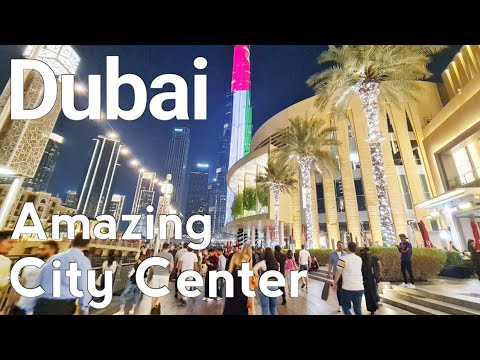
During this excursion, we leisurely explore Dubai Downtown and Burj Khalifa in the evening, giving you the chance to witness the captivating transformation of the district as it comes alive with the vibrant glow of thousands of lights. As the sun sets, the illuminated facade of Burj Khalifa and the enchanting Dubai Fountain collaborate to produce a genuinely magical atmosphere.Dubai Downtown, also known as Downtown Dubai, is a distinguished and iconic district situated in the heart of Dubai, United Arab Emirates. It is a renowned neighborhood celebrated for its striking architecture, luxurious living, and exceptional entertainment options. At the core of Downtown Dubai stands the Burj Khalifa, a towering skyscraper that holds the title of the world's tallest man-made structure and serves as an emblem of modern Dubai.Burj Khalifa: The focal point of Downtown Dubai, Burj Khalifa, is famous for its groundbreaking height, reaching an impressive 828 meters (2,722 feet). Designed by architect Adrian Smith, its distinctive Y-shaped design encompasses a mix of residential, commercial, and hotel spaces.Dubai Mall: Adjacent to Burj Khalifa is the Dubai Mall, one of the largest shopping malls globally, featuring an extensive array of retail outlets, from high-end boutiques to international brands. The mall also provides various dining options, and entertainment attractions like an indoor ice rink and an aquarium, and hosts the mesmerizing Dubai Fountain.Dubai Fountain: Located just outside the Dubai Mall, the Dubai Fountain is a captivating attraction that presents a nightly spectacle of water, music, and light, captivating visitors with its perfectly synchronized performances.Emaar Boulevard: Stretching through Downtown Dubai, this boulevard is adorned with restaurants, cafes, and shops, making it a popular spot for leisurely strolls, dining, and people-watching.Luxury Living: Downtown Dubai boasts numerous upscale residential buildings and hotels, making it an appealing locale for those seeking a sophisticated urban lifestyle.Cultural Attractions: The Dubai Opera, an iconic cultural venue within the district, hosts a diverse range of performances, including opera, ballet, concerts, and theater productions.Transportation: Downtown Dubai is well-connected through public transportation, including the Dubai Metro, facilitating easy access to other parts of the city.In summary, Downtown Dubai is a dynamic and vibrant district that stands as a testament to Dubai's modernity and grandeur. It seamlessly combines architectural wonders with shopping, entertainment, and cultural offerings, creating a truly extraordinary destination.