The Prague Post - Lyman's surrender crisis

EUR -
AED 4.126854
AFN 73.041992
ALL 91.264799
AMD 406.843082
ANG 2.011211
AOA 1030.448522
ARS 1702.716467
AUD 1.613608
AWG 2.024095
AZN 1.914779
BAM 1.955046
BBD 2.266626
BDT 138.436605
BGN 1.964067
BHD 0.425636
BIF 3368.300856
BMD 1.123717
BND 1.439645
BOB 13.138932
BRL 5.691742
BSD 1.125366
BTN 106.809804
BWP 15.418053
BYN 3.388993
BYR 22024.845083
BZD 2.263427
CAD 1.590902
CDF 2599.722726
CHF 0.928113
CLF 0.027959
CLP 1100.405577
CNY 7.519017
CNH 7.51396
COP 3566.624364
CRC 511.402753
CUC 1.123717
CUP 27.009582
CVE 110.222488
CZK 24.323187
DJF 200.402705
DKK 7.474068
DOP 69.033374
DZD 150.380998
EGP 60.152199
ERN 16.855749
ETB 183.8243
FJD 2.548196
FKP 0.843011
GBP 0.845122
GEL 2.910865
GGP 0.843011
GHS 13.141931
GIP 0.843011
GMD 82.597496
GNF 9900.18153
GTQ 8.598684
GYD 235.449188
HKD 8.819097
HNL 30.211348
HRK 7.533176
HTG 147.373159
HUF 363.309245
IDR 20286.455525
ILS 3.47751
IMP 0.843011
INR 106.714312
IQD 1706.041985
IRR 2018057.337243
ISK 136.172409
JEP 0.843011
JMD 178.891002
JOD 0.79676
JPY 177.564121
KES 146.193614
KGS 98.269447
KHR 4574.235731
KMF 494.435691
KPW 1011.344884
KRW 1499.869907
KWD 0.349274
KYD 0.937838
KZT 509.263579
LAK 25322.23329
LBP 100778.729946
LKR 372.726241
LRD 191.875994
LSL 18.499065
LTL 3.318043
LVL 0.679725
LYD 7.227212
MAD 10.933383
MDL 20.189213
MGA 5065.046427
MKD 61.621233
MMK 2359.646377
MNT 4042.305032
MOP 9.097991
MRU 44.990647
MUR 53.07356
MVR 17.373083
MWK 1951.447333
MXN 20.780783
MYR 4.588364
MZN 71.80968
NAD 18.499065
NGN 1495.90318
NIO 41.414027
NOK 10.594067
NPR 170.896086
NZD 1.985892
OMR 0.429724
PAB 1.125366
PEN 3.871007
PGK 5.110029
PHP 70.778456
PKR 311.536341
PLN 4.369291
PYG 6427.520924
QAR 4.113613
RON 5.315858
RSD 117.384725
RUB 94.543535
RWF 1661.059334
SAR 4.217125
SBD 9.062378
SCR 15.625873
SDG 675.919657
SEK 11.138733
SGD 1.440721
SHP 0.84812
SLE 27.733742
SLL 23563.779889
SOS 643.151938
SRD 42.470311
STD 23258.664553
STN 24.490554
SVC 9.847202
SYP 14610.562695
SZL 18.491868
THB 37.582744
TJS 10.3705
TMT 3.944245
TND 3.357305
TOP 2.70564
TRY 55.639483
TTD 7.640053
TWD 36.468653
TZS 2973.852994
UAH 50.478331
UGX 4648.2072
USD 1.123717
UYU 45.302527
UZS 13566.767338
VES 987.646423
VND 29098.079133
VUV 134.573156
WST 3.132678
XAF 655.957
XAG 0.019723
XAU 0.00026976363
XCD 3.036901
XCG 2.028218
XDR 0.794526
XOF 655.957
XPF 119.331742
YER 265.36608
ZAR 18.534623
ZMK 10114.801761
ZMW 22.53031
ZWL 361.836282
SSP 6470.487369
MXV 2.346356
  • NGG

    2.1500

    81.22

    +2.65%

  • RELX

    0.6400

    39.06

    +1.64%

  • GSK

    0.4900

    49.51

    +0.99%

  • RBGPF

    3.9200

    75.42

    +5.2%

  • CMSC

    0.0100

    19.89

    +0.05%

  • AZN

    -1.2700

    165.41

    -0.77%

  • BCE

    0.1500

    20.33

    +0.74%

  • BTI

    2.0000

    60

    +3.33%

  • RIO

    0.1100

    90.32

    +0.12%

  • RYCEF

    -0.3900

    17.61

    -2.21%

  • VOD

    0.2600

    16.11

    +1.61%

  • BCC

    0.6500

    76.13

    +0.85%

  • BP

    1.7700

    50.21

    +3.53%

  • CMSD

    0.0100

    19.86

    +0.05%

  • JRI

    0.0800

    10.56

    +0.76%


Lyman's surrender crisis


The capture of more than 250 Russian soldiers during Ukraine's Operation Vivaldi has exposed serious weaknesses in the forces fighting around Lyman. That figure remains a Ukrainian military claim, but the operation's significance extends beyond the prisoners themselves: it has challenged Russian positions, disrupted supplies and complicated the approach to northern Donetsk's principal defensive cities.

The chronology matters. The prisoner total was publicised in late September and became a prominent part of the account of Vivaldi's third phase. By 14 October, Brigadier General Andrii Biletskyi, commander of Ukraine's Third Army Corps, was announcing the completion of a fourth phase. The events concern a campaign conducted over months in the wider Lyman sector, rather than a single, independently documented moment in which hundreds of Russian troops all surrendered together inside the city.

Footage released by the corps showed dozens of men being escorted through woodland and assembled under guard. Some prisoners described severe shortages of food and water and said they had seen little point in continuing to fight. Those accounts are consistent with the picture of isolated positions presented by Ukrainian commanders. They still require caution: statements made in captivity cannot establish conditions across an entire army, and the released footage does not independently verify the full prisoner count.

The central military issue is the loss of a functioning supply system. Soldiers may remain in possession of a trench or village long after the routes needed to sustain them have become unusable. Ammunition runs down, food deliveries become irregular and casualty evacuation grows increasingly dangerous. A position that appears intact on a map can consequently lose much of its fighting value before an attacking force physically reaches it.

The Ukrainian account of Vivaldi describes a sustained effort to create precisely those conditions. Strikes on Russian logistics, fuel supplies and drone operators preceded advances on the ground. Infantry then worked alongside unmanned systems to penetrate and isolate positions. Viewed in that sequence, the surrenders suggest the cumulative effects of pressure on a military organisation's ability to support its soldiers. They cannot be explained adequately by a simple assertion that Russian morale suddenly disappeared.

There is a distinction between fear and a rational assessment of an untenable position. A soldier who expects relief may continue fighting under exceptionally difficult conditions. The calculation changes when communications are unreliable, resupply has stopped and withdrawal appears as dangerous as remaining in place. If the Ukrainian description is broadly accurate, Vivaldi narrowed those choices until surrender became a means of survival for groups of Russian troops.

The latest Ukrainian figures give a sense of the operation's claimed scale. On 14 October, Biletskyi said its fourth phase had recovered another 101 square kilometres, including Zelena Dolyna, Lypove and Kolodiazi. He put the total across four phases at 277 square kilometres and 16 settlements. These are the commander's figures; the complete tally has not been independently established. They should also be kept separate from the earlier prisoner count, which was not presented as a new fourth-phase total.

The value of these gains depends heavily on their location. The Lyman sector is part of the northern approach to Slovyansk and Kramatorsk, two central components of Ukraine's defensive network in Donetsk. Russian progress there could threaten the approaches and communications supporting those cities. Ukrainian advances can therefore matter beyond the area retaken, particularly if they deny Russia positions needed for a coordinated attack from several directions.

The operation's potential effect is to make Russia revise those plans. A formation forced to restore a damaged front has fewer resources immediately available for an offensive elsewhere. Reinforcements must move, supply arrangements must change and neighbouring units may have to adjust their tempo. Biletskyi has said Russia moved elements of its First Guards Tank Army from the Kupyansk direction to meet the pressure around Lyman. The extent and durability of that redistribution remain important measures of the operation's wider effect.

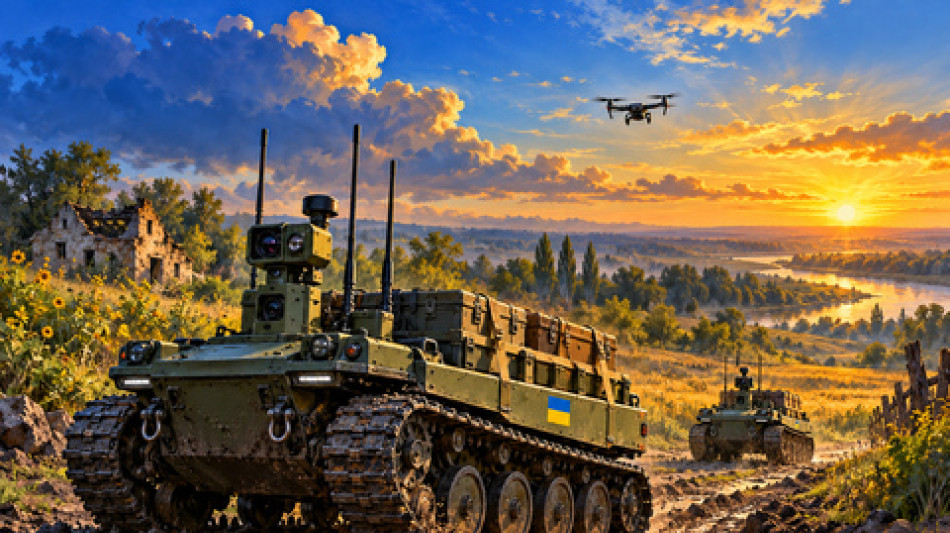
Vivaldi has also attracted attention for its use of ground robots alongside aerial drones. Ukrainian accounts describe unmanned vehicles operating beyond Russian forward positions and taking on missions that would otherwise expose troops to considerable risk. The operational logic is clear: machines can help find, strike or unsettle defended positions before infantry closes in. Their contribution becomes most significant when it disrupts the defender's ability to respond coherently.

Technology alone does not explain the result. Artillery, reconnaissance, infantry coordination and the ability to keep advancing forces supplied remain essential. A drone can reveal a position or interrupt movement; holding recovered territory requires troops and a sustainable defensive arrangement. Vivaldi's broader lesson is therefore about the coordination of established military functions with newer equipment. Describing it simply as a robot offensive obscures the work required to turn disruption into lasting territorial control.

A serious local setback is not sufficient evidence of an army-wide collapse. Russia's capacity to replace losses, concentrate firepower and continue operations in other sectors cannot be inferred from one body of prisoners. Nor does a successful Ukrainian offensive remove the strain on Ukraine's own personnel and resources. To judge the balance accurately, the captured soldiers must be considered alongside the ground held afterwards, the condition of the participating formations and the response of Russian reserves.

The political impact is nevertheless substantial. Images of Russian soldiers being led into captivity weaken the proposition that Moscow can always convert greater resources into inevitable advances. They also give Kyiv a concrete success to set against a war otherwise characterised by heavy attrition. That political usefulness makes precision especially important: the strength of the case rests on the actual operation, not on escalating every tactical success into a prediction of imminent Russian defeat.

The next test is whether Ukraine can retain the recovered positions and use the resulting disruption to reduce pressure on neighbouring sectors. Russia's response will show whether Vivaldi imposed a temporary interruption or forced a more consequential adjustment. For now, Lyman illustrates how a force can become vulnerable when the systems sustaining its forward troops fail. The prisoners are the most visible outcome of that failure; the military significance lies in how far its consequences travel.

Featured


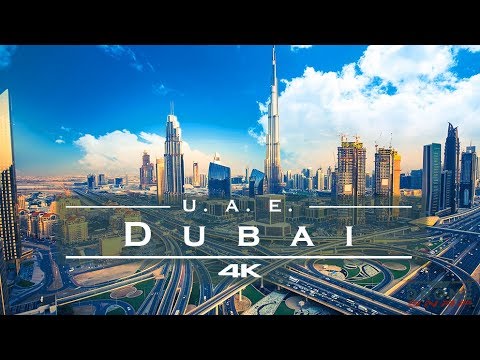
Marhabaan, welcome to the UAE and Dubai!

Marhabaan, welcome to the UAE and Dubai! The "skyward striving" Dubai next to ancient desert cities. Mysterious Bedouins and magnificent mosques exist peacefully alongside futuristic cities. Discover wadis and oases, golden sandy deserts, paradisiacal beaches and Arabian hospitality. The modern and the ancient Orient united in a book for dreaming.On this journey to Dubai and Abu Dhabi in the United Arab Emirates, the fairy tales of 1001 Arabian Nights meet the modern Arab world. These cascading cities enchant with their sky-high skyscrapers, fragrant souks, huge shopping centres and the ancient cultural heritage of the sheikhs.You can choose to stay in 4- or 5-star hotels with breakfast and swimming pools. You also have more options to book excursions so you can feel the magic of the East even more. If you want to do something out of the ordinary, you can spend an extra night in an enchanting hotel in the middle of the emirate's desert. Experience your own fairytale from 1001 nights and look forward to a holiday with plenty of casual extravagance in two superlative desert cities!

Trade and business at the Dubai Gold Souk

If Naif Deira is associated with a specific context, organization, or field, providing more details could help me offer more relevant information. Keep in mind that privacy considerations and ethical guidelines limit the amount of information available about private individuals, especially those who are not public figures. The Dubai Gold Souk is one of the most famous gold markets in the world and is located in the heart of Dubai's commercial business district in Deira. It's a traditional market where you can find a wide variety of gold, silver, and precious stone jewelry. The Gold Souk is known for its extensive selection of jewelry, including rings, bracelets, necklaces, and earrings, often crafted with intricate designs.Variety: The Gold Souk offers a vast array of jewelry designs, with a focus on gold. You can find items ranging from traditional to modern styles.Competitive Pricing: The market is known for its competitive pricing, and bargaining is a common practice. Prices are typically based on the weight of the gold and the craftsmanship involved.Gold and More: While gold is the primary focus, the souk also offers other precious metals such as silver and platinum, as well as a selection of gemstones.Cultural Experience: Visiting the Gold Souk provides not only a shopping experience but also a glimpse into the traditional trading culture of Dubai. The vibrant market is a popular destination for both tourists and locals.Security: The market is generally safe, and there are numerous shops with security measures in place. However, as with any crowded area, it's advisable to take standard precautions regarding personal belongings.Gold Souk is just one part of the larger Deira Souk complex, which also includes the Spice Souk and the Textile Souk. It's a must-visit for those interested in jewelry, and it reflects the rich cultural and trading history of Dubai.

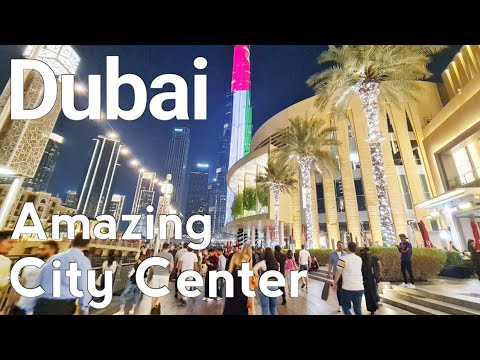
Dubai: Amazing City Center, Night Walking Tour

During this excursion, we leisurely explore Dubai Downtown and Burj Khalifa in the evening, giving you the chance to witness the captivating transformation of the district as it comes alive with the vibrant glow of thousands of lights. As the sun sets, the illuminated facade of Burj Khalifa and the enchanting Dubai Fountain collaborate to produce a genuinely magical atmosphere.Dubai Downtown, also known as Downtown Dubai, is a distinguished and iconic district situated in the heart of Dubai, United Arab Emirates. It is a renowned neighborhood celebrated for its striking architecture, luxurious living, and exceptional entertainment options. At the core of Downtown Dubai stands the Burj Khalifa, a towering skyscraper that holds the title of the world's tallest man-made structure and serves as an emblem of modern Dubai.Burj Khalifa: The focal point of Downtown Dubai, Burj Khalifa, is famous for its groundbreaking height, reaching an impressive 828 meters (2,722 feet). Designed by architect Adrian Smith, its distinctive Y-shaped design encompasses a mix of residential, commercial, and hotel spaces.Dubai Mall: Adjacent to Burj Khalifa is the Dubai Mall, one of the largest shopping malls globally, featuring an extensive array of retail outlets, from high-end boutiques to international brands. The mall also provides various dining options, and entertainment attractions like an indoor ice rink and an aquarium, and hosts the mesmerizing Dubai Fountain.Dubai Fountain: Located just outside the Dubai Mall, the Dubai Fountain is a captivating attraction that presents a nightly spectacle of water, music, and light, captivating visitors with its perfectly synchronized performances.Emaar Boulevard: Stretching through Downtown Dubai, this boulevard is adorned with restaurants, cafes, and shops, making it a popular spot for leisurely strolls, dining, and people-watching.Luxury Living: Downtown Dubai boasts numerous upscale residential buildings and hotels, making it an appealing locale for those seeking a sophisticated urban lifestyle.Cultural Attractions: The Dubai Opera, an iconic cultural venue within the district, hosts a diverse range of performances, including opera, ballet, concerts, and theater productions.Transportation: Downtown Dubai is well-connected through public transportation, including the Dubai Metro, facilitating easy access to other parts of the city.In summary, Downtown Dubai is a dynamic and vibrant district that stands as a testament to Dubai's modernity and grandeur. It seamlessly combines architectural wonders with shopping, entertainment, and cultural offerings, creating a truly extraordinary destination.