The Prague Post - South Korea: Yoon Suk Yeol shocks Nation

EUR -
AED 4.312165
AFN 76.95154
ALL 96.753705
AMD 448.031316
ANG 2.102251
AOA 1076.720928
ARS 1703.460147
AUD 1.779327
AWG 2.116455
AZN 1.995163
BAM 1.960036
BBD 2.363397
BDT 143.39197
BGN 1.956168
BHD 0.442705
BIF 3482.611091
BMD 1.174178
BND 1.516406
BOB 8.108213
BRL 6.480992
BSD 1.173386
BTN 106.122841
BWP 15.497835
BYN 3.464941
BYR 23013.883134
BZD 2.360071
CAD 1.61868
CDF 2659.512187
CHF 0.933592
CLF 0.027474
CLP 1077.800801
CNY 8.270027
CNH 8.265119
COP 4538.783942
CRC 584.638664
CUC 1.174178
CUP 31.115709
CVE 110.478074
CZK 24.391217
DJF 208.675178
DKK 7.471348
DOP 73.6792
DZD 152.004409
EGP 55.887573
ERN 17.612666
ETB 182.236126
FJD 2.682115
FKP 0.874651
GBP 0.878003
GEL 3.164377
GGP 0.874651
GHS 13.532349
GIP 0.874651
GMD 86.298212
GNF 10200.667993
GTQ 8.987156
GYD 245.500137
HKD 9.135026
HNL 30.774994
HRK 7.534576
HTG 153.698912
HUF 388.990947
IDR 19581.057178
ILS 3.792471
IMP 0.874651
INR 106.165215
IQD 1538.172801
IRR 49444.623799
ISK 147.993796
JEP 0.874651
JMD 187.765812
JOD 0.832515
JPY 182.561068
KES 151.353157
KGS 102.682053
KHR 4702.581843
KMF 491.980851
KPW 1056.77334
KRW 1735.046597
KWD 0.360215
KYD 0.977872
KZT 603.548729
LAK 25426.817853
LBP 105147.61388
LKR 363.417705
LRD 208.269765
LSL 19.644041
LTL 3.467041
LVL 0.710248
LYD 6.364121
MAD 10.748129
MDL 19.800952
MGA 5313.154049
MKD 61.552783
MMK 2466.030822
MNT 4166.481166
MOP 9.40212
MRU 46.697494
MUR 54.070734
MVR 18.141501
MWK 2039.54696
MXN 21.150931
MYR 4.798867
MZN 75.060144
NAD 19.644118
NGN 1706.279887
NIO 43.127586
NOK 11.980734
NPR 169.792398
NZD 2.035971
OMR 0.451465
PAB 1.173421
PEN 3.950522
PGK 4.987887
PHP 68.965348
PKR 329.120527
PLN 4.21373
PYG 7881.732459
QAR 4.275192
RON 5.092055
RSD 117.388771
RUB 94.520111
RWF 1702.557681
SAR 4.404148
SBD 9.546318
SCR 16.990238
SDG 706.269551
SEK 10.921825
SGD 1.516122
SHP 0.880937
SLE 28.293287
SLL 24621.923812
SOS 671.045152
SRD 45.414844
STD 24303.107961
STN 24.863213
SVC 10.267623
SYP 12983.066516
SZL 19.643882
THB 36.974672
TJS 10.830593
TMT 4.109622
TND 3.409519
TOP 2.827139
TRY 50.179072
TTD 7.959864
TWD 37.153097
TZS 2898.98726
UAH 49.805522
UGX 4182.844311
USD 1.174178
UYU 45.716469
UZS 14178.196202
VES 324.344521
VND 30921.970017
VUV 142.46031
WST 3.277164
XAF 657.349716
XAG 0.017731
XAU 0.000271
XCD 3.173274
XCG 2.114826
XDR 0.815437
XOF 656.961327
XPF 119.331742
YER 279.865043
ZAR 19.69423
ZMK 10569.016091
ZMW 26.900107
ZWL 378.084744
  • RBGPF

    0.4100

    82.01

    +0.5%

  • SCS

    0.0200

    16.14

    +0.12%

  • JRI

    -0.0800

    13.43

    -0.6%

  • CMSC

    -0.0800

    23.26

    -0.34%

  • RELX

    -0.2600

    40.56

    -0.64%

  • RIO

    1.2000

    77.19

    +1.55%

  • BCC

    0.4500

    76.29

    +0.59%

  • BCE

    -0.1800

    23.15

    -0.78%

  • NGG

    1.3900

    77.16

    +1.8%

  • GSK

    -0.0700

    48.71

    -0.14%

  • BTI

    -0.1200

    57.17

    -0.21%

  • BP

    0.7100

    34.47

    +2.06%

  • RYCEF

    -0.0300

    14.77

    -0.2%

  • CMSD

    -0.1000

    23.28

    -0.43%

  • VOD

    0.1100

    12.81

    +0.86%

  • AZN

    -1.4900

    89.86

    -1.66%


South Korea: Yoon Suk Yeol shocks Nation


South Korea in Crisis: President Yoon Suk Yeol's Coup Shakes the Nation

In a stunning and unprecedented move, South Korean President Yoon Suk Yeol has attempted to seize absolute power, plunging the nation into political chaos. On the night of December 3, President Yoon declared martial law, suspended the National Assembly, and deployed soldiers to surround its premises, effectively paralysing the country’s democratic institutions. The world is watching in shock as one of Asia’s most stable democracies faces an uncertain future.

The Coup: A Nation in Shock
The events unfolded rapidly on a cold December night, leaving South Koreans and the international community reeling. President Yoon cited national security threats and alleged internal dissent as justification for his actions, but critics are calling it a blatant power grab. By suspending the National Assembly—South Korea’s legislative body—Yoon has undermined the very foundation of the nation’s democratic system.

Eyewitnesses reported heavy military presence in the capital, Seoul, as soldiers and armoured vehicles took positions near government buildings. Communication networks were temporarily disrupted, adding to the confusion. The swift and calculated nature of the coup suggests months of planning, raising questions about who within the government and military may have supported the move.

Immediate Reactions: Outrage and Resistance
The coup has sparked widespread outrage among South Koreans. Protesters took to the streets in major cities, waving banners and chanting slogans calling for Yoon’s resignation. Opposition leaders condemned the move as a betrayal of the democratic values South Korea has upheld since its transition from military rule in the 1980s.

International leaders, including the US-President Joe Biden who is still in office until 20 January 2025 and Japanese Prime Minister Fumio Kishida, have expressed grave concern. The United Nations has called for an emergency session to address the situation, while human rights organisations warn of potential crackdowns on dissent.

What Led to This Crisis?
President Yoon’s tenure has been marked by polarising leadership and a growing divide between conservatives and progressives. Critics argue that his administration’s inability to address pressing economic challenges, such as rising housing costs and youth unemployment, eroded public trust. Yoon’s approval ratings had plummeted in recent months, and his administration faced mounting scrutiny over alleged corruption scandals.

While Yoon’s justification for the coup includes vague references to national security threats, experts believe the move was motivated by a desire to cling to power amidst growing opposition. Some speculate that internal disagreements within his party and the prospect of impeachment may have pushed Yoon to take drastic action.

The Role of the Military
The military’s involvement in the coup is particularly troubling for a country with a history of authoritarian rule. South Korea transitioned to a democracy in 1987 after decades of military dictatorship, and the armed forces have since remained apolitical. Yoon’s ability to mobilise the military raises questions about divisions within the armed forces and whether dissenting voices exist among its ranks.

Should significant portions of the military oppose Yoon’s actions, the possibility of a counter-coup or internal conflict could further destabilise the nation.

Implications for South Korea’s Future
The attempted coup casts a shadow over South Korea’s hard-earned reputation as a thriving democracy. Its political stability and economic strength have made it a key player in the global arena, but this crisis threatens to derail decades of progress.

Domestically, the suspension of democratic institutions could lead to widespread unrest, civil disobedience, and a protracted power struggle. Economically, investor confidence is likely to plummet, jeopardising South Korea’s status as a global technology and trade hub.

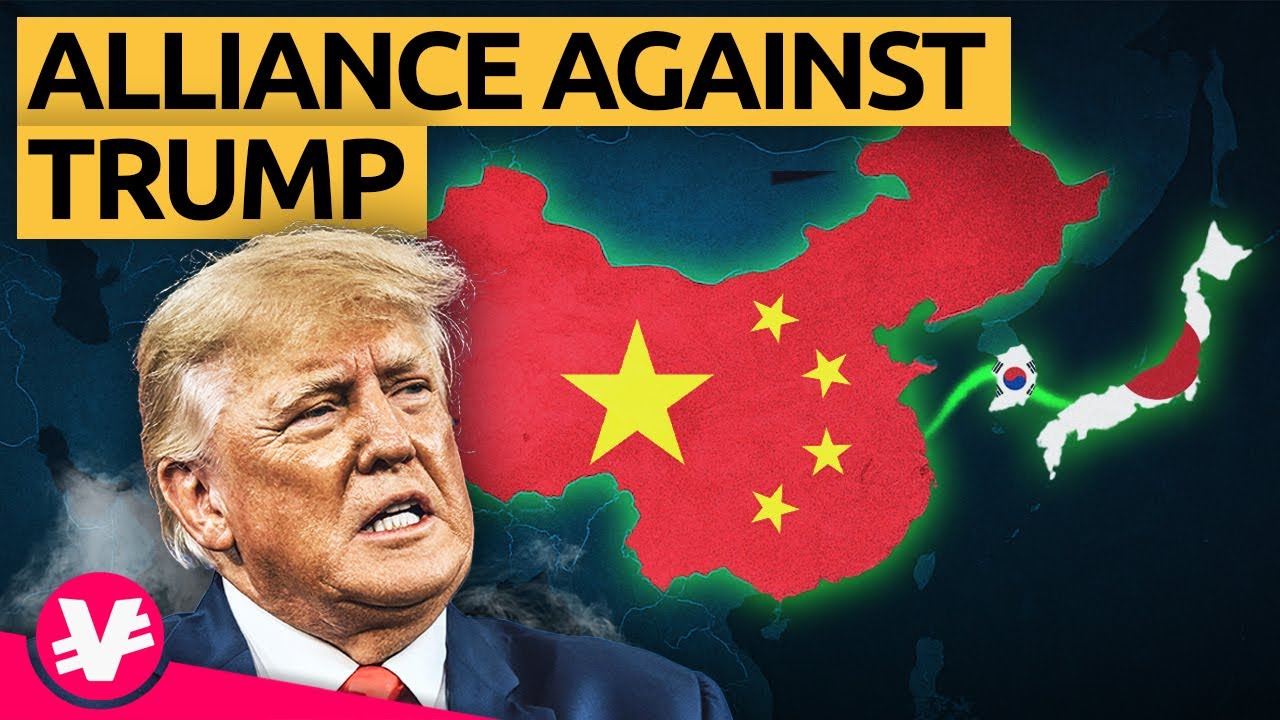
On the international stage, the coup could strain alliances, particularly with the United States, which has long regarded South Korea as a crucial ally in countering North Korea and maintaining regional stability. China and North Korea, meanwhile, may view the situation as an opportunity to exploit South Korea’s weakened state.

The Road Ahead: Democracy or Dictatorship?
The fate of South Korea now hinges on the response of its citizens, political leaders, and international allies. Opposition parties have called for immediate action to restore democracy, including mass protests and legal challenges. Meanwhile, world leaders face the delicate task of pressuring Yoon’s government while avoiding escalation.

The unfolding crisis serves as a stark reminder that even the most established democracies are not immune to authoritarian tendencies. For South Korea, the road ahead is fraught with uncertainty, but its people have shown resilience before. Whether the nation emerges from this crisis as a stronger democracy or succumbs to authoritarian rule will shape its future—and its place in the world—for generations to come.
Featured


Marhabaan, welcome to the UAE and Dubai!

Marhabaan, welcome to the UAE and Dubai! The "skyward striving" Dubai next to ancient desert cities. Mysterious Bedouins and magnificent mosques exist peacefully alongside futuristic cities. Discover wadis and oases, golden sandy deserts, paradisiacal beaches and Arabian hospitality. The modern and the ancient Orient united in a book for dreaming.On this journey to Dubai and Abu Dhabi in the United Arab Emirates, the fairy tales of 1001 Arabian Nights meet the modern Arab world. These cascading cities enchant with their sky-high skyscrapers, fragrant souks, huge shopping centres and the ancient cultural heritage of the sheikhs.You can choose to stay in 4- or 5-star hotels with breakfast and swimming pools. You also have more options to book excursions so you can feel the magic of the East even more. If you want to do something out of the ordinary, you can spend an extra night in an enchanting hotel in the middle of the emirate's desert. Experience your own fairytale from 1001 nights and look forward to a holiday with plenty of casual extravagance in two superlative desert cities!

Trade and business at the Dubai Gold Souk

If Naif Deira is associated with a specific context, organization, or field, providing more details could help me offer more relevant information. Keep in mind that privacy considerations and ethical guidelines limit the amount of information available about private individuals, especially those who are not public figures. The Dubai Gold Souk is one of the most famous gold markets in the world and is located in the heart of Dubai's commercial business district in Deira. It's a traditional market where you can find a wide variety of gold, silver, and precious stone jewelry. The Gold Souk is known for its extensive selection of jewelry, including rings, bracelets, necklaces, and earrings, often crafted with intricate designs.Variety: The Gold Souk offers a vast array of jewelry designs, with a focus on gold. You can find items ranging from traditional to modern styles.Competitive Pricing: The market is known for its competitive pricing, and bargaining is a common practice. Prices are typically based on the weight of the gold and the craftsmanship involved.Gold and More: While gold is the primary focus, the souk also offers other precious metals such as silver and platinum, as well as a selection of gemstones.Cultural Experience: Visiting the Gold Souk provides not only a shopping experience but also a glimpse into the traditional trading culture of Dubai. The vibrant market is a popular destination for both tourists and locals.Security: The market is generally safe, and there are numerous shops with security measures in place. However, as with any crowded area, it's advisable to take standard precautions regarding personal belongings.Gold Souk is just one part of the larger Deira Souk complex, which also includes the Spice Souk and the Textile Souk. It's a must-visit for those interested in jewelry, and it reflects the rich cultural and trading history of Dubai.

Dubai: Amazing City Center, Night Walking Tour

During this excursion, we leisurely explore Dubai Downtown and Burj Khalifa in the evening, giving you the chance to witness the captivating transformation of the district as it comes alive with the vibrant glow of thousands of lights. As the sun sets, the illuminated facade of Burj Khalifa and the enchanting Dubai Fountain collaborate to produce a genuinely magical atmosphere.Dubai Downtown, also known as Downtown Dubai, is a distinguished and iconic district situated in the heart of Dubai, United Arab Emirates. It is a renowned neighborhood celebrated for its striking architecture, luxurious living, and exceptional entertainment options. At the core of Downtown Dubai stands the Burj Khalifa, a towering skyscraper that holds the title of the world's tallest man-made structure and serves as an emblem of modern Dubai.Burj Khalifa: The focal point of Downtown Dubai, Burj Khalifa, is famous for its groundbreaking height, reaching an impressive 828 meters (2,722 feet). Designed by architect Adrian Smith, its distinctive Y-shaped design encompasses a mix of residential, commercial, and hotel spaces.Dubai Mall: Adjacent to Burj Khalifa is the Dubai Mall, one of the largest shopping malls globally, featuring an extensive array of retail outlets, from high-end boutiques to international brands. The mall also provides various dining options, and entertainment attractions like an indoor ice rink and an aquarium, and hosts the mesmerizing Dubai Fountain.Dubai Fountain: Located just outside the Dubai Mall, the Dubai Fountain is a captivating attraction that presents a nightly spectacle of water, music, and light, captivating visitors with its perfectly synchronized performances.Emaar Boulevard: Stretching through Downtown Dubai, this boulevard is adorned with restaurants, cafes, and shops, making it a popular spot for leisurely strolls, dining, and people-watching.Luxury Living: Downtown Dubai boasts numerous upscale residential buildings and hotels, making it an appealing locale for those seeking a sophisticated urban lifestyle.Cultural Attractions: The Dubai Opera, an iconic cultural venue within the district, hosts a diverse range of performances, including opera, ballet, concerts, and theater productions.Transportation: Downtown Dubai is well-connected through public transportation, including the Dubai Metro, facilitating easy access to other parts of the city.In summary, Downtown Dubai is a dynamic and vibrant district that stands as a testament to Dubai's modernity and grandeur. It seamlessly combines architectural wonders with shopping, entertainment, and cultural offerings, creating a truly extraordinary destination.