The Prague Post - Who wins and who loses in Syria?

EUR -
AED 4.337585
AFN 76.771781
ALL 96.377666
AMD 445.292458
ANG 2.11426
AOA 1083.06698
ARS 1706.679507
AUD 1.682
AWG 2.128929
AZN 2.02305
BAM 1.952301
BBD 2.369763
BDT 143.792275
BGN 1.983501
BHD 0.445318
BIF 3486.365995
BMD 1.181098
BND 1.495626
BOB 8.130256
BRL 6.188485
BSD 1.176596
BTN 106.305913
BWP 16.25194
BYN 3.371172
BYR 23149.522115
BZD 2.366369
CAD 1.613829
CDF 2598.415422
CHF 0.917022
CLF 0.02567
CLP 1013.594973
CNY 8.194699
CNH 8.196242
COP 4286.889922
CRC 584.355109
CUC 1.181098
CUP 31.299099
CVE 110.065395
CZK 24.358671
DJF 209.525346
DKK 7.468165
DOP 74.087523
DZD 153.421082
EGP 55.393858
ERN 17.716471
ETB 182.510052
FJD 2.599365
FKP 0.862103
GBP 0.861605
GEL 3.183029
GGP 0.862103
GHS 12.889625
GIP 0.862103
GMD 86.22027
GNF 10322.542162
GTQ 9.024634
GYD 246.153598
HKD 9.227128
HNL 31.086414
HRK 7.53434
HTG 154.334034
HUF 380.752358
IDR 19841.797923
ILS 3.644414
IMP 0.862103
INR 106.822647
IQD 1541.343908
IRR 49753.756262
ISK 145.003764
JEP 0.862103
JMD 184.39029
JOD 0.837399
JPY 185.168979
KES 152.303222
KGS 103.287245
KHR 4747.51093
KMF 493.699297
KPW 1062.923461
KRW 1720.683059
KWD 0.363093
KYD 0.980547
KZT 589.895203
LAK 25308.745187
LBP 105365.295293
LKR 364.18879
LRD 218.848675
LSL 18.845702
LTL 3.487475
LVL 0.714435
LYD 7.438699
MAD 10.792727
MDL 19.925371
MGA 5214.675588
MKD 61.633334
MMK 2480.230498
MNT 4216.339015
MOP 9.468489
MRU 46.970012
MUR 54.189058
MVR 18.247734
MWK 2040.251806
MXN 20.396666
MYR 4.644093
MZN 75.294834
NAD 18.845702
NGN 1629.431558
NIO 43.30257
NOK 11.399191
NPR 170.089861
NZD 1.96181
OMR 0.454118
PAB 1.176566
PEN 3.961001
PGK 5.040986
PHP 69.680058
PKR 329.06799
PLN 4.225077
PYG 7806.041941
QAR 4.278341
RON 5.094899
RSD 117.397611
RUB 90.585617
RWF 1717.229405
SAR 4.429255
SBD 9.517408
SCR 16.051653
SDG 710.429816
SEK 10.572511
SGD 1.50239
SHP 0.886129
SLE 28.907383
SLL 24767.035052
SOS 671.299643
SRD 45.016959
STD 24446.345361
STN 24.45627
SVC 10.29559
SYP 13062.442531
SZL 18.85229
THB 37.336284
TJS 10.995346
TMT 4.145654
TND 3.40233
TOP 2.8438
TRY 51.384728
TTD 7.969749
TWD 37.297869
TZS 3054.957424
UAH 50.919351
UGX 4194.393426
USD 1.181098
UYU 45.317816
UZS 14404.182763
VES 438.943953
VND 30687.289979
VUV 141.208292
WST 3.219874
XAF 654.78617
XAG 0.013099
XAU 0.000234
XCD 3.191976
XCG 2.120508
XDR 0.814344
XOF 654.78617
XPF 119.331742
YER 281.544296
ZAR 18.870345
ZMK 10631.303198
ZMW 23.090711
ZWL 380.313096
  • SCS

    0.0200

    16.14

    +0.12%

  • CMSC

    -0.0900

    23.66

    -0.38%

  • RBGPF

    -2.1000

    82.1

    -2.56%

  • BCE

    0.2700

    26.1

    +1.03%

  • NGG

    1.6200

    86.23

    +1.88%

  • RIO

    3.8500

    96.37

    +4%

  • BCC

    3.1800

    84.93

    +3.74%

  • CMSD

    -0.1400

    23.94

    -0.58%

  • RYCEF

    0.2600

    16.93

    +1.54%

  • RELX

    -5.0200

    30.51

    -16.45%

  • BTI

    0.8800

    61.87

    +1.42%

  • GSK

    0.8700

    53.34

    +1.63%

  • JRI

    -0.0300

    13.12

    -0.23%

  • BP

    1.1200

    38.82

    +2.89%

  • AZN

    -4.0900

    184.32

    -2.22%

  • VOD

    0.3400

    15.25

    +2.23%


Who wins and who loses in Syria?


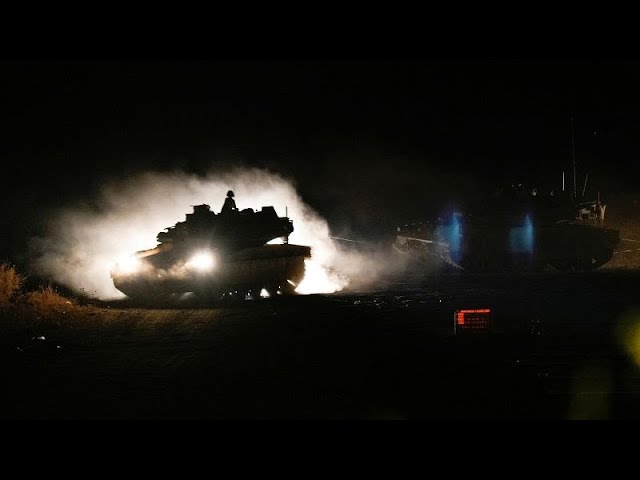
In a dramatic turning point for Syria, the Assad regime has collapsed, paving the way for Hay’at Tahrir al-Sham (HTS) to seize the reins of power. This profound shift comes after years of civil war, international intervention, and internal political struggles. While the fall of one government and the rise of another might briefly end large-scale hostilities in certain areas, the implications for Syrians—and regional players—are complex and far-reaching. Below, we examine who stands to benefit from HTS’s ascension and who may face serious setbacks in the aftermath.

Potential Winners

1) Hardline Islamist Groups and Affiliates
As HTS consolidates its influence, other aligned Islamist factions may find opportunities to share in governing structures or expand their influence in regions of Syria. Local militias cooperating with HTS may receive political or financial rewards, as well as a certain degree of autonomy in the territories they help control.

2) Foreign Backers of HTS
Certain external supporters might see political or strategic advantages if their preferred groups are now in charge. These backers could influence the formation of new governmental institutions, policies, or trade agreements favorable to their interests.

3) Some Local Communities Under HTS Control
In areas where HTS had already established local governance—providing basic services and a semblance of stability—residents might see a continuation of order, albeit under strict regulations. While personal freedoms may be curbed, some communities might prefer an end to intense fighting over the chaos of ongoing armed conflict.

Potential Losers

4) Moderate Opposition Groups
Non-extremist factions that fought to topple the Assad regime could be sidelined, if not outright suppressed, by the new leadership. Political competition might be stifled, making it difficult for moderate voices to participate in post-conflict governance.

5) Ethnic and Religious Minorities
With HTS widely considered a hardline faction, minority groups—such as Alawites, Christians, Kurds, and Druze—may face persecution or exclusion from the new power structure. Discriminatory policies could lead to displacement, especially in regions already experiencing sectarian tension.

6) Civil Society and Human Rights Advocates
NGOs, independent journalists, and activists critical of HTS’s ideology may be forced to operate clandestinely or face severe repercussions. Freedom of the press, speech, and assembly could be further curtailed, limiting any meaningful civic engagement.

7) International Humanitarian Efforts
Foreign aid agencies may find it more difficult to operate under a leadership that has been labeled “extremist” by many nations. Bureaucratic hurdles, security risks, and ideological disputes may restrict the distribution of crucial humanitarian assistance to vulnerable populations.


International Dynamics

Regional Powers:
Neighboring countries that once supported specific rebel factions might find their influence diminished if those groups lose ground under HTS rule. Conversely, regional actors that developed covert ties with HTS might gain a stronger foothold in Syria’s evolving political landscape.

Global Powers:
Western nations could face a dilemma: accept a de facto extremist-led government for the sake of stability, or maintain sanctions and diplomatic isolation. Rivalries between larger international players—such as the United States, Russia, and Iran—may shift as each decides how (or whether) to engage with HTS.

Humanitarian Concerns:
While HTS’s political agenda may bring an end to certain forms of internal conflict, Syria still faces severe humanitarian challenges. Millions are displaced, infrastructure is in ruins, and the economy remains fragile. Aid agencies worry that severely restrictive policies or ideological conditions set by the new authorities could hamper reconstruction and limit aid distribution, prolonging the suffering of ordinary Syrians.
Looking Ahead

The end of the Assad regime and the rise of HTS marks a new chapter in Syria’s ongoing struggle. For some, the new government provides a semblance of order after years of civil war. For others, it heralds tighter social controls, greater risk of persecution, and an uncertain future. How HTS manages governance, minority rights, and international relations will ultimately shape Syria’s recovery or further turmoil.

As the global community watches from afar, Syrians remain on the front lines of this dramatic power shift—some hoping for a break from ceaseless conflict, others bracing for a new and possibly harsher form of authoritarian rule. Only time will tell if HTS can stabilize the country and address the nation’s myriad challenges, or if Syria’s years of turmoil will persist under a different banner.
Featured


Marhabaan, welcome to the UAE and Dubai!

Marhabaan, welcome to the UAE and Dubai! The "skyward striving" Dubai next to ancient desert cities. Mysterious Bedouins and magnificent mosques exist peacefully alongside futuristic cities. Discover wadis and oases, golden sandy deserts, paradisiacal beaches and Arabian hospitality. The modern and the ancient Orient united in a book for dreaming.On this journey to Dubai and Abu Dhabi in the United Arab Emirates, the fairy tales of 1001 Arabian Nights meet the modern Arab world. These cascading cities enchant with their sky-high skyscrapers, fragrant souks, huge shopping centres and the ancient cultural heritage of the sheikhs.You can choose to stay in 4- or 5-star hotels with breakfast and swimming pools. You also have more options to book excursions so you can feel the magic of the East even more. If you want to do something out of the ordinary, you can spend an extra night in an enchanting hotel in the middle of the emirate's desert. Experience your own fairytale from 1001 nights and look forward to a holiday with plenty of casual extravagance in two superlative desert cities!

Trade and business at the Dubai Gold Souk

If Naif Deira is associated with a specific context, organization, or field, providing more details could help me offer more relevant information. Keep in mind that privacy considerations and ethical guidelines limit the amount of information available about private individuals, especially those who are not public figures. The Dubai Gold Souk is one of the most famous gold markets in the world and is located in the heart of Dubai's commercial business district in Deira. It's a traditional market where you can find a wide variety of gold, silver, and precious stone jewelry. The Gold Souk is known for its extensive selection of jewelry, including rings, bracelets, necklaces, and earrings, often crafted with intricate designs.Variety: The Gold Souk offers a vast array of jewelry designs, with a focus on gold. You can find items ranging from traditional to modern styles.Competitive Pricing: The market is known for its competitive pricing, and bargaining is a common practice. Prices are typically based on the weight of the gold and the craftsmanship involved.Gold and More: While gold is the primary focus, the souk also offers other precious metals such as silver and platinum, as well as a selection of gemstones.Cultural Experience: Visiting the Gold Souk provides not only a shopping experience but also a glimpse into the traditional trading culture of Dubai. The vibrant market is a popular destination for both tourists and locals.Security: The market is generally safe, and there are numerous shops with security measures in place. However, as with any crowded area, it's advisable to take standard precautions regarding personal belongings.Gold Souk is just one part of the larger Deira Souk complex, which also includes the Spice Souk and the Textile Souk. It's a must-visit for those interested in jewelry, and it reflects the rich cultural and trading history of Dubai.

Dubai: Amazing City Center, Night Walking Tour

During this excursion, we leisurely explore Dubai Downtown and Burj Khalifa in the evening, giving you the chance to witness the captivating transformation of the district as it comes alive with the vibrant glow of thousands of lights. As the sun sets, the illuminated facade of Burj Khalifa and the enchanting Dubai Fountain collaborate to produce a genuinely magical atmosphere.Dubai Downtown, also known as Downtown Dubai, is a distinguished and iconic district situated in the heart of Dubai, United Arab Emirates. It is a renowned neighborhood celebrated for its striking architecture, luxurious living, and exceptional entertainment options. At the core of Downtown Dubai stands the Burj Khalifa, a towering skyscraper that holds the title of the world's tallest man-made structure and serves as an emblem of modern Dubai.Burj Khalifa: The focal point of Downtown Dubai, Burj Khalifa, is famous for its groundbreaking height, reaching an impressive 828 meters (2,722 feet). Designed by architect Adrian Smith, its distinctive Y-shaped design encompasses a mix of residential, commercial, and hotel spaces.Dubai Mall: Adjacent to Burj Khalifa is the Dubai Mall, one of the largest shopping malls globally, featuring an extensive array of retail outlets, from high-end boutiques to international brands. The mall also provides various dining options, and entertainment attractions like an indoor ice rink and an aquarium, and hosts the mesmerizing Dubai Fountain.Dubai Fountain: Located just outside the Dubai Mall, the Dubai Fountain is a captivating attraction that presents a nightly spectacle of water, music, and light, captivating visitors with its perfectly synchronized performances.Emaar Boulevard: Stretching through Downtown Dubai, this boulevard is adorned with restaurants, cafes, and shops, making it a popular spot for leisurely strolls, dining, and people-watching.Luxury Living: Downtown Dubai boasts numerous upscale residential buildings and hotels, making it an appealing locale for those seeking a sophisticated urban lifestyle.Cultural Attractions: The Dubai Opera, an iconic cultural venue within the district, hosts a diverse range of performances, including opera, ballet, concerts, and theater productions.Transportation: Downtown Dubai is well-connected through public transportation, including the Dubai Metro, facilitating easy access to other parts of the city.In summary, Downtown Dubai is a dynamic and vibrant district that stands as a testament to Dubai's modernity and grandeur. It seamlessly combines architectural wonders with shopping, entertainment, and cultural offerings, creating a truly extraordinary destination.