The Prague Post - The Roman Empire and its downfall?

EUR -
AED 4.105022
AFN 72.645915
ALL 90.302422
AMD 403.178012
ANG 2.000319
AOA 1025.984857
ARS 1721.891285
AUD 1.592734
AWG 2.011735
AZN 1.919633
BAM 1.952805
BBD 2.251157
BDT 138.486355
BGN 1.95343
BHD 0.42168
BIF 3351.215999
BMD 1.117631
BND 1.431092
BOB 13.250558
BRL 6.034202
BSD 1.117691
BTN 106.329963
BWP 15.418214
BYN 3.287728
BYR 21905.563979
BZD 2.247932
CAD 1.566092
CDF 2587.315315
CHF 0.924254
CLF 0.028021
CLP 1106.410117
CNY 7.454877
CNH 7.452452
COP 3517.519465
CRC 508.815044
CUC 1.117631
CUP 26.824857
CVE 110.09949
CZK 24.350153
DJF 198.624952
DKK 7.47548
DOP 68.230843
DZD 151.032163
EGP 62.880363
ERN 16.764462
ETB 179.9947
FJD 2.517798
FKP 0.835661
GBP 0.837642
GEL 2.898002
GGP 0.835661
GHS 12.992487
GIP 0.835661
GMD 82.704825
GNF 9835.151044
GTQ 8.543819
GYD 234.210775
HKD 8.767647
HNL 30.176291
HRK 7.535846
HTG 146.394156
HUF 367.273048
IDR 20283.881666
ILS 3.446935
IMP 0.835661
INR 106.381298
IQD 1692.093054
IRR 2030743.574809
ISK 136.362508
JEP 0.835661
JMD 177.447836
JOD 0.792458
JPY 176.100058
KES 145.224755
KGS 97.73662
KHR 4554.345592
KMF 492.874661
KPW 1005.86769
KRW 1481.721444
KWD 0.347348
KYD 0.931463
KZT 504.022438
LAK 25155.192731
LBP 100083.839469
LKR 371.380389
LRD 190.276406
LSL 18.620199
LTL 3.300073
LVL 0.676044
LYD 7.169566
MAD 11.006986
MDL 20.085015
MGA 5076.168923
MKD 61.430213
MMK 2346.858728
MNT 4022.347333
MOP 9.032066
MRU 44.914391
MUR 52.65205
MVR 17.267308
MWK 1945.795661
MXN 20.772566
MYR 4.566749
MZN 71.42773
NAD 18.619517
NGN 1500.542687
NIO 41.179084
NOK 10.422354
NPR 170.127542
NZD 1.966946
OMR 0.42977
PAB 1.117676
PEN 3.847443
PGK 5.117298
PHP 71.504341
PKR 309.583597
PLN 4.403521
PYG 6443.117761
QAR 4.07376
RON 5.349434
RSD 117.523359
RUB 90.306002
RWF 1651.858345
SAR 4.185233
SBD 9.013298
SCR 15.57652
SDG 672.257132
SEK 11.121212
SGD 1.431011
SHP 0.83749
SLE 25.649511
SLL 23436.164295
SOS 638.722306
SRD 42.12578
STD 23132.701388
STN 24.587878
SVC 9.780043
SYP 14531.435507
SZL 18.581334
THB 37.753462
TJS 10.310786
TMT 3.911708
TND 3.361278
TOP 2.690986
TRY 55.633008
TTD 7.596281
TWD 36.419903
TZS 2956.136879
UAH 51.028606
UGX 5007.364675
USD 1.117631
UYU 44.821255
UZS 13378.041127
VES 983.279188
VND 28882.374343
VUV 132.765148
WST 3.093369
XAF 655.957
XAG 0.020705
XAU 0.000278210702
XCD 3.020453
XCG 2.014392
XDR 0.790223
XOF 655.957
XPF 119.331742
YER 263.928185
ZAR 18.598019
ZMK 10060.018363
ZMW 22.504282
ZWL 359.876667
SSP 6421.124049
MXV 2.343577
  • RBGPF

    0.3800

    70.53

    +0.54%

  • RYCEF

    0.6000

    16.1

    +3.73%

  • CMSC

    0.0010

    19.601

    +0.01%

  • BCE

    -0.1500

    20.25

    -0.74%

  • RIO

    0.3000

    83.72

    +0.36%

  • BCC

    -2.3000

    75.44

    -3.05%

  • GSK

    0.3500

    51.1

    +0.68%

  • JRI

    0.1000

    10.85

    +0.92%

  • NGG

    -0.0900

    81.77

    -0.11%

  • VOD

    -0.0400

    15.7

    -0.25%

  • RELX

    -0.3600

    40.18

    -0.9%

  • BP

    -0.7900

    50.53

    -1.56%

  • CMSD

    -0.1600

    19.62

    -0.82%

  • BTI

    0.6200

    60.1

    +1.03%

  • AZN

    0.5700

    172.06

    +0.33%


The Roman Empire and its downfall?


The fall of the Roman Empire has fascinated historians, political analysts, and history enthusiasts for centuries. Once an unparalleled power that stretched across much of Europe, North Africa, and the Middle East, Rome eventually succumbed to a complicated web of internal weaknesses and external pressures. But what factors most decisively contributed to its downfall?

Overextension and Resource Strain
One prominent reason for the Empire’s decline lies in its vast territorial expanse. As the Empire expanded, maintaining military and administrative control over far-flung provinces became an immense challenge. Garrisoning remote frontiers and sustaining essential infrastructure, such as roads and aqueducts, placed enormous financial and logistical burdens on the imperial administration. Over time, these obligations led to heightened taxation and social unrest, eroding the Empire’s stability from within.

Political Instability and Weak Leadership
Another fundamental weakness was Rome’s inability to establish a consistent and resilient political structure. Frequent coups, civil wars, and assassinations destabilised the imperial government. Short-lived emperors were often more focused on consolidating power and eliminating rivals than enacting long-term reforms. This lack of continuity in governance engendered bureaucratic inefficiency and thwarted coherent policymaking, leaving Rome ill-prepared to address growing internal and external threats.

Economic Decline and Hyperinflation
Economic disruptions also played a pivotal role. As wars grew costlier, silver coinage was devalued repeatedly, leading to rampant inflation. Confidence in the currency eroded, triggering a cycle of price increases and diminishing trade. Many farmers abandoned their land, amplifying rural depopulation and further undermining agricultural productivity. Trade routes, once the arteries of Roman commerce, became perilous, stifling economic growth and rendering the state increasingly vulnerable.

The Rise of External Threats
Simultaneously, external forces took advantage of Rome’s weakening grip. Germanic tribes and other barbarian groups pressed against the Empire’s borders, sensing the growing fragility of Roman power. Although Rome had once managed to integrate or repel these incursions, mounting economic strain and military overextension hindered an effective response. Over time, repeated invasions culminated in the sacking of Rome by the Visigoths in 410 CE and the eventual deposition of the last Western Roman Emperor in 476 CE.

Social and Cultural Transformation
Lastly, shifting social and cultural dynamics played a role. Traditional Roman values of civic duty and loyalty to the state gradually gave way to localised loyalties and a reliance on mercenary forces. The rise of Christianity, while not the sole cause of the Empire’s decline, reoriented cultural and political power away from older Roman institutions and towards the Church, reducing the emperors’ influence and the old civic order’s authority.

Conclusion No single event or factor can wholly explain the collapse of the Roman Empire. Rather, it was the convergence of overextension, economic instability, political turmoil, and shifting social foundations that led to Rome’s ultimate disintegration. While debates on the precise causes continue, most historians agree that the empire’s downfall underscores the fragile balance between power, governance, and societal cohesion—an enduring lesson for any ambitious political system.
Featured


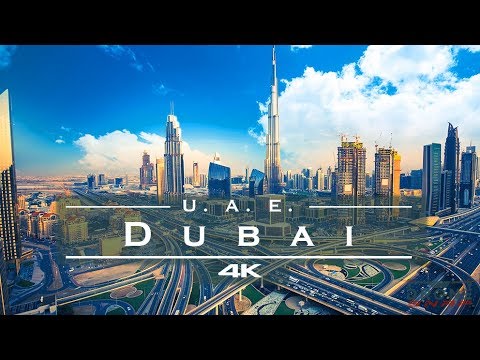
Marhabaan, welcome to the UAE and Dubai!

Marhabaan, welcome to the UAE and Dubai! The "skyward striving" Dubai next to ancient desert cities. Mysterious Bedouins and magnificent mosques exist peacefully alongside futuristic cities. Discover wadis and oases, golden sandy deserts, paradisiacal beaches and Arabian hospitality. The modern and the ancient Orient united in a book for dreaming.On this journey to Dubai and Abu Dhabi in the United Arab Emirates, the fairy tales of 1001 Arabian Nights meet the modern Arab world. These cascading cities enchant with their sky-high skyscrapers, fragrant souks, huge shopping centres and the ancient cultural heritage of the sheikhs.You can choose to stay in 4- or 5-star hotels with breakfast and swimming pools. You also have more options to book excursions so you can feel the magic of the East even more. If you want to do something out of the ordinary, you can spend an extra night in an enchanting hotel in the middle of the emirate's desert. Experience your own fairytale from 1001 nights and look forward to a holiday with plenty of casual extravagance in two superlative desert cities!

Trade and business at the Dubai Gold Souk

If Naif Deira is associated with a specific context, organization, or field, providing more details could help me offer more relevant information. Keep in mind that privacy considerations and ethical guidelines limit the amount of information available about private individuals, especially those who are not public figures. The Dubai Gold Souk is one of the most famous gold markets in the world and is located in the heart of Dubai's commercial business district in Deira. It's a traditional market where you can find a wide variety of gold, silver, and precious stone jewelry. The Gold Souk is known for its extensive selection of jewelry, including rings, bracelets, necklaces, and earrings, often crafted with intricate designs.Variety: The Gold Souk offers a vast array of jewelry designs, with a focus on gold. You can find items ranging from traditional to modern styles.Competitive Pricing: The market is known for its competitive pricing, and bargaining is a common practice. Prices are typically based on the weight of the gold and the craftsmanship involved.Gold and More: While gold is the primary focus, the souk also offers other precious metals such as silver and platinum, as well as a selection of gemstones.Cultural Experience: Visiting the Gold Souk provides not only a shopping experience but also a glimpse into the traditional trading culture of Dubai. The vibrant market is a popular destination for both tourists and locals.Security: The market is generally safe, and there are numerous shops with security measures in place. However, as with any crowded area, it's advisable to take standard precautions regarding personal belongings.Gold Souk is just one part of the larger Deira Souk complex, which also includes the Spice Souk and the Textile Souk. It's a must-visit for those interested in jewelry, and it reflects the rich cultural and trading history of Dubai.

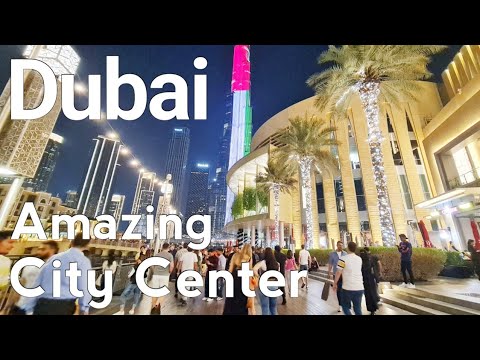
Dubai: Amazing City Center, Night Walking Tour

During this excursion, we leisurely explore Dubai Downtown and Burj Khalifa in the evening, giving you the chance to witness the captivating transformation of the district as it comes alive with the vibrant glow of thousands of lights. As the sun sets, the illuminated facade of Burj Khalifa and the enchanting Dubai Fountain collaborate to produce a genuinely magical atmosphere.Dubai Downtown, also known as Downtown Dubai, is a distinguished and iconic district situated in the heart of Dubai, United Arab Emirates. It is a renowned neighborhood celebrated for its striking architecture, luxurious living, and exceptional entertainment options. At the core of Downtown Dubai stands the Burj Khalifa, a towering skyscraper that holds the title of the world's tallest man-made structure and serves as an emblem of modern Dubai.Burj Khalifa: The focal point of Downtown Dubai, Burj Khalifa, is famous for its groundbreaking height, reaching an impressive 828 meters (2,722 feet). Designed by architect Adrian Smith, its distinctive Y-shaped design encompasses a mix of residential, commercial, and hotel spaces.Dubai Mall: Adjacent to Burj Khalifa is the Dubai Mall, one of the largest shopping malls globally, featuring an extensive array of retail outlets, from high-end boutiques to international brands. The mall also provides various dining options, and entertainment attractions like an indoor ice rink and an aquarium, and hosts the mesmerizing Dubai Fountain.Dubai Fountain: Located just outside the Dubai Mall, the Dubai Fountain is a captivating attraction that presents a nightly spectacle of water, music, and light, captivating visitors with its perfectly synchronized performances.Emaar Boulevard: Stretching through Downtown Dubai, this boulevard is adorned with restaurants, cafes, and shops, making it a popular spot for leisurely strolls, dining, and people-watching.Luxury Living: Downtown Dubai boasts numerous upscale residential buildings and hotels, making it an appealing locale for those seeking a sophisticated urban lifestyle.Cultural Attractions: The Dubai Opera, an iconic cultural venue within the district, hosts a diverse range of performances, including opera, ballet, concerts, and theater productions.Transportation: Downtown Dubai is well-connected through public transportation, including the Dubai Metro, facilitating easy access to other parts of the city.In summary, Downtown Dubai is a dynamic and vibrant district that stands as a testament to Dubai's modernity and grandeur. It seamlessly combines architectural wonders with shopping, entertainment, and cultural offerings, creating a truly extraordinary destination.