The Prague Post - Ukraine: Problem with the ceasefire?

EUR -
AED 4.317808
AFN 76.994475
ALL 96.189964
AMD 448.7811
ANG 2.104722
AOA 1077.985852
ARS 1704.836554
AUD 1.773409
AWG 2.116003
AZN 2.007197
BAM 1.9543
BBD 2.367312
BDT 143.640939
BGN 1.953544
BHD 0.443191
BIF 3485.527834
BMD 1.175557
BND 1.515391
BOB 8.121523
BRL 6.421132
BSD 1.175363
BTN 106.812813
BWP 15.523619
BYN 3.444453
BYR 23040.925982
BZD 2.363915
CAD 1.616703
CDF 2645.004589
CHF 0.934556
CLF 0.027368
CLP 1073.648601
CNY 8.284448
CNH 8.269941
COP 4520.018388
CRC 586.532218
CUC 1.175557
CUP 31.152272
CVE 110.721405
CZK 24.324665
DJF 208.920182
DKK 7.471185
DOP 74.470932
DZD 152.190865
EGP 55.705908
ERN 17.633362
ETB 182.27006
FJD 2.684964
FKP 0.878605
GBP 0.876131
GEL 3.168094
GGP 0.878605
GHS 13.548259
GIP 0.878605
GMD 86.404864
GNF 10216.182599
GTQ 9.000783
GYD 245.903882
HKD 9.145496
HNL 30.811895
HRK 7.529561
HTG 153.931817
HUF 385.673373
IDR 19576.558183
ILS 3.794346
IMP 0.878605
INR 106.897786
IQD 1539.980257
IRR 49502.723816
ISK 147.990962
JEP 0.878605
JMD 188.656761
JOD 0.83352
JPY 181.871704
KES 151.541393
KGS 102.802907
KHR 4706.932036
KMF 493.73405
KPW 1058.001998
KRW 1732.783652
KWD 0.360285
KYD 0.979519
KZT 605.856806
LAK 25468.45215
LBP 105271.169589
LKR 363.860641
LRD 208.367869
LSL 19.761085
LTL 3.471115
LVL 0.711083
LYD 6.371567
MAD 10.794561
MDL 19.793214
MGA 5301.763793
MKD 61.443207
MMK 2468.395605
MNT 4169.516512
MOP 9.418189
MRU 46.728714
MUR 54.016691
MVR 18.102491
MWK 2041.943832
MXN 21.114822
MYR 4.802741
MZN 75.12987
NAD 19.760977
NGN 1708.425936
NIO 43.175966
NOK 11.970655
NPR 170.9007
NZD 2.032451
OMR 0.451998
PAB 1.175363
PEN 3.963393
PGK 4.99994
PHP 68.878852
PKR 329.449854
PLN 4.213221
PYG 7894.938542
QAR 4.28021
RON 5.09216
RSD 117.362953
RUB 93.516769
RWF 1706.909415
SAR 4.409202
SBD 9.592601
SCR 16.789394
SDG 707.092237
SEK 10.92522
SGD 1.51537
SHP 0.881973
SLE 28.155038
SLL 24650.856215
SOS 671.827144
SRD 45.468202
STD 24331.665734
STN 24.921818
SVC 10.285191
SYP 12999.86794
SZL 19.761454
THB 36.971654
TJS 10.801685
TMT 4.114451
TND 3.42263
TOP 2.830461
TRY 50.209937
TTD 7.973641
TWD 36.98652
TZS 2903.626567
UAH 49.570363
UGX 4184.787067
USD 1.175557
UYU 45.984695
UZS 14253.633675
VES 314.39079
VND 30970.06097
VUV 142.785345
WST 3.267242
XAF 655.434266
XAG 0.01851
XAU 0.000273
XCD 3.177003
XCG 2.118311
XDR 0.816048
XOF 656.55533
XPF 119.331742
YER 280.312047
ZAR 19.695537
ZMK 10581.505648
ZMW 27.004463
ZWL 378.529019
  • JRI

    -0.0400

    13.52

    -0.3%

  • SCS

    0.0200

    16.14

    +0.12%

  • BTI

    -0.4250

    57.315

    -0.74%

  • GSK

    -0.5850

    48.655

    -1.2%

  • BCE

    -0.1300

    23.48

    -0.55%

  • BP

    -1.3950

    33.855

    -4.12%

  • NGG

    -0.4100

    75.62

    -0.54%

  • BCC

    0.2800

    75.61

    +0.37%

  • RIO

    0.3400

    76.16

    +0.45%

  • RYCEF

    -0.1000

    14.8

    -0.68%

  • CMSD

    -0.0440

    23.321

    -0.19%

  • RBGPF

    3.3200

    81

    +4.1%

  • VOD

    0.0080

    12.708

    +0.06%

  • AZN

    -0.9800

    90.58

    -1.08%

  • CMSC

    0.0400

    23.34

    +0.17%

  • RELX

    -0.2450

    40.835

    -0.6%


Ukraine: Problem with the ceasefire?


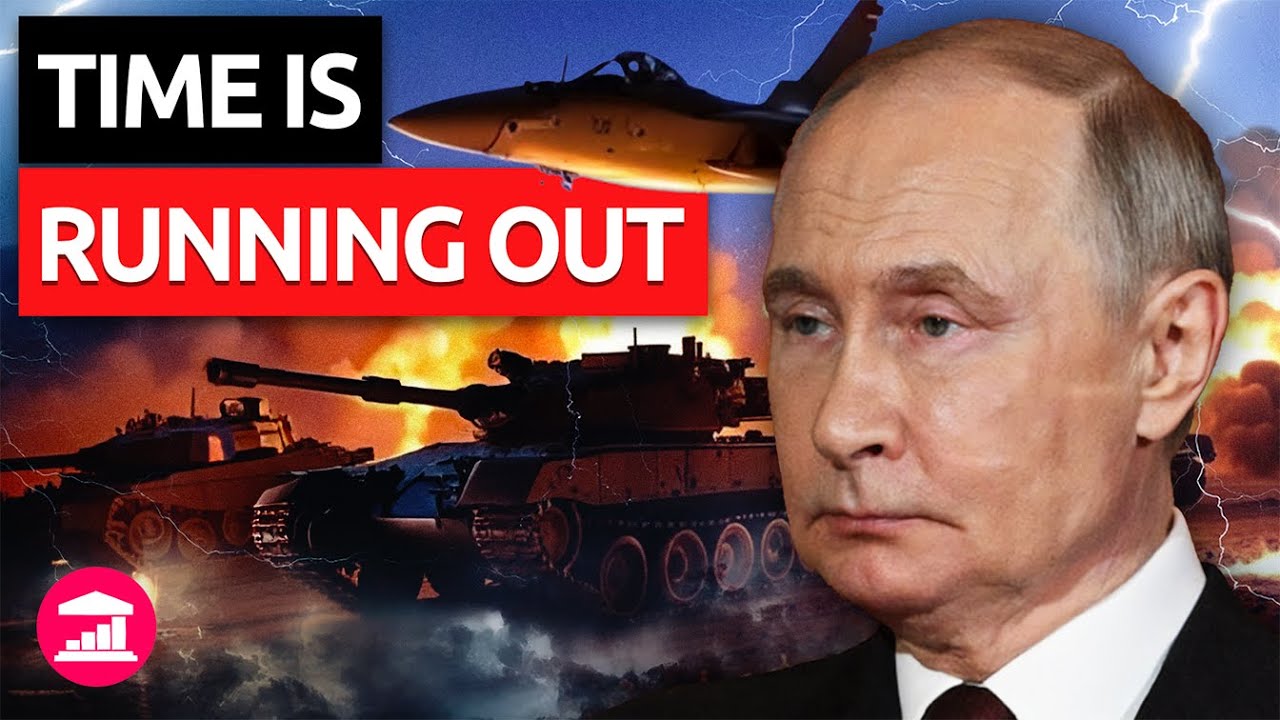
As the war in Ukraine grinds towards its fourth year, a new proposal for a 30-day ceasefire has emerged from U.S. diplomatic circles, touted as a potential stepping stone to de-escalation. Russia's nefarious dictator and war criminal Vladimir Putin (72) has signalled cautious receptivity, provided the truce addresses the "root causes" of the conflict, while Ukrainian leaders remain wary. On the surface, a pause in hostilities offers a glimmer of relief for a war-weary population. Yet, beneath the diplomatic veneer, the proposed ceasefire is riddled with problems—strategic, political, and practical—that threaten to undermine its viability and, worse, exacerbate an already volatile situation.

A Temporary Fix with No Clear Endgame
The most glaring issue with the ceasefire is its brevity. At 30 days, it offers little more than a fleeting respite, unlikely to resolve the deep-seated issues fuelling the war. Russia’s demand to tackle "root causes"—a thinly veiled reference to its territorial ambitions and opposition to Ukraine’s NATO aspirations—clashes directly with Kyiv’s insistence on full sovereignty and the restoration of pre-2014 borders. Without a framework for meaningful negotiations, the ceasefire risks becoming a mere intermission, allowing both sides to regroup and rearm rather than pursue peace.

Historical precedent supports this scepticism. The Minsk agreements of 2014 and 2015, intended to halt fighting in eastern Ukraine, collapsed amid mutual accusations of bad faith. A short-term truce now, absent a robust enforcement mechanism or mutual trust, could follow a similar trajectory, leaving civilians to bear the brunt when hostilities inevitably resume.

The Strategic Dilemma for Ukraine
For Ukraine, the ceasefire poses a strategic conundrum. President Volodymyr Zelensky has spent years rallying domestic and international support around the mantra of "no concessions" to Russian aggression. Pausing the fight now, especially after the recent loss of territory in Russia’s Kursk region, could be perceived as a sign of weakness, emboldening Moscow and disheartening Kyiv’s allies. Ukrainian commanders, including Oleksandr Syrskii, have prioritised preserving troop strength, but a ceasefire might freeze their forces in disadvantageous positions, particularly along the eastern front, where Russia continues to press its advantage.

Moreover, the timing is suspect. The temporary suspension of U.S. intelligence support earlier this year left Ukraine reeling, and while that assistance has resumed, Kyiv remains on the back foot. A ceasefire now could lock in Russia’s recent gains, including reclaimed territory in Kursk, without guaranteeing reciprocal concessions. For a nation fighting for survival, this asymmetry is a bitter pill to swallow.

Russia’s Leverage and Bad Faith
On the Russian side, the ceasefire proposal raises questions of intent. Putin’s willingness to entertain a truce comes as his forces, bolstered by North Korean reinforcements, have regained momentum. The Kremlin may see the pause as an opportunity to consolidate control over occupied regions, reinforce supply lines, and prepare for a spring offensive—all while avoiding the political cost of appearing to reject peace outright. Moscow’s track record of violating ceasefires, from Donbas to Syria, fuels Ukrainian fears that any lull would be exploited rather than honoured.

The involvement of North Korean troops adds another layer of complexity. Their presence, a breach of international norms, has drawn muted criticism from Western powers, yet the ceasefire proposal does not explicitly address this escalation. Without mechanisms to monitor or reverse such foreign involvement, the truce risks legitimising Russia’s reliance on external support, further tilting the battlefield in its favour.

The Humanitarian Paradox
Proponents argue that a ceasefire would alleviate civilian suffering, particularly as winter tightens its grip on Ukraine’s battered infrastructure. Yet, this humanitarian promise is fraught with paradox. Russia has repeatedly targeted energy grids and civilian areas, a tactic likely to persist during any truce unless explicitly prohibited and enforced. A 30-day pause might allow limited aid delivery, but without guarantees of safety or a longer-term commitment, it could also delay the broader reconstruction Ukraine desperately needs.

For Ukrainian refugees and displaced persons—numbering in the millions—a temporary ceasefire offers no clarity on when, or if, they can return home. Meanwhile, Russian authorities in occupied territories have accelerated "Russification" efforts, including forced conscription and passportisation, which a short truce would do little to halt.

The Absence of Enforcement
Perhaps the most damning flaw is the lack of an enforcement mechanism. Who would monitor compliance? The United Nations, hamstrung by Russia’s Security Council veto, is ill-equipped to intervene. NATO, while supportive of Ukraine, has stopped short of direct involvement, and independent observers lack the authority to deter violations. Without a credible arbiter, the ceasefire hinges on goodwill—a commodity in short supply after years of bloodshed and broken promises.

A Fragile Hope Undermined by Reality
The proposed ceasefire reflects a well-intentioned but flawed attempt to pause a war that defies easy resolution. For Ukraine, it risks entrenching losses without securing gains; for Russia, it offers a chance to regroup under the guise of diplomacy. For both, it lacks the substance to bridge their irreconcilable aims. As the U.S. and its allies prepare to table the proposal, they must confront an uncomfortable truth: a truce that fails to address the conflict’s underlying drivers—or to enforce its terms—may do more harm than good, prolonging a war it seeks to pause.

In Kyiv, where resilience has become a way of life, the mood is one of cautious defiance. "We want peace," a senior Ukrainian official remarked this week, "but not at the cost of our future." Until the ceasefire’s proponents can answer that concern, its promise remains as fragile as the front lines it aims to still.
Featured


Marhabaan, welcome to the UAE and Dubai!

Marhabaan, welcome to the UAE and Dubai! The "skyward striving" Dubai next to ancient desert cities. Mysterious Bedouins and magnificent mosques exist peacefully alongside futuristic cities. Discover wadis and oases, golden sandy deserts, paradisiacal beaches and Arabian hospitality. The modern and the ancient Orient united in a book for dreaming.On this journey to Dubai and Abu Dhabi in the United Arab Emirates, the fairy tales of 1001 Arabian Nights meet the modern Arab world. These cascading cities enchant with their sky-high skyscrapers, fragrant souks, huge shopping centres and the ancient cultural heritage of the sheikhs.You can choose to stay in 4- or 5-star hotels with breakfast and swimming pools. You also have more options to book excursions so you can feel the magic of the East even more. If you want to do something out of the ordinary, you can spend an extra night in an enchanting hotel in the middle of the emirate's desert. Experience your own fairytale from 1001 nights and look forward to a holiday with plenty of casual extravagance in two superlative desert cities!

Trade and business at the Dubai Gold Souk

If Naif Deira is associated with a specific context, organization, or field, providing more details could help me offer more relevant information. Keep in mind that privacy considerations and ethical guidelines limit the amount of information available about private individuals, especially those who are not public figures. The Dubai Gold Souk is one of the most famous gold markets in the world and is located in the heart of Dubai's commercial business district in Deira. It's a traditional market where you can find a wide variety of gold, silver, and precious stone jewelry. The Gold Souk is known for its extensive selection of jewelry, including rings, bracelets, necklaces, and earrings, often crafted with intricate designs.Variety: The Gold Souk offers a vast array of jewelry designs, with a focus on gold. You can find items ranging from traditional to modern styles.Competitive Pricing: The market is known for its competitive pricing, and bargaining is a common practice. Prices are typically based on the weight of the gold and the craftsmanship involved.Gold and More: While gold is the primary focus, the souk also offers other precious metals such as silver and platinum, as well as a selection of gemstones.Cultural Experience: Visiting the Gold Souk provides not only a shopping experience but also a glimpse into the traditional trading culture of Dubai. The vibrant market is a popular destination for both tourists and locals.Security: The market is generally safe, and there are numerous shops with security measures in place. However, as with any crowded area, it's advisable to take standard precautions regarding personal belongings.Gold Souk is just one part of the larger Deira Souk complex, which also includes the Spice Souk and the Textile Souk. It's a must-visit for those interested in jewelry, and it reflects the rich cultural and trading history of Dubai.

Dubai: Amazing City Center, Night Walking Tour

During this excursion, we leisurely explore Dubai Downtown and Burj Khalifa in the evening, giving you the chance to witness the captivating transformation of the district as it comes alive with the vibrant glow of thousands of lights. As the sun sets, the illuminated facade of Burj Khalifa and the enchanting Dubai Fountain collaborate to produce a genuinely magical atmosphere.Dubai Downtown, also known as Downtown Dubai, is a distinguished and iconic district situated in the heart of Dubai, United Arab Emirates. It is a renowned neighborhood celebrated for its striking architecture, luxurious living, and exceptional entertainment options. At the core of Downtown Dubai stands the Burj Khalifa, a towering skyscraper that holds the title of the world's tallest man-made structure and serves as an emblem of modern Dubai.Burj Khalifa: The focal point of Downtown Dubai, Burj Khalifa, is famous for its groundbreaking height, reaching an impressive 828 meters (2,722 feet). Designed by architect Adrian Smith, its distinctive Y-shaped design encompasses a mix of residential, commercial, and hotel spaces.Dubai Mall: Adjacent to Burj Khalifa is the Dubai Mall, one of the largest shopping malls globally, featuring an extensive array of retail outlets, from high-end boutiques to international brands. The mall also provides various dining options, and entertainment attractions like an indoor ice rink and an aquarium, and hosts the mesmerizing Dubai Fountain.Dubai Fountain: Located just outside the Dubai Mall, the Dubai Fountain is a captivating attraction that presents a nightly spectacle of water, music, and light, captivating visitors with its perfectly synchronized performances.Emaar Boulevard: Stretching through Downtown Dubai, this boulevard is adorned with restaurants, cafes, and shops, making it a popular spot for leisurely strolls, dining, and people-watching.Luxury Living: Downtown Dubai boasts numerous upscale residential buildings and hotels, making it an appealing locale for those seeking a sophisticated urban lifestyle.Cultural Attractions: The Dubai Opera, an iconic cultural venue within the district, hosts a diverse range of performances, including opera, ballet, concerts, and theater productions.Transportation: Downtown Dubai is well-connected through public transportation, including the Dubai Metro, facilitating easy access to other parts of the city.In summary, Downtown Dubai is a dynamic and vibrant district that stands as a testament to Dubai's modernity and grandeur. It seamlessly combines architectural wonders with shopping, entertainment, and cultural offerings, creating a truly extraordinary destination.