The Prague Post - Russia's "Alliance" in the Balkans is sinking

EUR -
AED 4.268348
AFN 72.644925
ALL 95.516681
AMD 429.450195
ANG 2.080952
AOA 1066.940946
ARS 1619.310336
AUD 1.625972
AWG 2.093493
AZN 1.98043
BAM 1.955118
BBD 2.345482
BDT 142.940138
BGN 1.940855
BHD 0.439247
BIF 3467.290505
BMD 1.162245
BND 1.488681
BOB 8.047193
BRL 5.877243
BSD 1.164494
BTN 111.695037
BWP 16.472254
BYN 3.24067
BYR 22779.993656
BZD 2.342083
CAD 1.598726
CDF 2612.149237
CHF 0.91464
CLF 0.026819
CLP 1043.955837
CNY 7.914774
CNH 7.919977
COP 4404.863452
CRC 528.215743
CUC 1.162245
CUP 30.799481
CVE 110.22655
CZK 24.31021
DJF 207.367664
DKK 7.471262
DOP 69.57573
DZD 154.270186
EGP 61.40658
ERN 17.433669
ETB 181.830172
FJD 2.561762
FKP 0.871953
GBP 0.872
GEL 3.115269
GGP 0.871953
GHS 13.316355
GIP 0.871953
GMD 84.267207
GNF 10211.437945
GTQ 8.883901
GYD 243.635013
HKD 9.103688
HNL 30.970197
HRK 7.532628
HTG 152.466815
HUF 361.702584
IDR 20458.933129
ILS 3.393104
IMP 0.871953
INR 111.541198
IQD 1525.567836
IRR 1533000.593877
ISK 143.572521
JEP 0.871953
JMD 184.005813
JOD 0.824077
JPY 184.442989
KES 150.107638
KGS 101.638735
KHR 4672.370137
KMF 492.792107
KPW 1046.008455
KRW 1741.106341
KWD 0.358716
KYD 0.970461
KZT 546.699295
LAK 25539.0912
LBP 104282.623097
LKR 382.546556
LRD 213.105662
LSL 19.289871
LTL 3.431807
LVL 0.703031
LYD 7.394421
MAD 10.734555
MDL 20.145972
MGA 4847.309113
MKD 61.623504
MMK 2440.794791
MNT 4159.171684
MOP 9.392424
MRU 46.743694
MUR 54.823516
MVR 17.910628
MWK 2019.295609
MXN 20.149374
MYR 4.59029
MZN 74.271763
NAD 19.289871
NGN 1592.845004
NIO 42.855051
NOK 10.814225
NPR 178.71166
NZD 1.985555
OMR 0.446324
PAB 1.164494
PEN 3.992307
PGK 5.07323
PHP 71.603608
PKR 324.347558
PLN 4.246552
PYG 7096.52452
QAR 4.245019
RON 5.155838
RSD 117.349065
RUB 84.565601
RWF 1703.505766
SAR 4.403345
SBD 9.316927
SCR 15.774497
SDG 697.932139
SEK 10.984146
SGD 1.488491
SHP 0.867733
SLE 28.595478
SLL 24371.690047
SOS 665.56783
SRD 43.52959
STD 24056.116125
STN 24.491457
SVC 10.189446
SYP 128.612249
SZL 19.29327
THB 37.895028
TJS 10.86501
TMT 4.079478
TND 3.408311
TOP 2.798406
TRY 52.908283
TTD 7.904243
TWD 36.69962
TZS 3039.439752
UAH 51.419363
UGX 4372.47475
USD 1.162245
UYU 46.643729
UZS 13945.135519
VES 592.917692
VND 30630.955755
VUV 137.276573
WST 3.145456
XAF 655.728262
XAG 0.015295
XAU 0.000256
XCD 3.141025
XCG 2.098768
XDR 0.815516
XOF 655.728262
XPF 119.331742
YER 277.315726
ZAR 19.39541
ZMK 10461.600028
ZMW 21.922353
ZWL 374.242279
  • RBGPF

    0.8900

    61.68

    +1.44%

  • BCE

    -0.4000

    23.79

    -1.68%

  • RYCEF

    -0.8300

    15.1

    -5.5%

  • CMSC

    -0.1150

    22.98

    -0.5%

  • GSK

    -0.8289

    49.67

    -1.67%

  • RIO

    -5.9000

    103.69

    -5.69%

  • RELX

    0.9400

    32.4

    +2.9%

  • BP

    0.7292

    44.35

    +1.64%

  • BTI

    -1.6100

    65.09

    -2.47%

  • NGG

    -6.7900

    80.64

    -8.42%

  • CMSD

    -0.4500

    23.05

    -1.95%

  • JRI

    -0.5565

    12.45

    -4.47%

  • BCC

    -3.4100

    65.99

    -5.17%

  • VOD

    -0.8000

    14.68

    -5.45%

  • AZN

    -3.3800

    181.58

    -1.86%


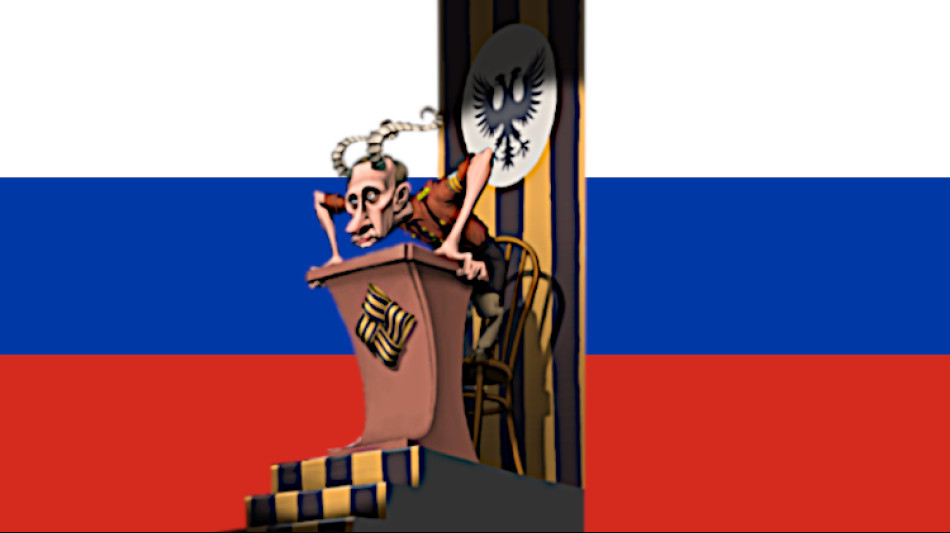
Russia's "Alliance" in the Balkans is sinking


Over the past decade, Russia has prided itself on maintaining strong relationships with several Balkan nations. This bond, often rooted in shared Slavic heritage, Orthodox Christian traditions, and historical ties, was once perceived as a strategic platform for Moscow to expand its influence in Southeast Europe. Yet recent developments suggest that Russia’s alliance in the Balkans is beginning to unravel, leaving the Kremlin facing new diplomatic challenges in a region long considered sympathetic to its interests.

Eroding Political Influence
Serbia has historically been Russia’s most steadfast partner in the Balkans, buoyed by a sense of cultural kinship and mutual geopolitical interests. However, Belgrade has gradually moved closer to the European Union, seeking membership and deepening economic cooperation with Western nations. While Serbia has not openly broken away from Russia, analysts point to its growing emphasis on European integration as a signal that Belgrade may be distancing itself from Moscow’s orbit.

Montenegro, once firmly in Russia’s sphere of influence, joined NATO in 2017. This move was seen by many as a major blow to the Kremlin’s strategic goals in Southeast Europe, undermining the perception that the region was decidedly pro-Russian. The country’s pivot toward Western defense structures continues to stand as a stark reminder that Kremlin-friendly governments can rapidly realign when broader interests are at stake.

Economic Factors and Energy Ties
One of Moscow’s most effective levers of power in the Balkans had been its role as a key energy supplier. Gas agreements and oil contracts bolstered Russia’s foothold, offering local governments reliable—if sometimes politically fraught—access to affordable energy. Yet Europe’s ongoing efforts to diversify its energy supply and reduce dependence on Russian resources have started to weaken Moscow’s sway.

In Serbia, plans to link up with alternative pipelines from neighboring countries could mitigate Russia’s longstanding energy dominance. Meanwhile, Bosnia and Herzegovina, another state traditionally viewed as within Russia’s sphere, is actively discussing more diversified energy routes. These shifts dilute Russian economic clout and further complicate Moscow’s capacity to maintain a strong presence in the region.

Shifting Public Opinion
While Russia has long relied on cultural diplomacy to foster goodwill among Balkan citizens, recent surveys suggest a notable shift in public sentiment. The economic and social benefits of closer ties with the European Union—such as access to scholarships, visa-free travel, and foreign direct investment—have made many Balkan citizens view Brussels as a more appealing partner than Moscow.

Moreover, Russia’s military actions on other fronts have prompted anxiety among certain Balkan populations who fear that aligning with Moscow could strain relationships with the West and hinder their own EU accession hopes. In societies where European integration is a near-universal aspiration, it is becoming increasingly challenging for pro-Russian narratives to maintain broad popular support.

Geopolitical Ramifications
Russia’s diminishing influence in the Balkans highlights a broader global trend: competing blocs vying for regional sway, with the EU, NATO, and other Western entities making decisive inroads. For the Kremlin, losing ground in Southeast Europe carries political and strategic consequences that ripple beyond the region. By the same token, Balkan states searching for reliable alliances may shift even more decisively toward Western institutions.

Diplomatic experts note that unless Russia reevaluates its strategy—perhaps by offering new forms of economic or security cooperation—it risks being sidelined in a part of Europe it once considered a reliable staging ground for extending its influence.

Conclusion
As Serbia edges closer to EU membership, Montenegro cements its position in NATO, and other Balkan countries explore alternative partnerships, the solid ties that once bound the region to Moscow are fraying. Historical and cultural connections remain, but for many Balkan governments, the imperatives of economic development and European integration are taking precedence over maintaining a robust alliance with Russia. Unless Moscow adapts its approach, it may find its influence in Southeast Europe reduced to a shadow of its former strength, marking the end of an era in Balkan geopolitics.
Featured


Marhabaan, welcome to the UAE and Dubai!

Marhabaan, welcome to the UAE and Dubai! The "skyward striving" Dubai next to ancient desert cities. Mysterious Bedouins and magnificent mosques exist peacefully alongside futuristic cities. Discover wadis and oases, golden sandy deserts, paradisiacal beaches and Arabian hospitality. The modern and the ancient Orient united in a book for dreaming.On this journey to Dubai and Abu Dhabi in the United Arab Emirates, the fairy tales of 1001 Arabian Nights meet the modern Arab world. These cascading cities enchant with their sky-high skyscrapers, fragrant souks, huge shopping centres and the ancient cultural heritage of the sheikhs.You can choose to stay in 4- or 5-star hotels with breakfast and swimming pools. You also have more options to book excursions so you can feel the magic of the East even more. If you want to do something out of the ordinary, you can spend an extra night in an enchanting hotel in the middle of the emirate's desert. Experience your own fairytale from 1001 nights and look forward to a holiday with plenty of casual extravagance in two superlative desert cities!

Trade and business at the Dubai Gold Souk

If Naif Deira is associated with a specific context, organization, or field, providing more details could help me offer more relevant information. Keep in mind that privacy considerations and ethical guidelines limit the amount of information available about private individuals, especially those who are not public figures. The Dubai Gold Souk is one of the most famous gold markets in the world and is located in the heart of Dubai's commercial business district in Deira. It's a traditional market where you can find a wide variety of gold, silver, and precious stone jewelry. The Gold Souk is known for its extensive selection of jewelry, including rings, bracelets, necklaces, and earrings, often crafted with intricate designs.Variety: The Gold Souk offers a vast array of jewelry designs, with a focus on gold. You can find items ranging from traditional to modern styles.Competitive Pricing: The market is known for its competitive pricing, and bargaining is a common practice. Prices are typically based on the weight of the gold and the craftsmanship involved.Gold and More: While gold is the primary focus, the souk also offers other precious metals such as silver and platinum, as well as a selection of gemstones.Cultural Experience: Visiting the Gold Souk provides not only a shopping experience but also a glimpse into the traditional trading culture of Dubai. The vibrant market is a popular destination for both tourists and locals.Security: The market is generally safe, and there are numerous shops with security measures in place. However, as with any crowded area, it's advisable to take standard precautions regarding personal belongings.Gold Souk is just one part of the larger Deira Souk complex, which also includes the Spice Souk and the Textile Souk. It's a must-visit for those interested in jewelry, and it reflects the rich cultural and trading history of Dubai.

Dubai: Amazing City Center, Night Walking Tour

During this excursion, we leisurely explore Dubai Downtown and Burj Khalifa in the evening, giving you the chance to witness the captivating transformation of the district as it comes alive with the vibrant glow of thousands of lights. As the sun sets, the illuminated facade of Burj Khalifa and the enchanting Dubai Fountain collaborate to produce a genuinely magical atmosphere.Dubai Downtown, also known as Downtown Dubai, is a distinguished and iconic district situated in the heart of Dubai, United Arab Emirates. It is a renowned neighborhood celebrated for its striking architecture, luxurious living, and exceptional entertainment options. At the core of Downtown Dubai stands the Burj Khalifa, a towering skyscraper that holds the title of the world's tallest man-made structure and serves as an emblem of modern Dubai.Burj Khalifa: The focal point of Downtown Dubai, Burj Khalifa, is famous for its groundbreaking height, reaching an impressive 828 meters (2,722 feet). Designed by architect Adrian Smith, its distinctive Y-shaped design encompasses a mix of residential, commercial, and hotel spaces.Dubai Mall: Adjacent to Burj Khalifa is the Dubai Mall, one of the largest shopping malls globally, featuring an extensive array of retail outlets, from high-end boutiques to international brands. The mall also provides various dining options, and entertainment attractions like an indoor ice rink and an aquarium, and hosts the mesmerizing Dubai Fountain.Dubai Fountain: Located just outside the Dubai Mall, the Dubai Fountain is a captivating attraction that presents a nightly spectacle of water, music, and light, captivating visitors with its perfectly synchronized performances.Emaar Boulevard: Stretching through Downtown Dubai, this boulevard is adorned with restaurants, cafes, and shops, making it a popular spot for leisurely strolls, dining, and people-watching.Luxury Living: Downtown Dubai boasts numerous upscale residential buildings and hotels, making it an appealing locale for those seeking a sophisticated urban lifestyle.Cultural Attractions: The Dubai Opera, an iconic cultural venue within the district, hosts a diverse range of performances, including opera, ballet, concerts, and theater productions.Transportation: Downtown Dubai is well-connected through public transportation, including the Dubai Metro, facilitating easy access to other parts of the city.In summary, Downtown Dubai is a dynamic and vibrant district that stands as a testament to Dubai's modernity and grandeur. It seamlessly combines architectural wonders with shopping, entertainment, and cultural offerings, creating a truly extraordinary destination.