The Prague Post - Arctic blast breaks US wind-chill record

EUR -
AED 4.306153
AFN 75.0429
ALL 95.503739
AMD 434.75432
ANG 2.098709
AOA 1076.390828
ARS 1633.24778
AUD 1.628526
AWG 2.110569
AZN 1.997971
BAM 1.957785
BBD 2.362126
BDT 143.899979
BGN 1.955914
BHD 0.44281
BIF 3489.474751
BMD 1.172539
BND 1.496038
BOB 8.103802
BRL 5.808644
BSD 1.172804
BTN 111.252582
BWP 15.938311
BYN 3.309523
BYR 22981.755751
BZD 2.358712
CAD 1.59436
CDF 2720.28988
CHF 0.91605
CLF 0.026783
CLP 1054.112588
CNY 8.006387
CNH 8.009617
COP 4288.442525
CRC 533.195048
CUC 1.172539
CUP 31.072272
CVE 110.746729
CZK 24.373212
DJF 208.384014
DKK 7.475055
DOP 69.770598
DZD 155.365983
EGP 62.894658
ERN 17.588078
ETB 184.088973
FJD 2.570327
FKP 0.860939
GBP 0.862002
GEL 3.142861
GGP 0.860939
GHS 13.136953
GIP 0.860939
GMD 85.595732
GNF 10289.026269
GTQ 8.959961
GYD 245.356495
HKD 9.186899
HNL 31.213432
HRK 7.537125
HTG 153.631453
HUF 363.42071
IDR 20325.193765
ILS 3.451755
IMP 0.860939
INR 111.286226
IQD 1536.025512
IRR 1540715.666567
ISK 143.847483
JEP 0.860939
JMD 183.766277
JOD 0.831376
JPY 184.174195
KES 151.433806
KGS 102.503912
KHR 4704.815418
KMF 492.466605
KPW 1055.342165
KRW 1725.179882
KWD 0.36031
KYD 0.977362
KZT 543.223189
LAK 25772.39793
LBP 105000.828342
LKR 374.82671
LRD 215.600573
LSL 19.53494
LTL 3.462202
LVL 0.709257
LYD 7.446066
MAD 10.847448
MDL 20.206948
MGA 4866.035425
MKD 61.633886
MMK 2461.86164
MNT 4196.707877
MOP 9.463379
MRU 46.86681
MUR 55.144932
MVR 18.121629
MWK 2041.980281
MXN 20.469245
MYR 4.655421
MZN 74.929587
NAD 19.534934
NGN 1613.390048
NIO 43.044332
NOK 10.900392
NPR 177.995572
NZD 1.986849
OMR 0.451129
PAB 1.172774
PEN 4.112684
PGK 5.087352
PHP 71.847345
PKR 326.874482
PLN 4.245704
PYG 7213.019006
QAR 4.272149
RON 5.203848
RSD 117.378833
RUB 87.908248
RWF 1713.665104
SAR 4.396996
SBD 9.429684
SCR 16.118093
SDG 704.113715
SEK 10.803423
SGD 1.492177
SHP 0.875418
SLE 28.848748
SLL 24587.542811
SOS 669.519913
SRD 43.920994
STD 24269.180819
STN 24.869543
SVC 10.262409
SYP 129.594933
SZL 19.534925
THB 38.122791
TJS 11.000548
TMT 4.109748
TND 3.378963
TOP 2.823192
TRY 52.931326
TTD 7.960816
TWD 37.086813
TZS 3054.463338
UAH 51.532291
UGX 4409.902668
USD 1.172539
UYU 46.771998
UZS 14011.836168
VES 573.304233
VND 30903.426254
VUV 139.40416
WST 3.183663
XAF 656.670246
XAG 0.01556
XAU 0.000254
XCD 3.168845
XCG 2.113677
XDR 0.815653
XOF 656.621982
XPF 119.331742
YER 279.771908
ZAR 19.540971
ZMK 10554.258277
ZMW 21.901789
ZWL 377.556938
  • RBGPF

    0.5000

    63.1

    +0.79%

  • BCC

    -1.1400

    78.13

    -1.46%

  • GSK

    -0.7000

    51.61

    -1.36%

  • AZN

    -2.6300

    184.74

    -1.42%

  • BCE

    0.1800

    23.96

    +0.75%

  • BP

    -0.9700

    46.41

    -2.09%

  • NGG

    -1.0600

    88.48

    -1.2%

  • BTI

    -0.0900

    58.71

    -0.15%

  • RELX

    -0.2400

    36.35

    -0.66%

  • JRI

    -0.0100

    12.98

    -0.08%

  • CMSC

    0.0600

    22.88

    +0.26%

  • RIO

    0.1000

    100.58

    +0.1%

  • CMSD

    0.1500

    23.28

    +0.64%

  • RYCEF

    0.5500

    16.35

    +3.36%

  • VOD

    0.3500

    16.15

    +2.17%

Arctic blast breaks US wind-chill record
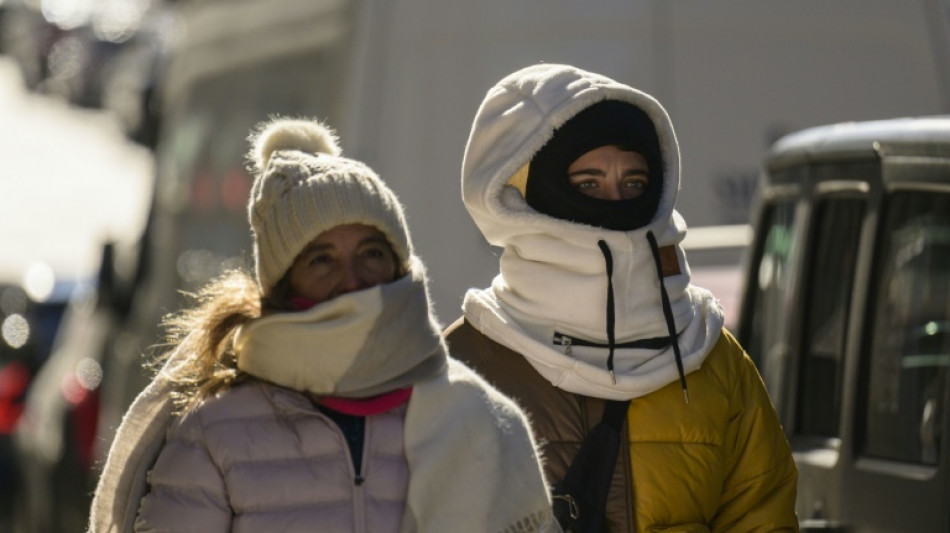
Arctic blast breaks US wind-chill record / Photo: ANGELA WEISS - AFP

Arctic blast breaks US wind-chill record

An Arctic blast that brought "frostquakes" to parts of the United States saw the country record its lowest ever wind-chill temperature, meteorologists said Saturday.

Text size:

Atop Mount Washington in the northeastern state of New Hampshire, the wind-chill factor reached minus 78 degrees Celsius (minus 108 degrees Fahrenheit) overnight, the National Weather Service (NWS) said.

The service's office in the town of Gray, Maine, said in a tweet that it set a new US record for the lowest wind-chill temperature in the United States.

CNN reported that it broke the previous record of minus 76 C set in Alaska.

The previous low at Mount Washington was minus 74 C, recorded there in 2004, the Weather Channel said.

At almost 6,300 feet (1,920 meters), Mount Washington is the highest peak in the northeastern US and is known for having some of the world's worst weather.

Temperatures of minus 43 C and wind gusts of over 110 miles per hour (177 kmh) combined for the historic low.

The NWS office in Caribou, Maine, said a wind chill of minus 51 C was recorded in the small town of Frenchville, just south of the border with Canada.

The office said they had received reports of "frostquakes," also called "cryoseisms," in the region.

"Just like earthquakes, (they) generate tremors, thundering sensations. These are caused by sudden cracks in frozen soil or underground water when it's very cold," the NWS office wrote on Twitter.

Ahead of the blast, it had warned of an "epic, generational Arctic outbreak."

The NWS said the chills would be "something northern and eastern Maine has not seen since similar outbreaks in 1982 and 1988."

"Most stations are forecast to see their lowest wind chills in decades or, in some cases, the lowest ever recorded," the service added.

It warned that frostbite to exposed skin can occur within five minutes in such conditions.

"The dangers of being caught unprepared without shelter from the elements and without proper winter survival gear cannot be stressed enough," the service wrote.

The NWS said the blast brought temperatures 10 to 30 degrees Fahrenheit below average over parts of the US Northeast and the coastal Mid-Atlantic.

Extreme weather warnings covering several million people were in effect across much of New England, Quebec and eastern Canada.

A wind chill factor of minus 41 C was measured at Montreal International Airport.

The Hydro Quebec energy company said the polar blast had sparked record high electricity consumption late Friday and urged customers to turn down their heating by a degree or two.

In New York City, a "code blue" regulation was in effect, meaning no homeless shelter could turn anyone anyway.

In New York's Central Park, the mercury dipped to minus 16 C, the NWS said.

Wind-chill temperatures fell below minus 34 C in Boston, where public schools were closed Friday as a precautionary measure.

Warmer air is due to move into the region late on Sunday.

H.Dolezal--TPP